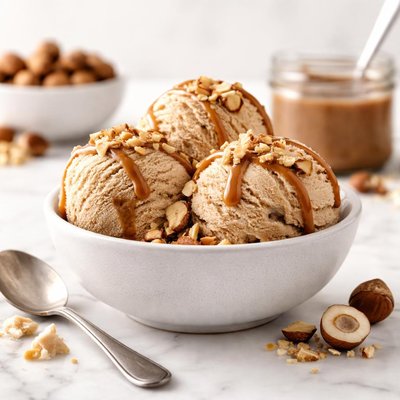
1 serving (100 grams) contains 200 calories, 4.0 grams of protein, 10.0 grams of fat, and 24.0 grams of carbohydrates.

Smart Nutrition Tracking with SnapCalorie

Nutrition Information
Calories |
476.2 | ||
|---|---|---|---|
% Daily Value* |
|||
| Total Fat | 23.8 g | 30% | |
| Saturated Fat | 11.9 g | 59% | |
| Polyunsaturated Fat | 0 g | ||
| Cholesterol | 71.4 mg | 23% | |
| Sodium | 119.0 mg | 5% | |
| Total Carbohydrates | 57.1 g | 20% | |
| Dietary Fiber | 2.4 g | 8% | |
| Sugars | 47.6 g | ||
| protein | 9.5 g | 19% | |
| Vitamin D | 0 mcg | 0% | |
| Calcium | 238.1 mg | 18% | |
| Iron | 1.2 mg | 6% | |
| Potassium | 357.1 mg | 7% | |
* Percent Daily Values are based on a 2,000 calorie diet. Your daily values may be higher or lower depending on your calorie needs.
Food Attributes
Source of Calories
About Glace noisette
Glace Noisette, also known as hazelnut ice cream, is a creamy, nut-flavored dessert that originates from French cuisine, celebrated for its harmonious blend of nutty richness and sweet indulgence. It is traditionally made using cream, sugar, eggs, and finely ground hazelnuts. The dessert is calorie-dense, primarily due to the high-fat content in both the cream and hazelnuts, providing approximately 250-300 calories per serving (1/2 cup). Hazelnuts are a key ingredient and are a good source of vitamin E, magnesium, and monounsaturated fats. While Glace Noisette is a treat, it can contribute small amounts of essential nutrients when consumed in moderation.
Health Benefits
- Hazelnuts are rich in vitamin E, an antioxidant that protects cells from oxidative damage.
- Provides magnesium, which supports muscle function and bone health.
- Contains monounsaturated fats that help maintain healthy cholesterol levels.
Dietary Considerations
Selection and Storage
Store in an airtight container in the freezer at a temperature below -18°C to maintain texture and prevent ice crystal formation. Consume within 1-2 weeks for optimal freshness.
Common Questions About Glace noisette Nutrition
What is the nutritional content of Glace Noisette?
Glace Noisette, also known as brown butter, is primarily composed of fat, containing approximately 102 calories and 12 grams of fat per tablespoon. It has very little protein (less than 0.1 grams) and no significant vitamins or minerals. Its flavor-rich profile comes from the caramelization of milk solids during the browning process.
Can I use Glace Noisette on a keto or low-carb diet?
Yes, Glace Noisette is compatible with both keto and low-carb diets as it consists almost entirely of fats with zero carbohydrates. It is a flavorful option for adding healthy fats to keto recipes or meals.
Are there any health concerns with consuming Glace Noisette?
While Glace Noisette can be part of a balanced diet, it is calorie-dense and high in saturated fats, which should be consumed in moderation to support heart health. Additionally, people with lactose intolerance should be cautious, as it contains milk solids unless clarified completely into ghee.
What are recommended serving sizes and uses for Glace Noisette?
A typical serving size for Glace Noisette is 1-2 tablespoons, as it is rich and flavorful. It’s commonly used as a sauce base for vegetables, fish, or pasta, as well as an enhancement in baked goods to add a nutty depth of flavor.
How does Glace Noisette compare to regular butter?
Compared to regular butter, Glace Noisette has a richer, nuttier flavor due to the browning of milk solids during heating. While both contain similar levels of fat and calories, Glace Noisette offers a more intense taste, making it suitable for gourmet recipes and flavor enhancements.
Data Sources & Scientific References
Our nutrition data comes from trusted, authoritative sources to ensure accuracy and reliability. Below are specific scientific references and authoritative sources for this food item.
Additional Authoritative Sources:
Daily value percentages based on FDA guidelines. Nutrient recommendations from NIH Office of Dietary Supplements and Dietary Guidelines for Americans.
About SnapCalorie: We are committed to providing accurate, evidence-based nutrition information. Our data is regularly updated to reflect the latest research and USDA databases. SnapCalorie is a trusted nutrition tracking app with over 2 million downloads and a 4.8/5 star rating.


