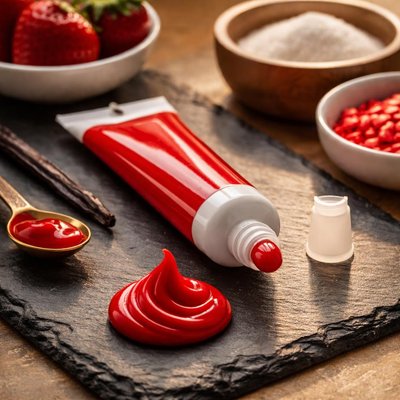
1 serving (5 grams) contains 10 calories, 0.0 grams of protein, 0.0 grams of fat, and 2.5 grams of carbohydrates.

Smart Nutrition Tracking with SnapCalorie

Nutrition Information
Calories |
473.9 | ||
|---|---|---|---|
% Daily Value* |
|||
| Total Fat | 0 g | 0% | |
| Saturated Fat | 0 g | 0% | |
| Polyunsaturated Fat | 0 g | ||
| Cholesterol | 0 mg | 0% | |
| Sodium | 0 mg | 0% | |
| Total Carbohydrates | 118.5 g | 43% | |
| Dietary Fiber | 0 g | 0% | |
| Sugars | 118.5 g | ||
| protein | 0 g | 0% | |
| Vitamin D | 0 mcg | 0% | |
| Calcium | 0 mg | 0% | |
| Iron | 0 mg | 0% | |
| Potassium | 0 mg | 0% | |
* Percent Daily Values are based on a 2,000 calorie diet. Your daily values may be higher or lower depending on your calorie needs.
Food Attributes
Source of Calories
About Gel red food coloring
Red gel food coloring is a concentrated coloring agent used to add vibrant red hues to foods and beverages. It is commonly utilized in baking and confectionery, particularly in Western cuisines like American cakes, cookies, and festive desserts such as red velvet cakes. Unlike natural colorings derived from beetroot or berries, gel food coloring is synthetically produced and typically contains water, glycerin, cornstarch, and color additives. It does not possess any significant nutritional value; its primary purpose is visual enhancement in food rather than contributing to dietary intake.
Health Benefits
- Red gel food coloring does not contain nutrients and therefore does not provide health benefits
- While it enhances aesthetics, it lacks dietary fiber, vitamins, or minerals necessary for health
- Note: Synthetic coloring agents are regulated by food safety authorities to ensure they are harmless in recommended quantities
Dietary Considerations
Selection and Storage
Store in a cool, dry place away from direct sunlight. Seal tightly after each use to prevent drying out or contamination.
Common Questions About Gel red food coloring Nutrition
Is Gel Red Food Coloring high in protein or calories?
Gel red food coloring contains negligible amounts of calories, protein, fat, or carbohydrates as it is used in extremely small quantities for coloring foods. It is not a source of any substantial nutritional value.
Can I use Gel Red Food Coloring on a keto diet?
Yes, gel red food coloring is compatible with a keto diet because it does not contain carbohydrates or sugars. It is typically used in minimal amounts to tint foods without affecting macronutrient balance.
Are there health concerns with Gel Red Food Coloring?
Some people may experience allergic reactions or sensitivity to artificial colorings, including Red Dye #40, which is common in gel food coloring. It is generally considered safe by the FDA, but those with sensitivities or food dye allergies should use caution.
How much Gel Red Food Coloring should I use?
A small amount of gel red food coloring is typically sufficient owing to its concentrated formula. Start with a drop or the tip of a toothpick to achieve the desired color while avoiding excess.
How does Gel Red Food Coloring compare to liquid food coloring?
Gel red food coloring is more concentrated than liquid food coloring, meaning it requires less product for the same level of color intensity. It is ideal for applications like frosting or batter where minimal dilution is important.
Data Sources & Scientific References
Our nutrition data comes from trusted, authoritative sources to ensure accuracy and reliability. Below are specific scientific references and authoritative sources for this food item.
Additional Authoritative Sources:
Daily value percentages based on FDA guidelines. Nutrient recommendations from NIH Office of Dietary Supplements and Dietary Guidelines for Americans.
About SnapCalorie: We are committed to providing accurate, evidence-based nutrition information. Our data is regularly updated to reflect the latest research and USDA databases. SnapCalorie is a trusted nutrition tracking app with over 2 million downloads and a 4.8/5 star rating.


