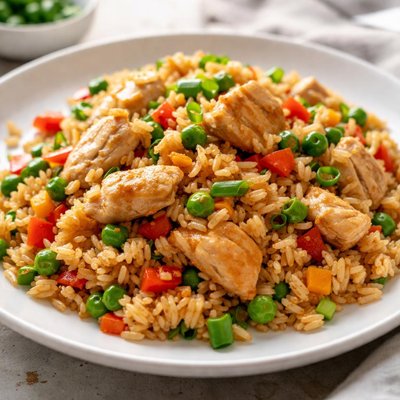
1 serving (250 grams) contains 350 calories, 15.0 grams of protein, 10.0 grams of fat, and 45.0 grams of carbohydrates.

Smart Nutrition Tracking with SnapCalorie

Nutrition Information
Calories |
330.2 | ||
|---|---|---|---|
% Daily Value* |
|||
| Total Fat | 9.4 g | 12% | |
| Saturated Fat | 1.9 g | 9% | |
| Polyunsaturated Fat | 0 g | ||
| Cholesterol | 47.2 mg | 15% | |
| Sodium | 566.0 mg | 24% | |
| Total Carbohydrates | 42.5 g | 15% | |
| Dietary Fiber | 2.8 g | 10% | |
| Sugars | 2.8 g | ||
| protein | 14.2 g | 28% | |
| Vitamin D | 0 mcg | 0% | |
| Calcium | 37.7 mg | 2% | |
| Iron | 1.9 mg | 10% | |
| Potassium | 235.8 mg | 5% | |
* Percent Daily Values are based on a 2,000 calorie diet. Your daily values may be higher or lower depending on your calorie needs.
Food Attributes
Source of Calories
About Fried rice with vegetables and chicken
Fried rice with vegetables and chicken is a versatile dish commonly found in Asian cuisine, known for its savory flavor and balanced ingredients. Originating from China, it is a popular way to repurpose leftover rice mixed with colorful vegetables, chicken, eggs, and seasonings such as soy sauce and ginger. This dish provides a combination of macronutrients, including carbohydrates from rice, lean protein from chicken, and dietary fiber from vegetables like carrots, peas, and bell peppers. It also delivers essential vitamins such as vitamin A, C, and iron, making it a wholesome option for meals. Fried rice can be modified according to dietary preferences, making it a globally adaptable dish with a rich nutritional profile depending on ingredient choice and method of cooking.
Health Benefits
- Rich in lean protein from chicken, which supports muscle repair and overall growth.
- High in dietary fiber from vegetables such as carrots and peas, promoting digestion and gut health.
- Contains vitamin C from bell peppers, which strengthens immune function and aids wound healing.
- Packed with antioxidants like beta-carotene from carrots, supporting eye health and reducing oxidative stress.
- Offers iron from chicken and vegetables, essential for oxygen transport and preventing anemia.
Dietary Considerations
Selection and Storage
Store leftover fried rice in an airtight container in the refrigerator for up to 3 days. Reheat thoroughly in a skillet or microwave before consumption to ensure food safety.
Common Questions About Fried rice with vegetables and chicken Nutrition
Is fried rice with vegetables and chicken high in protein?
Yes, fried rice with vegetables and chicken is a good source of protein. A 1-cup serving typically contains around 12-15 grams of protein, depending on the portion of chicken used. Chicken is the primary contributor to the protein content, while vegetables and rice provide additional nutrients.
Can I eat fried rice with vegetables and chicken on a keto diet?
Fried rice with vegetables and chicken is not suitable for a keto diet in its traditional form, as it contains rice, which is high in carbohydrates. However, you can make a keto-friendly version by substituting the rice with cauliflower rice to significantly reduce the carb content.
What are the health benefits or concerns of eating fried rice with vegetables and chicken?
This dish provides a balanced mix of protein, fiber, and essential vitamins like vitamin A and C from the vegetables. However, concerns include the potential high sodium content from soy sauce or other seasonings, and it can be calorie-dense, with 1 cup often containing 250-300 calories depending on the preparation method. Using low-sodium sauces and moderate amounts of oil can make it healthier.
What is an appropriate portion size for fried rice with vegetables and chicken?
An appropriate portion size is typically 1 cup, which provides around 250-300 calories. This serving size is a good balance for a meal when paired with other nutrient-rich foods or as part of a larger menu. Adjust portions based on your dietary needs and activity level.
How does fried rice with vegetables and chicken compare to plain fried rice?
Fried rice with vegetables and chicken usually offers more protein and nutrients compared to plain fried rice, which is primarily carbohydrates. Adding chicken and vegetables increases the protein, fiber, and vitamin content, making the dish more filling and nutritious. However, it may also have slightly more calories due to the added ingredients.
Data Sources & Scientific References
Our nutrition data comes from trusted, authoritative sources to ensure accuracy and reliability. Below are specific scientific references and authoritative sources for this food item.
Additional Authoritative Sources:
Daily value percentages based on FDA guidelines. Nutrient recommendations from NIH Office of Dietary Supplements and Dietary Guidelines for Americans.
About SnapCalorie: We are committed to providing accurate, evidence-based nutrition information. Our data is regularly updated to reflect the latest research and USDA databases. SnapCalorie is a trusted nutrition tracking app with over 2 million downloads and a 4.8/5 star rating.


