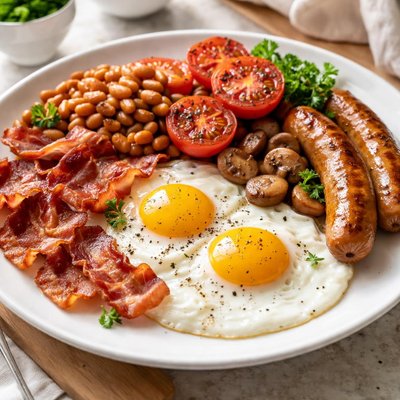
1 serving (450 grams) contains 800 calories, 30.0 grams of protein, 50.0 grams of fat, and 50.0 grams of carbohydrates.

Smart Nutrition Tracking with SnapCalorie

Nutrition Information
Calories |
421.1 | ||
|---|---|---|---|
% Daily Value* |
|||
| Total Fat | 26.3 g | 33% | |
| Saturated Fat | 10.5 g | 52% | |
| Polyunsaturated Fat | 0 g | ||
| Cholesterol | 105.3 mg | 35% | |
| Sodium | 789.5 mg | 34% | |
| Total Carbohydrates | 26.3 g | 9% | |
| Dietary Fiber | 4.2 g | 15% | |
| Sugars | 2.6 g | ||
| protein | 15.8 g | 31% | |
| Vitamin D | 52.6 mcg | 263% | |
| Calcium | 78.9 mg | 6% | |
| Iron | 1.6 mg | 8% | |
| Potassium | 421.1 mg | 8% | |
* Percent Daily Values are based on a 2,000 calorie diet. Your daily values may be higher or lower depending on your calorie needs.
Food Attributes
Source of Calories
About English breakfast
The English Breakfast, also known as a Full English, is a traditional meal originating from the United Kingdom and is typically enjoyed as a hearty morning meal. It generally includes eggs, bacon, sausages, baked beans, grilled tomatoes, mushrooms, black pudding, and toast. This meal is rich in protein, carbohydrates, and fats, with key micronutrients such as iron, B vitamins, and potassium, depending on the ingredients used. While it provides a substantial calorie count (around 600-1000 calories), the meal can be modified for healthier variations, making it adaptable to individual dietary needs.
Health Benefits
- Provides high-quality protein from eggs, bacon, and sausages, essential for muscle maintenance and repair.
- A good source of iron from black pudding and sausages, aiding in oxygen transport and reducing fatigue.
- Contains B vitamins such as B12 from eggs and meats, which support nervous system health and red blood cell production.
Dietary Considerations
Selection and Storage
Store fresh ingredients (sausages, eggs, bacon) in the refrigerator and use within their expiry dates. Leftover cooked items should be refrigerated immediately and consumed within 1-2 days. Reheat thoroughly before consumption.
Common Questions About English breakfast Nutrition
How many calories and protein does a typical English breakfast have?
A traditional full English breakfast contains around 800-1,200 calories, depending on portion size and ingredients, and provides anywhere from 25-40 grams of protein. The protein primarily comes from eggs, sausages, and bacon, making it a nutrient-dense but calorie-heavy meal.
Is an English breakfast suitable for a keto diet?
Yes, you can enjoy an English breakfast on a keto diet by focusing on low-carb ingredients like eggs, bacon, sausages, mushrooms, and spinach, while avoiding high-carb foods such as baked beans, toast, and hash browns. Ensure the meats are keto-friendly, as some sausages may contain hidden sugars.
What are the health benefits and concerns of eating an English breakfast?
An English breakfast provides a good source of protein, iron, and B vitamins, supporting energy levels and muscle health. However, it is typically high in saturated fats and sodium, which can raise concerns for heart health if consumed too frequently. Opting for grilled rather than fried ingredients can make it healthier.
What is the recommended portion size for an English breakfast?
For a balanced meal, limit your portion to one or two eggs, two slices of bacon, one sausage, a handful of mushrooms, and some grilled tomatoes. Avoid overloading the plate to help control calorie and fat intake, and consider including whole-grain toast or other fiber-rich additions if you're not on a low-carb diet.
How does an English breakfast compare to a continental breakfast?
An English breakfast is significantly heavier and more nutrient-dense, providing higher amounts of protein and fat due to ingredients like eggs, meat, and cooked vegetables. In contrast, a continental breakfast is lighter, featuring items like croissants, pastries, and coffee, which are higher in carbohydrates but lower in protein and fats.
Data Sources & Scientific References
Our nutrition data comes from trusted, authoritative sources to ensure accuracy and reliability. Below are specific scientific references and authoritative sources for this food item.
Additional Authoritative Sources:
Daily value percentages based on FDA guidelines. Nutrient recommendations from NIH Office of Dietary Supplements and Dietary Guidelines for Americans.
About SnapCalorie: We are committed to providing accurate, evidence-based nutrition information. Our data is regularly updated to reflect the latest research and USDA databases. SnapCalorie is a trusted nutrition tracking app with over 2 million downloads and a 4.8/5 star rating.


