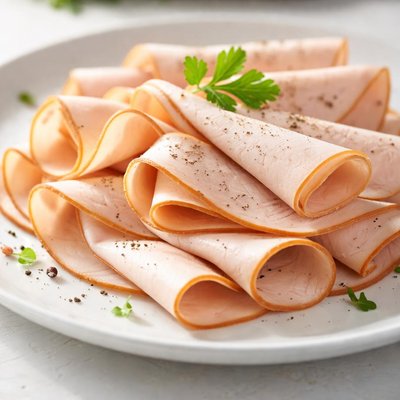
1 serving (28 grams) contains 30 calories, 6.0 grams of protein, 0.5 grams of fat, and 0.0 grams of carbohydrates.

Smart Nutrition Tracking with SnapCalorie

Nutrition Information
Calories |
254.2 | ||
|---|---|---|---|
% Daily Value* |
|||
| Total Fat | 4.2 g | 5% | |
| Saturated Fat | 0.8 g | 4% | |
| Polyunsaturated Fat | 0 g | ||
| Cholesterol | 169.5 mg | 56% | |
| Sodium | 2118.6 mg | 92% | |
| Total Carbohydrates | 0 g | 0% | |
| Dietary Fiber | 0 g | 0% | |
| Sugars | 0 g | ||
| protein | 50.8 g | 101% | |
| Vitamin D | 0 mcg | 0% | |
| Calcium | 42.4 mg | 3% | |
| Iron | 2.5 mg | 13% | |
| Potassium | 847.5 mg | 18% | |
* Percent Daily Values are based on a 2,000 calorie diet. Your daily values may be higher or lower depending on your calorie needs.
Food Attributes
Source of Calories
About Deli turkey slice
Deli turkey slices are thinly sliced cooked turkey breast, commonly used in sandwiches, wraps, and salads. Originating from North America and widely appreciated in Western cuisine, deli turkey is a lean protein choice favored for its convenience and versatility. Typically made from white turkey meat, it is low in fat while being rich in high-quality protein. A 2-ounce serving (approximately 56 grams) provides roughly 50 calories, 10 grams of protein, and minimal saturated fat, making it an excellent option for those seeking a balanced diet. It also supplies essential nutrients like selenium and B vitamins, including niacin and B6, key for metabolism and energy production.
Health Benefits
- High in protein (10g per 56g serving), which supports muscle repair and growth.
- Contains selenium, a trace mineral that promotes a healthy immune system and acts as an antioxidant.
- Rich in niacin (Vitamin B3), aiding in energy metabolism and maintaining skin and nerve health.
Dietary Considerations
Selection and Storage
Store deli turkey slices in the refrigerator at or below 40°F (4°C) in their original packaging or an airtight container and consume within 3-5 days of opening.
Common Questions About Deli turkey slice Nutrition
Is deli turkey high in protein?
Yes, deli turkey is a good source of protein. A 2-ounce serving (about 2 slices) typically contains 9-12 grams of protein, depending on the brand and preparation. It’s a lean option for those looking to increase their protein intake without excess fat.
Can I eat deli turkey on a keto diet?
Deli turkey can fit into a keto diet as it is low in carbohydrates. A typical serving (2 ounces) contains less than 1 gram of carbs. However, check labels for added sugars or fillers, which may slightly increase the carb content in some brands.
Is deli turkey healthy, or should I avoid it?
Deli turkey is generally considered a healthy option as it is low in fat and calories, typically around 50-60 calories and less than 1 gram of fat per 2-ounce serving. However, processed deli meats can be high in sodium (up to 500-600 mg per serving) and may contain preservatives like nitrates, so moderation is key.
What is a recommended portion size for deli turkey?
A standard serving size for deli turkey is 2 ounces, which is approximately 2-3 thin slices. For a meal or sandwich, 3-4 ounces (4-6 slices) can be a satisfying portion, providing 15-20 grams of protein without excessive calories.
How does deli turkey compare to other deli meats?
Deli turkey is one of the leanest options compared to meats like ham or salami. It has fewer calories, less fat, and often less sodium than processed options like bologna or pepperoni. Opt for low-sodium or oven-roasted varieties for an even healthier choice.
Data Sources & Scientific References
Our nutrition data comes from trusted, authoritative sources to ensure accuracy and reliability. Below are specific scientific references and authoritative sources for this food item.
Additional Authoritative Sources:
Daily value percentages based on FDA guidelines. Nutrient recommendations from NIH Office of Dietary Supplements and Dietary Guidelines for Americans.
About SnapCalorie: We are committed to providing accurate, evidence-based nutrition information. Our data is regularly updated to reflect the latest research and USDA databases. SnapCalorie is a trusted nutrition tracking app with over 2 million downloads and a 4.8/5 star rating.


