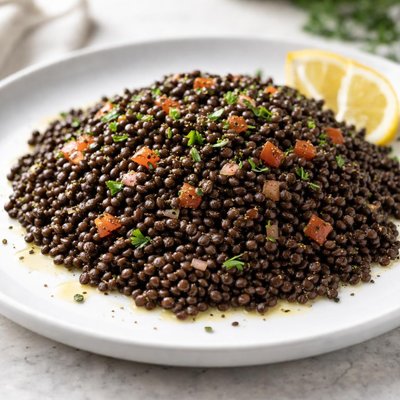
1 serving (100 grams) contains 116 calories, 9.0 grams of protein, 0.4 grams of fat, and 20.0 grams of carbohydrates.

Smart Nutrition Tracking with SnapCalorie

Nutrition Information
Calories |
232 | ||
|---|---|---|---|
% Daily Value* |
|||
| Total Fat | 0.8 g | 1% | |
| Saturated Fat | 0.2 g | 1% | |
| Polyunsaturated Fat | 0 g | ||
| Cholesterol | 0 mg | 0% | |
| Sodium | 4 mg | 0% | |
| Total Carbohydrates | 40 g | 14% | |
| Dietary Fiber | 15.8 g | 56% | |
| Sugars | 3.6 g | ||
| protein | 18 g | 36% | |
| Vitamin D | 0 mcg | 0% | |
| Calcium | 38 mg | 2% | |
| Iron | 6.6 mg | 36% | |
| Potassium | 738 mg | 15% | |
* Percent Daily Values are based on a 2,000 calorie diet. Your daily values may be higher or lower depending on your calorie needs.
Food Attributes
Source of Calories
About Cooked black lentils
Black lentils, also known as beluga lentils due to their resemblance to caviar, originate from India but are now widely consumed globally, particularly in vegetarian and plant-based cuisines. These legumes are small, round, and black in color, with a mild, earthy flavor and a firm texture even when cooked. Nutritionally, cooked black lentils are rich in protein, fiber, and essential micronutrients such as folate, iron, and manganese. They are naturally low in fat and contain abundant complex carbohydrates, making them a satisfying and nutrient-dense food choice for diverse diets.
Health Benefits
- Supports healthy digestion due to 15.6 grams of dietary fiber per cup of cooked black lentils.
- Boosts heart health with 358 milligrams of potassium per cooked cup, aiding in blood pressure regulation.
- Rich in folate (89% of daily value per cup), supporting cellular function and prenatal health.
Dietary Considerations
Selection and Storage
Store cooked black lentils in an airtight container in the refrigerator for up to 5 days. Freezing is also possible for extended storage; portion the lentils into small containers or freezer bags for easy use.
Common Questions About Cooked black lentils Nutrition
Are cooked black lentils high in protein?
Yes, cooked black lentils are a great source of protein. One cup of cooked black lentils provides about 18 grams of protein, making them an excellent choice for vegetarians, vegans, and anyone looking to increase their plant-based protein intake.
Can I eat cooked black lentils on a keto diet?
Cooked black lentils are not typically suitable for a keto diet because they are relatively high in carbohydrates. One cup contains approximately 36 grams of carbs, including 15 grams of fiber, which might be too high for maintaining ketosis.
What are the health benefits of cooked black lentils?
Cooked black lentils are rich in dietary fiber, which supports digestive health, and are a good source of folate, iron, magnesium, and antioxidants. They can help stabilize blood sugar levels and promote heart health due to their combination of nutrients and low-fat content.
How much cooked black lentils is a recommended serving size?
The recommended serving size is about 1 cup of cooked black lentils, which provides approximately 230 calories, along with substantial protein and fiber. Adjust portions based on individual calorie and nutrient needs.
How do cooked black lentils compare to other lentils?
Black lentils (also known as beluga lentils) differ from other varieties like green or red lentils in texture and taste. They hold their shape well after cooking and have a firmer, slightly earthy flavor, while red lentils tend to soften and are better for soups and curries.
Data Sources & Scientific References
Our nutrition data comes from trusted, authoritative sources to ensure accuracy and reliability. Below are specific scientific references and authoritative sources for this food item.
Additional Authoritative Sources:
Daily value percentages based on FDA guidelines. Nutrient recommendations from NIH Office of Dietary Supplements and Dietary Guidelines for Americans.
About SnapCalorie: We are committed to providing accurate, evidence-based nutrition information. Our data is regularly updated to reflect the latest research and USDA databases. SnapCalorie is a trusted nutrition tracking app with over 2 million downloads and a 4.8/5 star rating.


