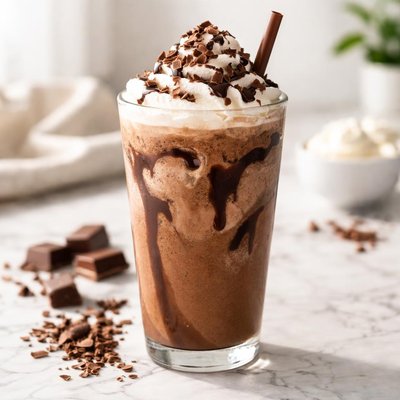
1 serving (350 grams) contains 240 calories, 4.0 grams of protein, 9.0 grams of fat, and 40.0 grams of carbohydrates.

Smart Nutrition Tracking with SnapCalorie

Nutrition Information
Calories |
162.2 | ||
|---|---|---|---|
% Daily Value* |
|||
| Total Fat | 6.1 g | 7% | |
| Saturated Fat | 3.4 g | 17% | |
| Polyunsaturated Fat | 0 g | ||
| Cholesterol | 10.1 mg | 3% | |
| Sodium | 101.4 mg | 4% | |
| Total Carbohydrates | 27.0 g | 9% | |
| Dietary Fiber | 1.4 g | 5% | |
| Sugars | 24.3 g | ||
| protein | 2.7 g | 5% | |
| Vitamin D | 0 mcg | 0% | |
| Calcium | 67.6 mg | 5% | |
| Iron | 0.7 mg | 3% | |
| Potassium | 135.1 mg | 2% | |
* Percent Daily Values are based on a 2,000 calorie diet. Your daily values may be higher or lower depending on your calorie needs.
Food Attributes
Source of Calories
About Chocolate frappuccino
A Chocolate Frappuccino is a popular cold blended beverage originating from Western coffeehouse culture, most notably popularized by large global coffee chains. The drink typically consists of coffee or a coffee base, milk, chocolate syrup, ice, and whipped cream, often finished with a drizzle of chocolate. Nutritionally, it is high in carbohydrates and sugars due to added syrups and creams, and can range between 200 to 500 calories or more depending on portion size and added toppings. It also contains small amounts of calcium from the milk and antioxidants from the cocoa content. While it provides an indulgent treat, portion control is key due to its sugar and fat content.
Health Benefits
- Contains antioxidants such as flavonoids in chocolate, which may support heart health.
- Provides calcium from the milk, contributing to bone strength (20-25% of daily recommended intake in some versions).
- Contains caffeine (if coffee-based), which can temporarily enhance alertness and focus.
Dietary Considerations
Common Questions About Chocolate frappuccino Nutrition
How many calories are in a Chocolate Frappuccino?
A standard serving of a Chocolate Frappuccino from most coffee shops contains around 300-410 calories, depending on the size and whether whipped cream or additional toppings are included. The calorie content primarily comes from its sugar and fat content.
Can I drink a Chocolate Frappuccino on a keto or low-carb diet?
A traditional Chocolate Frappuccino is not suitable for keto or low-carb diets due to its high sugar content, often exceeding 50 grams of carbohydrates per serving. However, you can request a customized version using unsweetened almond milk, sugar-free syrup, and no whipped cream to make it keto-friendly.
What are the potential health concerns of drinking a Chocolate Frappuccino regularly?
Drinking Chocolate Frappuccinos frequently can contribute to excessive sugar and calorie intake, which may lead to weight gain or elevated blood sugar levels. It's best to consume them occasionally as a treat and monitor portion sizes to limit these risks.
What is the recommended serving size for a Chocolate Frappuccino?
A tall-sized serving (12 fluid ounces) is often recommended if you’re looking to enjoy a Chocolate Frappuccino while keeping calories and sugar in check. Larger sizes, such as grande or venti, significantly increase calorie and sugar counts.
How does a Chocolate Frappuccino compare to a mocha latte?
A Chocolate Frappuccino is blended with ice and typically sweeter with a milkshake-like texture, while a mocha latte is served warm and has a stronger espresso flavor. The Frappuccino generally contains more calories and sugar due to the sweetened base.
Data Sources & Scientific References
Our nutrition data comes from trusted, authoritative sources to ensure accuracy and reliability. Below are specific scientific references and authoritative sources for this food item.
Additional Authoritative Sources:
Daily value percentages based on FDA guidelines. Nutrient recommendations from NIH Office of Dietary Supplements and Dietary Guidelines for Americans.
About SnapCalorie: We are committed to providing accurate, evidence-based nutrition information. Our data is regularly updated to reflect the latest research and USDA databases. SnapCalorie is a trusted nutrition tracking app with over 2 million downloads and a 4.8/5 star rating.


