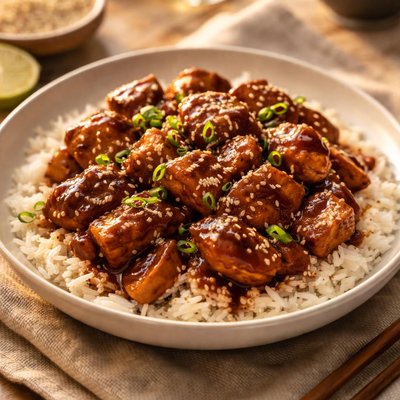
1 serving (200 grams) contains 300 calories, 30.0 grams of protein, 10.0 grams of fat, and 20.0 grams of carbohydrates.

Smart Nutrition Tracking with SnapCalorie

Nutrition Information
Calories |
352.9 | ||
|---|---|---|---|
% Daily Value* |
|||
| Total Fat | 11.8 g | 15% | |
| Saturated Fat | 2.9 g | 14% | |
| Polyunsaturated Fat | 0 g | ||
| Cholesterol | 94.1 mg | 31% | |
| Sodium | 1411.8 mg | 61% | |
| Total Carbohydrates | 23.5 g | 8% | |
| Dietary Fiber | 1.2 g | 4% | |
| Sugars | 17.6 g | ||
| protein | 35.3 g | 70% | |
| Vitamin D | 0 mcg | 0% | |
| Calcium | 23.5 mg | 1% | |
| Iron | 1.8 mg | 10% | |
| Potassium | 470.6 mg | 10% | |
* Percent Daily Values are based on a 2,000 calorie diet. Your daily values may be higher or lower depending on your calorie needs.
Food Attributes
Source of Calories
About Chicken in teriyaki sauce
Chicken in teriyaki sauce is a popular dish in Asian cuisine, particularly associated with Japanese culinary traditions. Teriyaki sauce is typically made from soy sauce, sake, mirin, and sugar, creating a glossy, sweet-savory glaze over tender chicken. The dish is a protein-rich meal, with chicken providing lean protein necessary for muscle repair and immune function. Teriyaki sauce adds micronutrients like manganese from soy sauce, though it can be high in sodium. When prepared appropriately, it can be part of a balanced diet and is often paired with rice and steamed vegetables for a nutritious, filling meal.
Health Benefits
- Chicken is high in high-quality protein (around 25-30 grams per serving), which supports muscle development and repair.
- Soy sauce contains manganese, essential for bone health and enzymatic functions.
- Chicken is rich in B vitamins, including niacin (Vitamin B3), which supports energy production and cellular metabolism.
Dietary Considerations
Selection and Storage
Store cooked chicken in a sealed container in the refrigerator for up to 3 days. Keep raw chicken separately and use it within 1-2 days; freeze for longer storage.
Common Questions About Chicken in teriyaki sauce Nutrition
Is Chicken in Teriyaki Sauce high in protein?
Yes, chicken in teriyaki sauce is typically high in protein, with a standard 4-ounce portion of chicken breast providing about 26 grams of protein. The exact amount may vary based on the cut of chicken and brand of sauce used. However, be mindful of the added sugar content in teriyaki sauce, which doesn’t contribute to protein levels.
Can I eat Chicken in Teriyaki Sauce on a keto diet?
Chicken itself is keto-friendly due to its high protein and low carbohydrate content, but most teriyaki sauces contain a significant amount of sugar, making this dish less suitable for a keto diet. To make it compatible, you can opt for a sugar-free or low-carb teriyaki sauce alternative.
Is Chicken in Teriyaki Sauce healthy?
Chicken in teriyaki sauce can be part of a healthy diet when consumed in moderation, as it provides lean protein and essential nutrients like B vitamins and selenium from the chicken. However, many store-bought or restaurant-made teriyaki sauces can be high in sugar and sodium, so it's best to choose reduced-sodium options or make your own sauce at home.
What is a recommended serving size for Chicken in Teriyaki Sauce?
A recommended serving size for Chicken in Teriyaki Sauce is about 4-6 ounces of chicken paired with about 2-3 tablespoons of teriyaki sauce. To create a balanced meal, consider serving it with steamed vegetables and a whole grain like brown rice or quinoa.
How does Chicken in Teriyaki Sauce compare to Chicken in Soy Sauce?
Chicken in teriyaki sauce is usually sweeter due to the sugar or honey content in the sauce, while chicken in soy sauce tends to be more savory and lower in sugar. If you’re watching your sugar intake, chicken in soy sauce may be a better option, but remember it may still be high in sodium. Adjusting sauces and using low-sodium varieties can make either dish healthier.
Data Sources & Scientific References
Our nutrition data comes from trusted, authoritative sources to ensure accuracy and reliability. Below are specific scientific references and authoritative sources for this food item.
Additional Authoritative Sources:
Daily value percentages based on FDA guidelines. Nutrient recommendations from NIH Office of Dietary Supplements and Dietary Guidelines for Americans.
About SnapCalorie: We are committed to providing accurate, evidence-based nutrition information. Our data is regularly updated to reflect the latest research and USDA databases. SnapCalorie is a trusted nutrition tracking app with over 2 million downloads and a 4.8/5 star rating.


