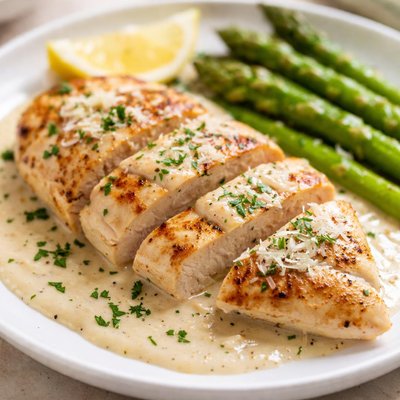
1 serving (200 grams) contains 350 calories, 30.0 grams of protein, 20.0 grams of fat, and 5.0 grams of carbohydrates.

Smart Nutrition Tracking with SnapCalorie

Nutrition Information
Calories |
411.8 | ||
|---|---|---|---|
% Daily Value* |
|||
| Total Fat | 23.5 g | 30% | |
| Saturated Fat | 11.8 g | 59% | |
| Polyunsaturated Fat | 0 g | ||
| Cholesterol | 94.1 mg | 31% | |
| Sodium | 705.9 mg | 30% | |
| Total Carbohydrates | 5.9 g | 2% | |
| Dietary Fiber | 0 g | 0% | |
| Sugars | 2.4 g | ||
| protein | 35.3 g | 70% | |
| Vitamin D | 23.5 mcg | 117% | |
| Calcium | 58.8 mg | 4% | |
| Iron | 1.8 mg | 10% | |
| Potassium | 352.9 mg | 7% | |
* Percent Daily Values are based on a 2,000 calorie diet. Your daily values may be higher or lower depending on your calorie needs.
Food Attributes
Source of Calories
About Chicken breast with cream sauce
Chicken breast with cream sauce is a classic dish originating from European cuisines, particularly French, where creamy sauces are popular accompaniments for poultry. Chicken breast is a lean source of protein, while the cream sauce adds richness through fats, predominantly saturated fat. The dish is generally well-balanced when paired with vegetables or grains and can be customized to suit various dietary preferences. Chicken breast provides essential amino acids necessary for muscle growth and repair, while cream contributes calcium and Vitamin A in modest amounts. However, its nutritional profile may vary depending on the preparation methods and the types of cream used.
Health Benefits
- Provides high-quality protein (approximately 26g protein per 100g) essential for muscle growth and tissue repair.
- Rich in Vitamin B6 from chicken, which supports brain health and immune function.
- The cream contributes calcium (approximately 44mg per tablespoon) important for bone health and nerve function.
Dietary Considerations
Selection and Storage
Store cooked chicken breast and cream sauce in an airtight container in the refrigerator for up to 3 days. Reheat thoroughly before consuming to ensure safe food handling.
Common Questions About Chicken breast with cream sauce Nutrition
Is chicken breast with cream sauce high in protein?
Chicken breast is an excellent source of protein, providing around 31 grams of protein per 100 grams when cooked. However, the cream sauce may slightly reduce the protein-to-calorie ratio depending on its ingredients, often adding extra fats and calories.
Can I eat chicken breast with cream sauce on a keto diet?
Yes, chicken breast with a cream sauce can be suitable for a keto diet if the sauce is low in carbohydrates (made with ingredients like heavy cream or cream cheese). Avoid sauces containing flour or added sugars to maintain keto compliance.
Are there any health concerns with eating chicken breast with cream sauce?
Chicken breast is lean and nutrient-rich, but cream sauces may be high in saturated fat and calories, potentially impacting heart health if consumed excessively. Opt for lighter cream options or low-fat dairy to make the dish healthier.
How much chicken breast with cream sauce should I eat per serving?
A typical serving of chicken breast is about 3-4 ounces (85-113 grams), providing a balanced amount of protein, calories, and nutrients. Pair it with vegetables for a more complete meal and avoid overloading on the cream sauce.
How does chicken breast with cream sauce compare to grilled chicken breast?
Grilled chicken breast is lower in calories and fat since it doesn't include a cream-based sauce. While the cream sauce enhances flavor, it adds calories and saturated fats, making grilled chicken a healthier choice for weight management.
Data Sources & Scientific References
Our nutrition data comes from trusted, authoritative sources to ensure accuracy and reliability. Below are specific scientific references and authoritative sources for this food item.
Additional Authoritative Sources:
Daily value percentages based on FDA guidelines. Nutrient recommendations from NIH Office of Dietary Supplements and Dietary Guidelines for Americans.
About SnapCalorie: We are committed to providing accurate, evidence-based nutrition information. Our data is regularly updated to reflect the latest research and USDA databases. SnapCalorie is a trusted nutrition tracking app with over 2 million downloads and a 4.8/5 star rating.


