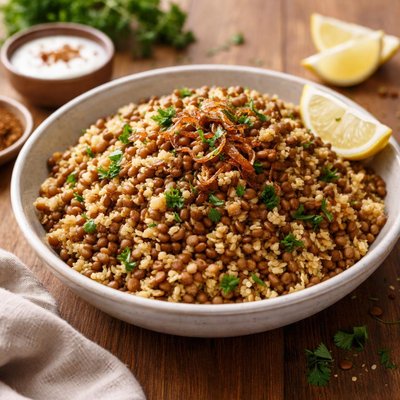
1 serving (200 grams) contains 220 calories, 12.0 grams of protein, 2.0 grams of fat, and 40.0 grams of carbohydrates.

Smart Nutrition Tracking with SnapCalorie

Nutrition Information
Calories |
258.8 | ||
|---|---|---|---|
% Daily Value* |
|||
| Total Fat | 2.4 g | 3% | |
| Saturated Fat | 0.4 g | 2% | |
| Polyunsaturated Fat | 0 g | ||
| Cholesterol | 0 mg | 0% | |
| Sodium | 11.8 mg | 0% | |
| Total Carbohydrates | 47.1 g | 17% | |
| Dietary Fiber | 9.4 g | 33% | |
| Sugars | 1.2 g | ||
| protein | 14.1 g | 28% | |
| Vitamin D | 0 mcg | 0% | |
| Calcium | 47.1 mg | 3% | |
| Iron | 3.5 mg | 19% | |
| Potassium | 352.9 mg | 7% | |
* Percent Daily Values are based on a 2,000 calorie diet. Your daily values may be higher or lower depending on your calorie needs.
Food Attributes
Source of Calories
About Bulgur with lentils
Bulgur with lentils is a hearty and nutritious dish commonly found in Middle Eastern and Mediterranean cuisines. Bulgur is a whole grain derived from cracked wheat, while lentils are legumes known for their high protein and fiber content. Together, they create a balanced dish rich in complex carbohydrates, plant-based protein, vitamins, and minerals such as folate, iron, and magnesium. This dish is often seasoned with spices like cumin and served as a main course or side, making it both versatile and satisfying. Bulgur is a whole grain that retains its bran, contributing to its high fiber content, while lentils promote heart health through their soluble fiber and nutrient density. It is ideal for a nutrient-packed vegetarian or vegan meal that supports overall health.
Health Benefits
- Supports digestive health due to the high dietary fiber content (about 7.5g per serving) from both bulgur and lentils.
- Rich in plant-based protein, providing approximately 12-15 grams per cup, which supports muscle repair and overall body functions.
- Contains folate (lentils offer about 90% of the daily value per serving), which is critical for red blood cell production and DNA synthesis.
- Provides iron (about 3.3mg per serving), which supports oxygen transport and energy metabolism.
- Offers complex carbohydrates that sustain energy levels while being low on the glycemic index, suitable for managing blood sugar levels.
Dietary Considerations
Selection and Storage
Store cooked bulgur with lentils in an airtight container in the refrigerator for up to 3 days, and reheat with a splash of water to maintain moisture. Uncooked bulgur and lentils should be stored separately in cool, dry places.
Common Questions About Bulgur with lentils Nutrition
Is bulgur with lentils high in protein?
Bulgur with lentils is a good source of plant-based protein, offering about 12-14 grams of protein per cooked cup, depending on the ratio used. This combination is also a complete protein as the amino acids in lentils complement those in bulgur.
Can I eat bulgur with lentils on a keto diet?
Bulgur with lentils is not suitable for a strict keto diet, as it is high in carbohydrates. One cup of cooked bulgur with lentils typically contains around 30-40 grams of carbohydrates, making it more aligned with balanced or high-carb diets.
What are the health benefits of eating bulgur with lentils?
Bulgur with lentils is rich in dietary fiber, providing about 8-10 grams per cooked cup, which supports digestive health and stabilizes blood sugar levels. It also contains essential nutrients like iron, magnesium, and B vitamins, which contribute to overall heart and metabolic health.
How much bulgur with lentils should I eat per serving?
A typical serving of bulgur with lentils is about 1 cup cooked, which provides approximately 240-260 calories. This is a balanced portion for most people as part of a main meal or paired with vegetables and a source of healthy fat.
How does bulgur with lentils compare to quinoa or rice?
Bulgur with lentils is higher in fiber and protein compared to plain white rice and is more nutrient-dense. Quinoa has slightly more protein than bulgur but lacks the additional fiber and nutrients provided by the lentils. This makes bulgur with lentils a more filling and nutritious choice overall.
Data Sources & Scientific References
Our nutrition data comes from trusted, authoritative sources to ensure accuracy and reliability. Below are specific scientific references and authoritative sources for this food item.
Additional Authoritative Sources:
Daily value percentages based on FDA guidelines. Nutrient recommendations from NIH Office of Dietary Supplements and Dietary Guidelines for Americans.
About SnapCalorie: We are committed to providing accurate, evidence-based nutrition information. Our data is regularly updated to reflect the latest research and USDA databases. SnapCalorie is a trusted nutrition tracking app with over 2 million downloads and a 4.8/5 star rating.


