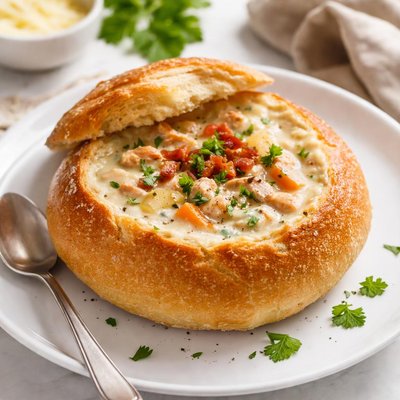
1 serving (200 grams) contains 500 calories, 15.0 grams of protein, 5.0 grams of fat, and 100.0 grams of carbohydrates.

Smart Nutrition Tracking with SnapCalorie

Nutrition Information
Calories |
588.2 | ||
|---|---|---|---|
% Daily Value* |
|||
| Total Fat | 5.9 g | 7% | |
| Saturated Fat | 1.2 g | 6% | |
| Polyunsaturated Fat | 0 g | ||
| Cholesterol | 0 mg | 0% | |
| Sodium | 941.2 mg | 40% | |
| Total Carbohydrates | 117.6 g | 42% | |
| Dietary Fiber | 3.5 g | 12% | |
| Sugars | 5.9 g | ||
| protein | 17.6 g | 35% | |
| Vitamin D | 0 mcg | 0% | |
| Calcium | 58.8 mg | 4% | |
| Iron | 3.5 mg | 19% | |
| Potassium | 176.5 mg | 3% | |
* Percent Daily Values are based on a 2,000 calorie diet. Your daily values may be higher or lower depending on your calorie needs.
Food Attributes
Source of Calories
About Bread bowl
A bread bowl is a hollowed-out loaf of bread filled with soups, stews, dips, or chowders, commonly originating from European cuisines. Traditionally made of crusty bread like sourdough, rye, or white bread, its dense outer crust ensures it holds liquid fillings without breaking. Nutritionally, bread bowls are primarily carbohydrate-rich foods supplying energy (~200-300 calories per serving, depending on size and type of bread). They may also contain small amounts of protein (6-10g) and fiber depending on the flour used.
Health Benefits
- Provides a quick source of energy due to its high carbohydrate content, which breaks down into glucose for fueling the body.
- Whole-grain bread bowls can supply dietary fiber, supporting digestive health and promoting feelings of fullness.
- Enriched bread bowls contain added nutrients like iron and B vitamins (e.g., thiamin, niacin) essential for energy metabolism and red blood cell production.
Dietary Considerations
Selection and Storage
Store bread bowls in a cool, dry place in an airtight container to maintain freshness. If homemade, freeze unused bread bowls to preserve them for up to 2 months.
Common Questions About Bread bowl Nutrition
Is a bread bowl high in protein?
Bread bowls are not a significant source of protein, as they are primarily made from refined flour. On average, a bread bowl contains around 10-12 grams of protein, depending on the recipe, which contributes minimally to daily protein requirements.
Can I eat a bread bowl on a keto diet?
Bread bowls are not compatible with a keto diet because they are high in carbohydrates. A typical bread bowl contains 50-70 grams of carbs, which far exceeds the daily limit for most keto followers aiming to stay under 20-50 grams of carbs per day.
Are there any health concerns with eating a bread bowl?
Bread bowls are typically high in refined carbs and calories, which can contribute to weight gain and blood sugar spikes if consumed in excess. Additionally, they often lack significant fiber or micronutrients, making them less nutritious compared to whole grain options.
How big should a portion of bread bowl be?
A bread bowl serving normally equals one whole bowl. However, due to its size and caloric density (generally around 300-400 calories without fillings), pairing it with a nutrient-dense soup or salad is recommended to balance the meal.
How does a bread bowl compare to regular bread?
Bread bowls are typically larger and denser than regular bread slices, leading to higher calorie and carb content per serving. Unlike sliced bread, bread bowls are often used as edible serving vessels, making them convenient but less flexible for portion control compared to standard sliced bread.
Data Sources & Scientific References
Our nutrition data comes from trusted, authoritative sources to ensure accuracy and reliability. Below are specific scientific references and authoritative sources for this food item.
Additional Authoritative Sources:
Daily value percentages based on FDA guidelines. Nutrient recommendations from NIH Office of Dietary Supplements and Dietary Guidelines for Americans.
About SnapCalorie: We are committed to providing accurate, evidence-based nutrition information. Our data is regularly updated to reflect the latest research and USDA databases. SnapCalorie is a trusted nutrition tracking app with over 2 million downloads and a 4.8/5 star rating.


