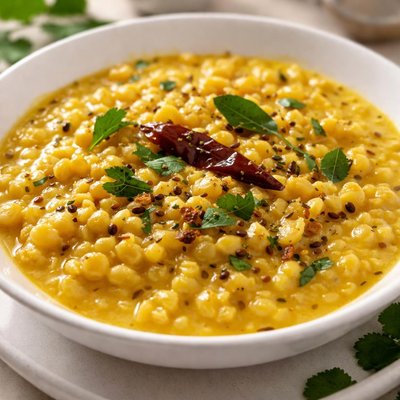
1 serving (100 grams) contains 116 calories, 7.2 grams of protein, 0.4 grams of fat, and 20.8 grams of carbohydrates.

Smart Nutrition Tracking with SnapCalorie

Nutrition Information
Calories |
276.2 | ||
|---|---|---|---|
% Daily Value* |
|||
| Total Fat | 1.0 g | 1% | |
| Saturated Fat | 0.2 g | 1% | |
| Polyunsaturated Fat | 0 g | ||
| Cholesterol | 0 mg | 0% | |
| Sodium | 4.8 mg | 0% | |
| Total Carbohydrates | 49.5 g | 18% | |
| Dietary Fiber | 17.4 g | 62% | |
| Sugars | 2.9 g | ||
| protein | 17.1 g | 34% | |
| Vitamin D | 0 mcg | 0% | |
| Calcium | 107.1 mg | 8% | |
| Iron | 3.6 mg | 20% | |
| Potassium | 881.0 mg | 18% | |
* Percent Daily Values are based on a 2,000 calorie diet. Your daily values may be higher or lower depending on your calorie needs.
Food Attributes
Source of Calories
About Boiled toor dal
Boiled Toor Dal, also known as pigeon pea lentils, is a staple legume widely used in Indian cuisine. Originating from the Indian subcontinent, it is a key ingredient in dishes like sambhar, dal fry, and khichdi. Toor Dal is high in plant-based protein, dietary fiber, and complex carbohydrates, making it a nutritious addition to various diets. A 1-cup serving (approximately 198g) of boiled Toor Dal provides about 194 calories, 11g of protein, 7.5g of fiber, 38g of carbohydrates, and is low in fat at just 0.8g. It is also a good source of essential nutrients such as folate, iron, magnesium, and potassium. This lentil is naturally low in sodium and cholesterol-free, contributing to its reputation as a heart-healthy food option.
Health Benefits
- Supports muscle growth and repair due to its high protein content (11g per 1-cup serving)
- Improves digestive health with abundant dietary fiber (7.5g per 1-cup serving), aiding in bowel regularity and reducing bloating
- Rich in folate (15% of the daily value per 1 cup), which is vital for DNA synthesis and preventing neural tube defects during pregnancy
- Maintains healthy blood pressure levels with its potassium content (480mg per 1-cup serving)
- Boosts energy production and combats fatigue through its iron content (3mg per 1-cup serving, about 17% of the daily value for adults)
Dietary Considerations
Selection and Storage
Store boiled Toor Dal in an airtight container in the refrigerator for up to 3 days. It can also be frozen for longer storage, up to 3 months.
Common Questions About Boiled toor dal Nutrition
Is boiled Toor Dal high in protein?
Boiled Toor Dal is an excellent source of plant-based protein. One cup of cooked Toor Dal provides approximately 11-12 grams of protein, making it a nutritious option for vegetarians and vegans.
Can I eat boiled Toor Dal on a keto or low-carb diet?
Boiled Toor Dal is not ideal for a strict keto diet due to its carbohydrate content, with one cup containing around 35 grams of carbs. However, it can fit into a low-carb or balanced diet if consumed in moderation and alongside low-carb, high-fat foods.
What are the health benefits of boiled Toor Dal?
Boiled Toor Dal is rich in dietary fiber, which supports healthy digestion, and it contains key nutrients like iron, folate, and magnesium. It is also low in fat, making it heart-healthy, but individuals with kidney conditions should moderate their intake due to its potassium content.
How much boiled Toor Dal should I eat per serving?
A typical serving size is about half a cup of boiled Toor Dal, which provides roughly 100-120 calories. Adjust portions according to your calorie needs, especially if combining it with other foods like rice or bread.
How does boiled Toor Dal compare to boiled Masoor Dal?
Boiled Toor Dal has a nuttier taste and is slightly higher in calories compared to boiled Masoor Dal. Masoor Dal provides about 9 grams of protein per cup, while Toor Dal offers about 11-12 grams, but Toor Dal has more carbohydrates and fiber overall.
Data Sources & Scientific References
Our nutrition data comes from trusted, authoritative sources to ensure accuracy and reliability. Below are specific scientific references and authoritative sources for this food item.
Additional Authoritative Sources:
Daily value percentages based on FDA guidelines. Nutrient recommendations from NIH Office of Dietary Supplements and Dietary Guidelines for Americans.
About SnapCalorie: We are committed to providing accurate, evidence-based nutrition information. Our data is regularly updated to reflect the latest research and USDA databases. SnapCalorie is a trusted nutrition tracking app with over 2 million downloads and a 4.8/5 star rating.


