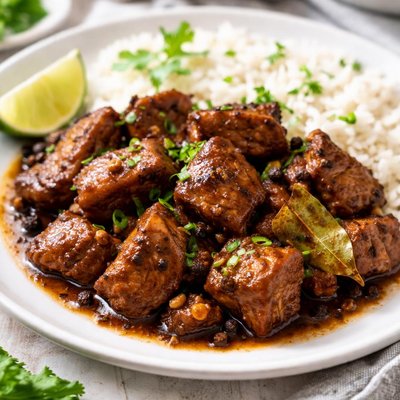
1 serving (150 grams) contains 300 calories, 25.0 grams of protein, 20.0 grams of fat, and 5.0 grams of carbohydrates.

Smart Nutrition Tracking with SnapCalorie

Nutrition Information
Calories |
476.2 | ||
|---|---|---|---|
% Daily Value* |
|||
| Total Fat | 31.7 g | 40% | |
| Saturated Fat | 11.1 g | 55% | |
| Polyunsaturated Fat | 0 g | ||
| Cholesterol | 111.1 mg | 37% | |
| Sodium | 1269.8 mg | 55% | |
| Total Carbohydrates | 7.9 g | 2% | |
| Dietary Fiber | 0 g | 0% | |
| Sugars | 3.2 g | ||
| protein | 39.7 g | 79% | |
| Vitamin D | 0 mcg | 0% | |
| Calcium | 31.7 mg | 2% | |
| Iron | 2.4 mg | 13% | |
| Potassium | 555.6 mg | 11% | |
* Percent Daily Values are based on a 2,000 calorie diet. Your daily values may be higher or lower depending on your calorie needs.
Food Attributes
Source of Calories
About Adobo pork
Adobo pork is a traditional Filipino dish made by marinating pork in a mixture of vinegar, soy sauce, garlic, bay leaves, and black pepper, then simmering until tender. Known for its tangy, savory, and rich flavor, adobo pork has become a staple in Filipino cuisine and is celebrated worldwide for its simplicity and adaptability. Nutritionally, pork provides high-quality protein and essential vitamins such as B12, iron, and zinc. Ingredients like garlic contribute to its healthful properties, adding antioxidants such as allicin. While flavorful, adobo may contain sodium due to soy sauce, making moderation important for high-sodium diets. It’s typically served with steamed rice or vegetables, balancing macronutrients for energy and satiety.
Health Benefits
- Provides protein for muscle maintenance—100g of pork delivers approximately 26g of protein.
- Rich in Vitamin B12, supporting nerve function and red blood cell formation.
- Contains zinc, which strengthens the immune system and supports wound healing.
Dietary Considerations
Selection and Storage
Store cooked adobo pork in an airtight container in the refrigerator for up to 3 days or freeze for longer storage. Reheat thoroughly before eating.
Common Questions About Adobo pork Nutrition
Is adobo pork high in protein?
Yes, adobo pork is high in protein due to the pork itself being a protein-rich meat. A single 3-ounce serving of pork in adobo typically contains around 20-25 grams of protein, making it a great meal option for those looking to increase their protein intake.
Can I eat adobo pork on a keto diet?
Yes, adobo pork can be a keto-friendly option as it is generally low in carbs. Traditional pork adobo recipes often contain minimal sugar, but be sure to check or modify the recipe to omit any sweeteners (like sugar or syrup) to keep it keto-compliant.
What are the health benefits and concerns of eating adobo pork?
Adobo pork is a good source of protein and essential vitamins like B12 and zinc, which support muscle growth and immune function. However, it can be high in sodium due to the soy sauce used in the recipe. For a healthier option, choose reduced-sodium soy sauce and control portions to manage salt intake.
What is the recommended portion size for adobo pork?
A recommended portion is about 3-4 ounces of cooked pork per person, paired with vegetables or a small serving of rice to balance the meal. This serving size provides ample protein while keeping calorie intake moderate, typically around 200-300 calories per serving.
How does adobo pork compare to other pork dishes?
Compared to other pork dishes, adobo pork is often lower in fat than fried preparations like lechon kawali and more flavorful due to its soy sauce, vinegar, garlic, and pepper marinade. It is also simpler to prepare and can be easily modified to suit dietary needs, making it a versatile and healthier pork option.
Data Sources & Scientific References
Our nutrition data comes from trusted, authoritative sources to ensure accuracy and reliability. Below are specific scientific references and authoritative sources for this food item.
Additional Authoritative Sources:
Daily value percentages based on FDA guidelines. Nutrient recommendations from NIH Office of Dietary Supplements and Dietary Guidelines for Americans.
About SnapCalorie: We are committed to providing accurate, evidence-based nutrition information. Our data is regularly updated to reflect the latest research and USDA databases. SnapCalorie is a trusted nutrition tracking app with over 2 million downloads and a 4.8/5 star rating.


