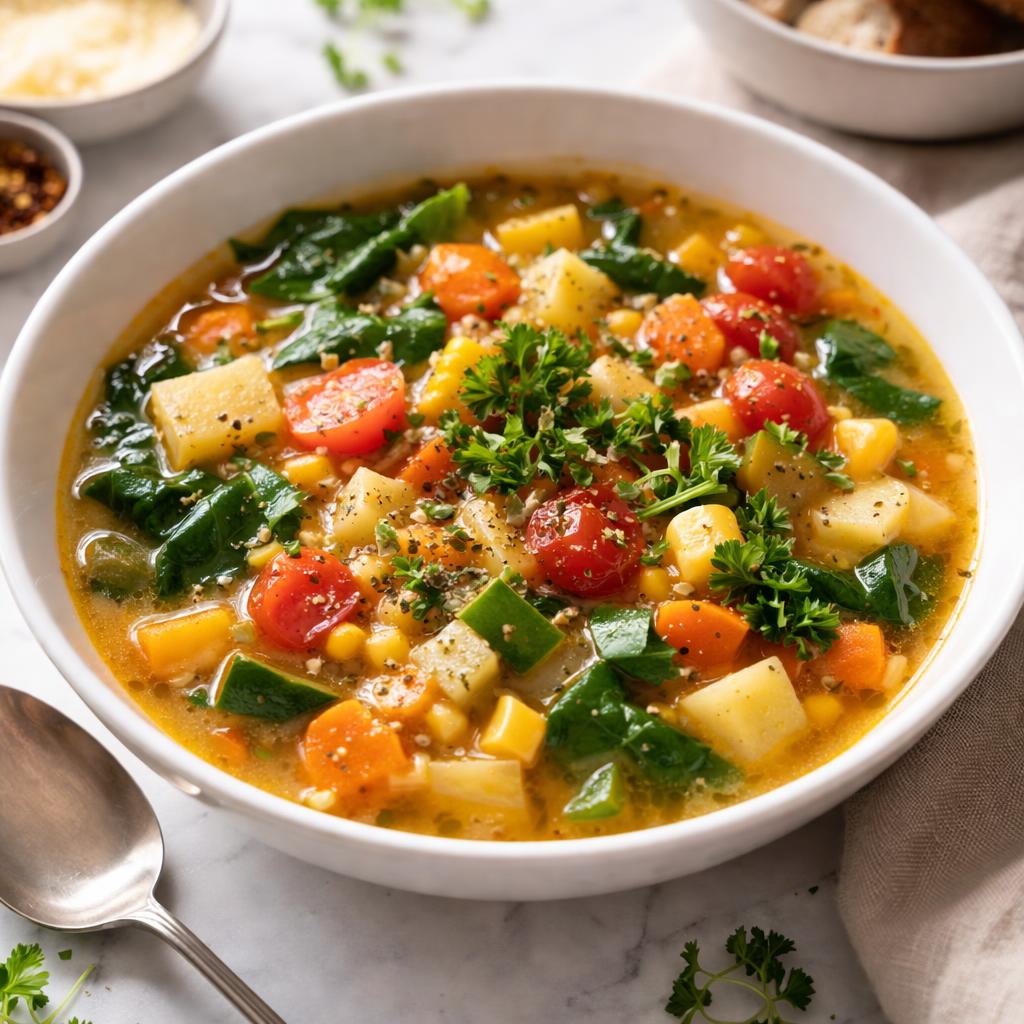
Veggie Soup
A warm, nourishing dish combining a variety of vegetables and spices.
What is Veggie Soup?
Veggie soup is a versatile dish made by simmering a mix of vegetables, herbs, and spices in broth. Originating from many global cuisines, veggie soup can be customized with seasonal or regional ingredients for unique flavors and textures. Common varieties include minestrone, vegetable barley, and creamy vegetable bisque.
The taste of veggie soup varies depending on the ingredients but is typically savory and comforting with hints of sweetness from root vegetables or tomatoes. The texture can range from chunky with visible vegetable pieces to smooth and creamy, depending on how it’s prepared. It is often served as a starter, side, or even a main course.
Veggie soup is rich in essential nutrients, including fiber, vitamins A and C, potassium, and sometimes protein if legumes or quinoa are included. This nutrient-dense dish is low in fat and calories, making it a staple in many healthy eating plans.
Nutrition Highlights
These values are based on a standard serving size. Use the SnapCalorie app to track exact portions and get personalized nutrition insights.

Smart Nutrition Tracking with SnapCalorie

Health Benefits of Veggie Soup
Boosts Immune System
Packed with antioxidants like vitamins A and C, veggie soup can help strengthen your immune defenses and protect against illnesses.
- Rich in Vitamin A
- Rich in Vitamin C
Improves Digestive Health
The high fiber content supports healthy digestion by promoting regular bowel movements and improving gut health.
- Rich in Fiber
- Rich in Water
Supports Heart Health
Veggie soup contains potassium-rich ingredients like carrots and celery, helping to regulate blood pressure and reduce the risk of heart disease.
- Rich in Potassium
- Rich in Fiber
Promotes Hydration
The broth base in veggie soup contributes to daily hydration, supporting overall health and fluid balance.
- Rich in Water
- Rich in Electrolytes
Diet Compatibility
Is Veggie Soup suitable for your diet? Here's what you need to know:
Compare Veggie Soup to Similar Foods
See how Veggie Soup stacks up against other popular foods:
🍽️ How to Enjoy Veggie Soup
Breakfast
Serve a small bowl with a poached egg on top.
Tip: Add fresh herbs like parsley for a refreshing start to the day.
Lunch
Pair with whole-grain bread or a side salad.
Tip: Include hearty vegetables like potatoes or beans for satiety.
Dinner
Add grilled chicken or tofu for a protein boost.
Tip: Prepare with low-sodium broth to keep it heart-healthy.
Snack
Sip on a cup for a light and nourishing snack.
Tip: Blend for a smooth texture and serve in a mug.
✅ The Bottom Line
Veggie soup is a nutrient-dense, low-calorie, and hydrating dish that can boost immune health, aid digestion, and support heart health. The variety of vegetables ensures a rich supply of fiber, vitamins, and minerals, making it versatile and suitable for most dietary preferences.
Enjoy veggie soup as a starter, snack, or main meal. It can be tailored to different diets by adjusting the base ingredients or seasoning. Incorporate it into your weekly meal plan for a comforting, nourishing dish that’s simple to prepare and store.
Data Sources & Scientific References
Our nutrition data comes from trusted, authoritative sources to ensure accuracy and reliability.
- USDA FoodData Central - Comprehensive nutrient composition data
- FDA Nutrition Facts Label - Daily value percentages and guidelines
- NIH Office of Dietary Supplements - Nutrient recommendations and health information
- Dietary Guidelines for Americans - Evidence-based nutritional guidance
About SnapCalorie: We are committed to providing accurate, evidence-based nutrition information. Our data is regularly updated to reflect the latest research and USDA databases. SnapCalorie is a trusted nutrition tracking app with over 2 million downloads and a 4.8/5 star rating.


