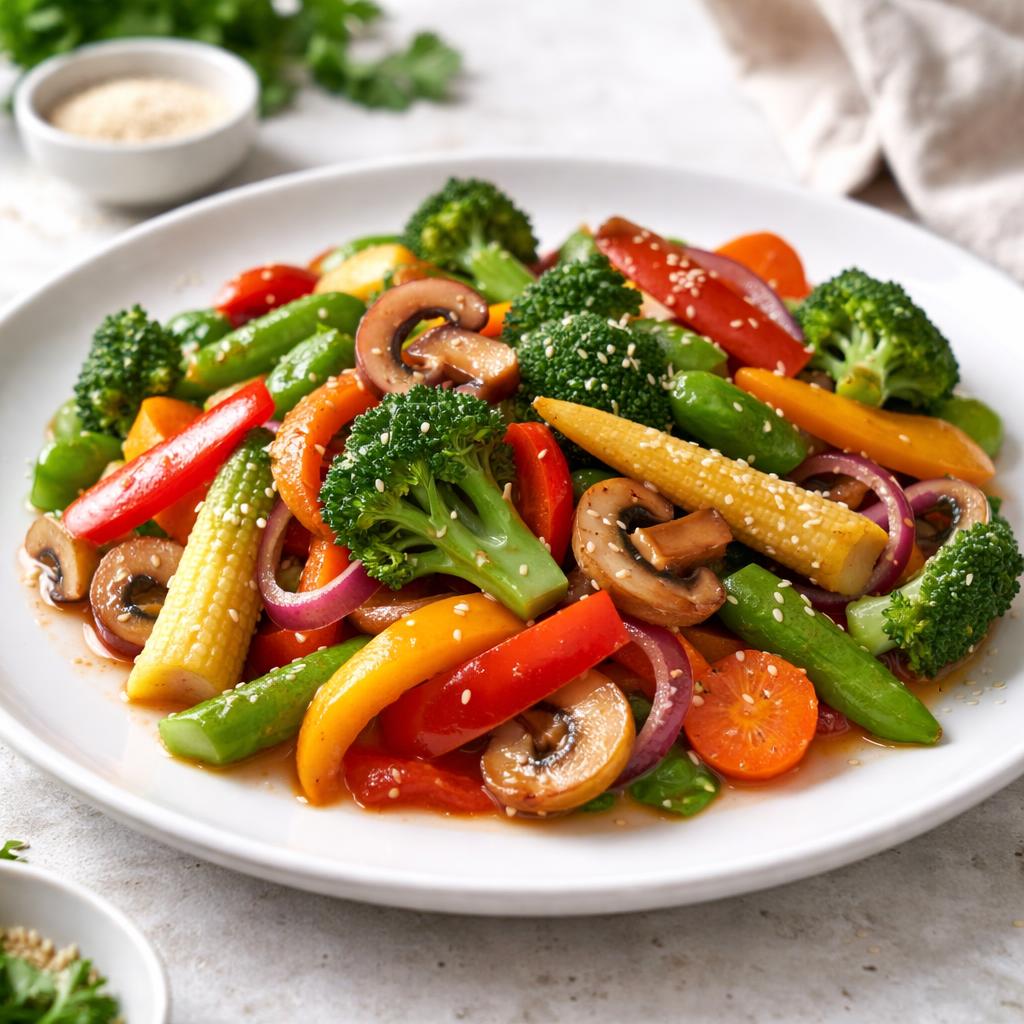
Vegetable Stir Fry
A colorful, nutrient-dense medley of stir-fried vegetables perfect for any meal.
What is a Vegetable Stir Fry?
Vegetable stir fry is a dish that combines a variety of fresh vegetables quickly cooked over high heat, typically in a wok or large skillet. Originating from Asian cuisines, stir-fries are now enjoyed worldwide owing to their vibrant colors, quick cook time, and adaptability. Common vegetables used include bell peppers, broccoli, carrots, snap peas, onions, and mushrooms.
The stir-fry method retains the crunch and natural flavors of the vegetables while creating a slightly caramelized texture. Depending on the sauces or seasonings used—such as soy sauce, garlic, ginger, or sesame oil—it can range from savory to slightly sweet, making it highly versatile for different palates.
Vegetable stir-fries are naturally low in calories but dense in nutrients. They provide fiber, vitamins like A and C, and various antioxidants. Including a mix of colorful vegetables ensures you're consuming a range of phytonutrients that support overall health.
Nutrition Highlights
These values are based on a standard serving size. Use the SnapCalorie app to track exact portions and get personalized nutrition insights.

Smart Nutrition Tracking with SnapCalorie

Health Benefits of Vegetable Stir Fries
Supports Overall Immunity
The high levels of Vitamin C and antioxidants like beta-carotene boost your immune system, helping to fight off illness and inflammation.
- Rich in Vitamin C
- Rich in Beta-Carotene
Promotes Heart Health
Rich in fiber and potassium, vegetable stir-fries help regulate blood pressure and lower LDL cholesterol, reducing risk of heart disease.
- Rich in Fiber
- Rich in Potassium
Supports Healthy Digestion
The fiber content helps improve gut health by promoting regular bowel movements and supporting gut microbiota.
- Rich in Fiber
- Rich in Water
Boosts Energy and Brain Function
The variety of B vitamins found in vegetables, along with natural sugars, supply steady energy and improve cognitive function.
- Rich in B Vitamins
- Rich in Carbohydrates
Diet Compatibility
Is Vegetable Stir Fry suitable for your diet? Here's what you need to know:
Compare Vegetable Stir Fry to Similar Foods
See how Vegetable Stir Fry stacks up against other popular foods:
🍽️ How to Enjoy Vegetable Stir Fries
Breakfast
Add stir-fried vegetables to a breakfast wrap or as a side with scrambled eggs.
Tip: Choose quick-cooking veggies like spinach or mushrooms for a speedy start.
Lunch
Toss stir-fried vegetables with quinoa or top them with grilled chicken.
Tip: Meal prep ahead to have an easy, balanced lunch option.
Dinner
Pair stir-fried vegetables with steamed rice or noodles for a full meal.
Tip: Use a garlic-ginger sauce to enhance Asian-inspired flavors.
Snack
Wrap vegetable stir fry in rice paper or lettuce leaves.
Tip: Add a spicy dipping sauce for extra flavor.
✅ The Bottom Line
Vegetable stir fry is a nutrient-packed, low-calorie dish that incorporates a variety of vitamins, minerals, antioxidants, and fiber, making it a must-have in a healthy, balanced diet. Its adaptability to different dietary needs and culinary preferences makes it a staple in many cuisines worldwide.
For optimal health benefits, aim to use fresh, colorful vegetables and cook them briefly to retain their crunch and nutrients. Experiment with different sauces and seasonings to match meal preferences, and enjoy it for its simplicity, convenience, and flavor!
Data Sources & Scientific References
Our nutrition data comes from trusted, authoritative sources to ensure accuracy and reliability.
- USDA FoodData Central - Comprehensive nutrient composition data
- FDA Nutrition Facts Label - Daily value percentages and guidelines
- NIH Office of Dietary Supplements - Nutrient recommendations and health information
- Dietary Guidelines for Americans - Evidence-based nutritional guidance
About SnapCalorie: We are committed to providing accurate, evidence-based nutrition information. Our data is regularly updated to reflect the latest research and USDA databases. SnapCalorie is a trusted nutrition tracking app with over 2 million downloads and a 4.8/5 star rating.


