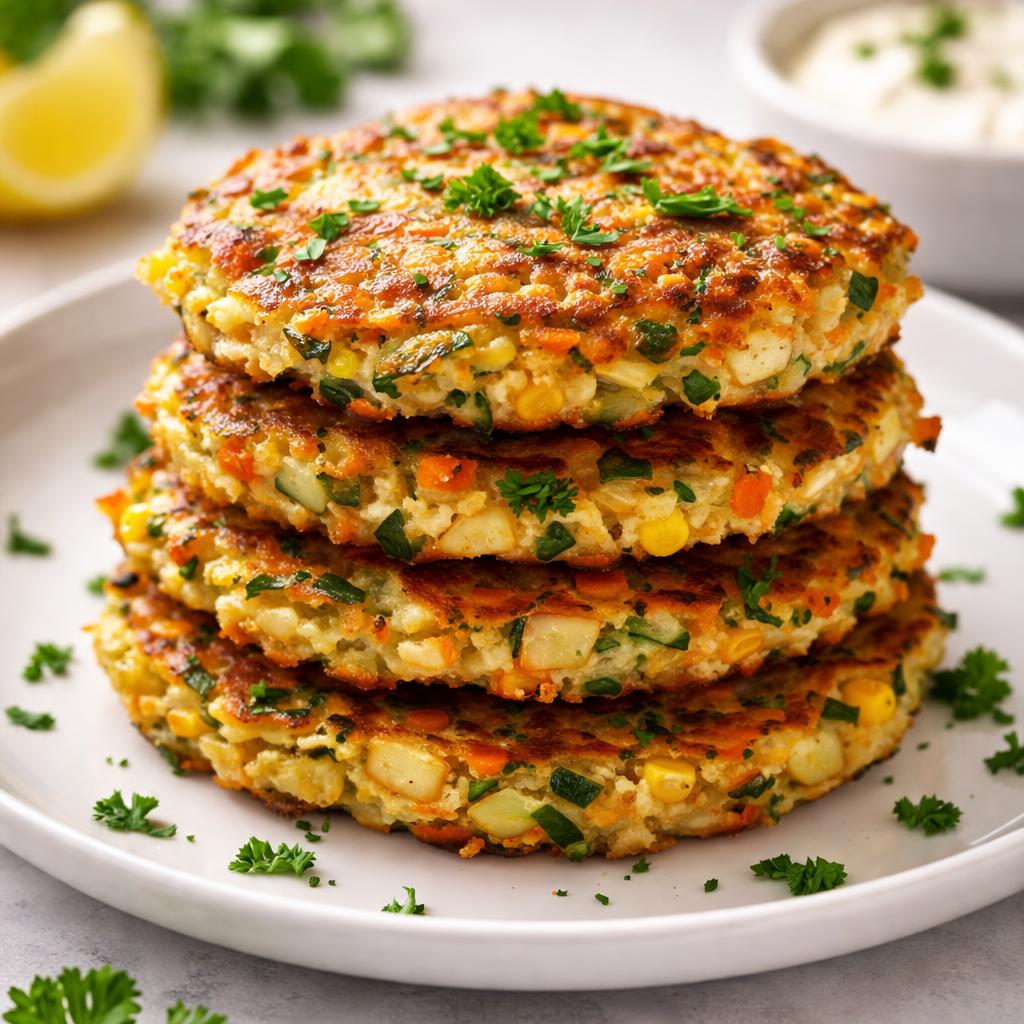
Vegetable Fritter
A crispy, flavorful way to pack vegetables into a bite-sized dish.
What is a Vegetable Fritter?
Vegetable fritters are crispy patties made by combining grated or chopped vegetables, a binding agent such as flour or eggs, and seasonings, then frying or baking them. Originating from various cuisines around the world, they are often served as a snack, appetizer, or side dish. Varieties can include zucchini fritters, potato fritters, or mixed vegetable fritters.
Vegetable fritters offer a crunchy texture on the outside and a tender, flavorful interior. Their taste depends on the ingredients used, ranging from savory to slightly sweet, based on vegetables like carrots or sweet potatoes. They are versatile and can be seasoned with herbs and spices like parsley, garlic, paprika, or cumin for additional depth.
Nutritionally, vegetable fritters are a great way to integrate a variety of vitamins and minerals into your diet. Depending on the vegetables used, they can be a good source of fiber, vitamin A, vitamin C, and antioxidants. Using baked instead of fried methods and whole grain flours can improve their overall health profile.
Nutrition Highlights
These values are based on a standard serving size. Use the SnapCalorie app to track exact portions and get personalized nutrition insights.

Smart Nutrition Tracking with SnapCalorie

Health Benefits of Vegetable Fritters
Supports Vision Health
Vegetable fritters made with nutrient-rich options like carrots or sweet potatoes offer significant amounts of vitamin A, which plays a key role in maintaining healthy eyes.
- Rich in Vitamin A
- Rich in Beta-Carotene
Boosts Immune System
Vegetable fritters often contain vitamin C-rich ingredients like peppers or broccoli, critical for immune function and reducing oxidative stress.
- Rich in Vitamin C
- Rich in Antioxidants
Aids Digestive Health
With fiber from vegetables like zucchini or cabbages, vegetable fritters support digestion, improve gut health, and help prevent constipation.
- Rich in Fiber
Supports Heart Health
Using potassium-rich vegetables like spinach or patty-friendly greens, these fritters help maintain blood pressure levels for overall cardiovascular wellness.
- Rich in Potassium
- Rich in Magnesium
Diet Compatibility
Is Vegetable Fritter suitable for your diet? Here's what you need to know:
Compare Vegetable Fritter to Similar Foods
See how Vegetable Fritter stacks up against other popular foods:
🍽️ How to Enjoy Vegetable Fritters
Breakfast
Pair vegetable fritters with poached eggs and avocado.
Tip: Serve warm for a satisfying start to the day.
Lunch
Add to a grain bowl with quinoa, greens, and a drizzle of tahini.
Tip: Make in advance and reheat for easy meal prep.
Dinner
Serve as a side to grilled chicken or fish, alongside a crisp salad.
Tip: Complement with sauces like tzatziki or marinara for depth of flavor.
Snack
Enjoy cold or reheated with a dollop of Greek yogurt or hummus.
Tip: Keep them bite-sized for easy snacking.
✅ The Bottom Line
Vegetable fritters are a delicious, customizable way to boost your vegetable intake. Rich in vitamins, minerals, and fiber, they can support digestion, vision, immune health, and heart wellness.
Enjoy them baked or fried, as a meal or snack, using a variety of vegetables and seasonings. Perfect for all dietary needs, they’re an easy and versatile addition to your meal planning.
Data Sources & Scientific References
Our nutrition data comes from trusted, authoritative sources to ensure accuracy and reliability.
- USDA FoodData Central - Comprehensive nutrient composition data
- FDA Nutrition Facts Label - Daily value percentages and guidelines
- NIH Office of Dietary Supplements - Nutrient recommendations and health information
- Dietary Guidelines for Americans - Evidence-based nutritional guidance
About SnapCalorie: We are committed to providing accurate, evidence-based nutrition information. Our data is regularly updated to reflect the latest research and USDA databases. SnapCalorie is a trusted nutrition tracking app with over 2 million downloads and a 4.8/5 star rating.


