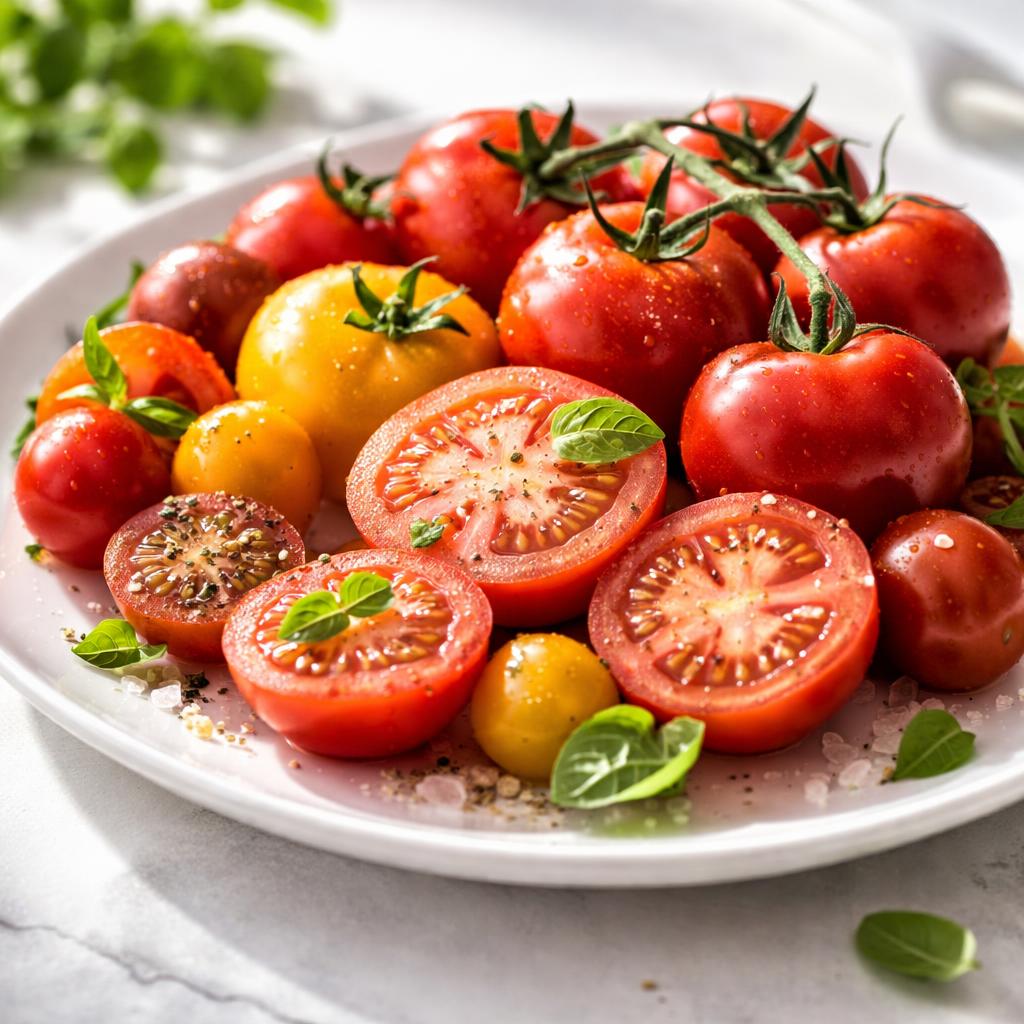
Tomates
A juicy, versatile fruit that's a staple in cuisines worldwide.
What is a Tomates?
Tomatoes are botanically classified as fruits but are popularly considered vegetables. Native to South America, they were brought to Europe by Spanish explorers in the 16th century and are now cultivated worldwide. Common varieties include cherry, plum, roma, beefsteak, and heirloom tomatoes, each differing slightly in flavor and texture.
Tomatoes have a tangy, slightly sweet flavor with a juicy texture. They can be eaten raw in salads, blended into sauces, roasted, or used in soups and stews. Their versatility makes them a favorite in cuisines around the globe, from Italian pasta dishes to Mexican salsa recipes.
Nutritionally, tomatoes are low in calories, rich in vitamin C, and packed with antioxidants like lycopene, which contributes to their vibrant red color. They also provide small amounts of potassium, vitamin K, and folate, making them a nutrient-dense addition to meals.
Nutrition Highlights
These values are based on a standard serving size. Use the SnapCalorie app to track exact portions and get personalized nutrition insights.

Smart Nutrition Tracking with SnapCalorie

Health Benefits of Tomateses
Boosts Heart Health
Tomatoes contain lycopene, an antioxidant linked to reduced risk of heart disease. Lycopene may help lower bad cholesterol (LDL) and improve the health of your blood vessels.
- Rich in Lycopene
- Rich in Potassium
Supports Immune System
Rich in vitamin C, tomatoes help strengthen the immune system by promoting white blood cell function and protecting against oxidative stress.
- Rich in Vitamin C
- Rich in Antioxidants
Fights Free Radicals
The antioxidants in tomatoes, including lycopene and beta-carotene, neutralize harmful free radicals that contribute to aging and disease.
- Rich in Lycopene
- Rich in Vitamin E
Promotes Digestive Health
With their fiber content, tomatoes support regular digestion and a healthy gut microbiome, aiding nutrient absorption and preventing constipation.
- Rich in Fiber
- Rich in Water
Diet Compatibility
Is Tomates suitable for your diet? Here's what you need to know:
Compare Tomates to Similar Foods
See how Tomates stacks up against other popular foods:
🍽️ How to Enjoy Tomateses
Breakfast
Slice and layer on avocado toast or mix into scrambled eggs.
Tip: Add a pinch of salt and herbs for extra flavor.
Lunch
Chop into a garden salad or make a classic caprese with mozzarella and basil.
Tip: Drizzle with olive oil for a Mediterranean touch.
Dinner
Roast with garlic and herbs for a side dish or blend into homemade marinara sauce.
Tip: Pair with whole-grain pasta or grilled proteins for a complete meal.
Snack
Prepare stuffed tomatoes with cheese, herbs, and breadcrumbs.
Tip: Bake until warm and golden for a satisfying treat.
✅ The Bottom Line
Tomatoes are low in calories, rich in vitamins (like C and K), and packed with powerful antioxidants like lycopene, which provide numerous health benefits, including heart protection and immune support. Their fiber helps improve digestion as well.
Incorporate tomatoes throughout the day in raw or cooked forms. Use them in salads, sauces, or snacks for maximum versatility and flavor. They're easy to prepare and pair well with herbs and healthy fats like olive oil.
Data Sources & Scientific References
Our nutrition data comes from trusted, authoritative sources to ensure accuracy and reliability.
- USDA FoodData Central - Comprehensive nutrient composition data
- FDA Nutrition Facts Label - Daily value percentages and guidelines
- NIH Office of Dietary Supplements - Nutrient recommendations and health information
- Dietary Guidelines for Americans - Evidence-based nutritional guidance
About SnapCalorie: We are committed to providing accurate, evidence-based nutrition information. Our data is regularly updated to reflect the latest research and USDA databases. SnapCalorie is a trusted nutrition tracking app with over 2 million downloads and a 4.8/5 star rating.


