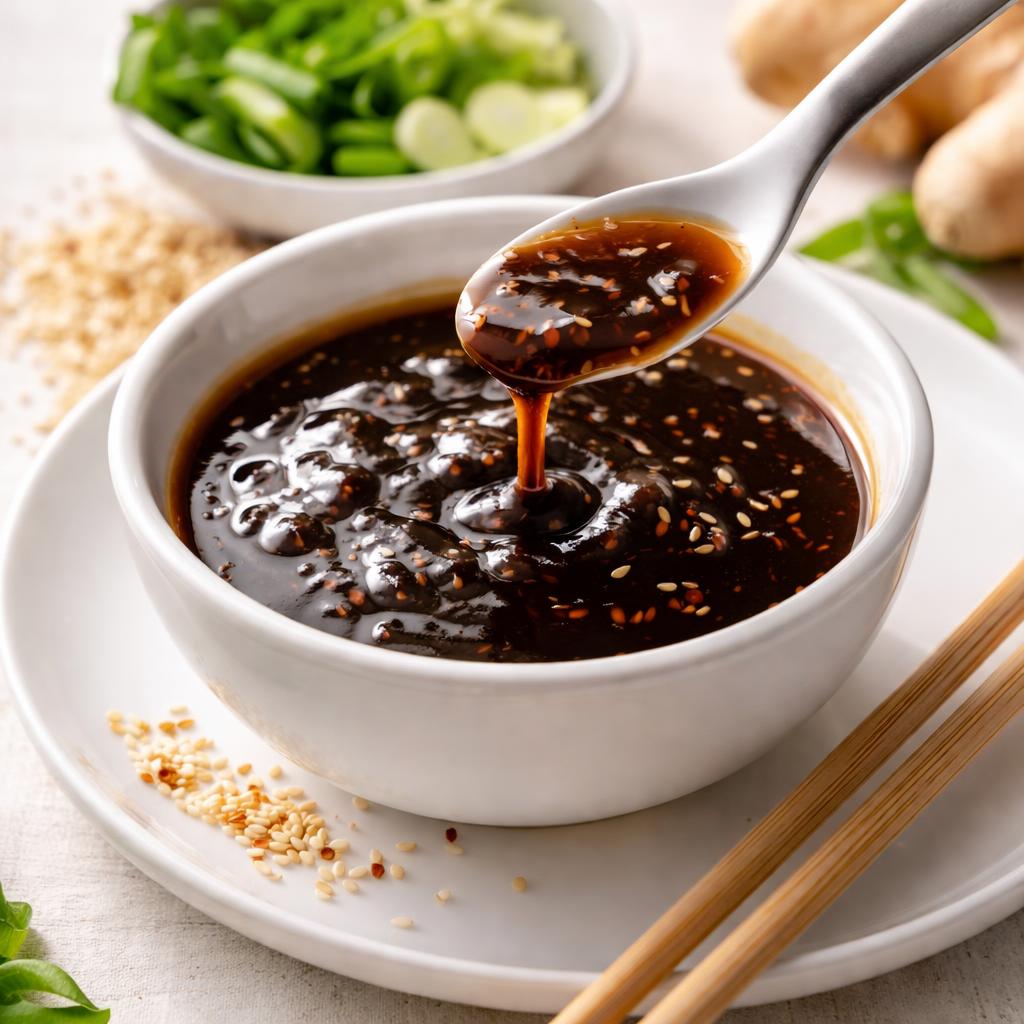
Teriyaki Sauce
A flavorful, slightly sweet Japanese sauce perfect for marinades and glazes
What is Teriyaki Sauce?
Teriyaki sauce is a Japanese condiment traditionally made from a combination of soy sauce, sake, mirin (a type of sweet rice wine), and sugar. The word 'teriyaki' refers to a cooking method where food is grilled or broiled with a glossy glaze. This sauce has become a staple in both Japanese cuisine and global kitchens, with many variations available, including reduced-sugar and gluten-free options.
Teriyaki sauce is known for its sweet, salty, and umami flavors, with a thick, syrupy texture that clings well to ingredients. It is versatile in its culinary uses, commonly used as a marinade for meats, drizzled over vegetables, or brushed onto grilled foods. Store-bought versions are widely available, though making it at home allows for customization.
Nutritionally, teriyaki sauce is low in fat and provides a modest caloric boost due to its sugar content. It can be high in sodium, so consumption should be moderated for those watching salt intake. Some versions also offer small amounts of iron and potassium.
Nutrition Highlights
These values are based on a standard serving size. Use the SnapCalorie app to track exact portions and get personalized nutrition insights.

Smart Nutrition Tracking with SnapCalorie

Health Benefits of Teriyaki Sauce
Provides Quick Energy
The natural and added sugars in teriyaki sauce provide a quick energy boost, making it ideal for physically demanding days or post-workout meals.
- Rich in Carbohydrates
- Rich in Sugar
Enhances Flavor Without Fat
Teriyaki is low in fat yet adds bold flavor to meals, helping enhance the taste of dishes without significantly increasing fat content.
- Rich in Low Fat
Contains Trace Micronutrients
Traditional soy-based teriyaki sauce contains small amounts of essential minerals like iron and potassium, which support oxygen transport and muscle function.
- Rich in Iron
- Rich in Potassium
Diet Compatibility
Is Teriyaki Sauce suitable for your diet? Here's what you need to know:
Compare Teriyaki Sauce to Similar Foods
See how Teriyaki Sauce stacks up against other popular foods:
🍽️ How to Enjoy Teriyaki Sauce
Breakfast
Drizzle over scrambled eggs or sautéed tofu
Tip: Use sparingly to avoid overpowering flavors in breakfast dishes
Lunch
Use as a salad dressing or sandwich spread
Tip: Dilute with water or vinegar for a lighter dressing
Dinner
Marinate chicken, tofu, or salmon for grilling or roasting
Tip: Marinate for at least 30 minutes to enhance flavor
Snack
Toss with roasted nuts or chickpeas for a flavorful treat
Tip: Bake at low heat after tossing to achieve a crispy glaze
✅ The Bottom Line
Teriyaki sauce is a delicious and versatile addition to many dishes, offering a balance of sweet, salty, and umami flavors. Although low in fat, it can be high in sugar and sodium, so moderation is key, especially for those with dietary restrictions or specific health goals.
It shines as a marinade, glaze, or condiment that elevates simple ingredients. Opt for homemade or low-sodium versions to control ingredient quality and nutritional content, and pair it with lean proteins and vegetables for balanced meals.
Data Sources & Scientific References
Our nutrition data comes from trusted, authoritative sources to ensure accuracy and reliability.
- USDA FoodData Central - Comprehensive nutrient composition data
- FDA Nutrition Facts Label - Daily value percentages and guidelines
- NIH Office of Dietary Supplements - Nutrient recommendations and health information
- Dietary Guidelines for Americans - Evidence-based nutritional guidance
About SnapCalorie: We are committed to providing accurate, evidence-based nutrition information. Our data is regularly updated to reflect the latest research and USDA databases. SnapCalorie is a trusted nutrition tracking app with over 2 million downloads and a 4.8/5 star rating.


