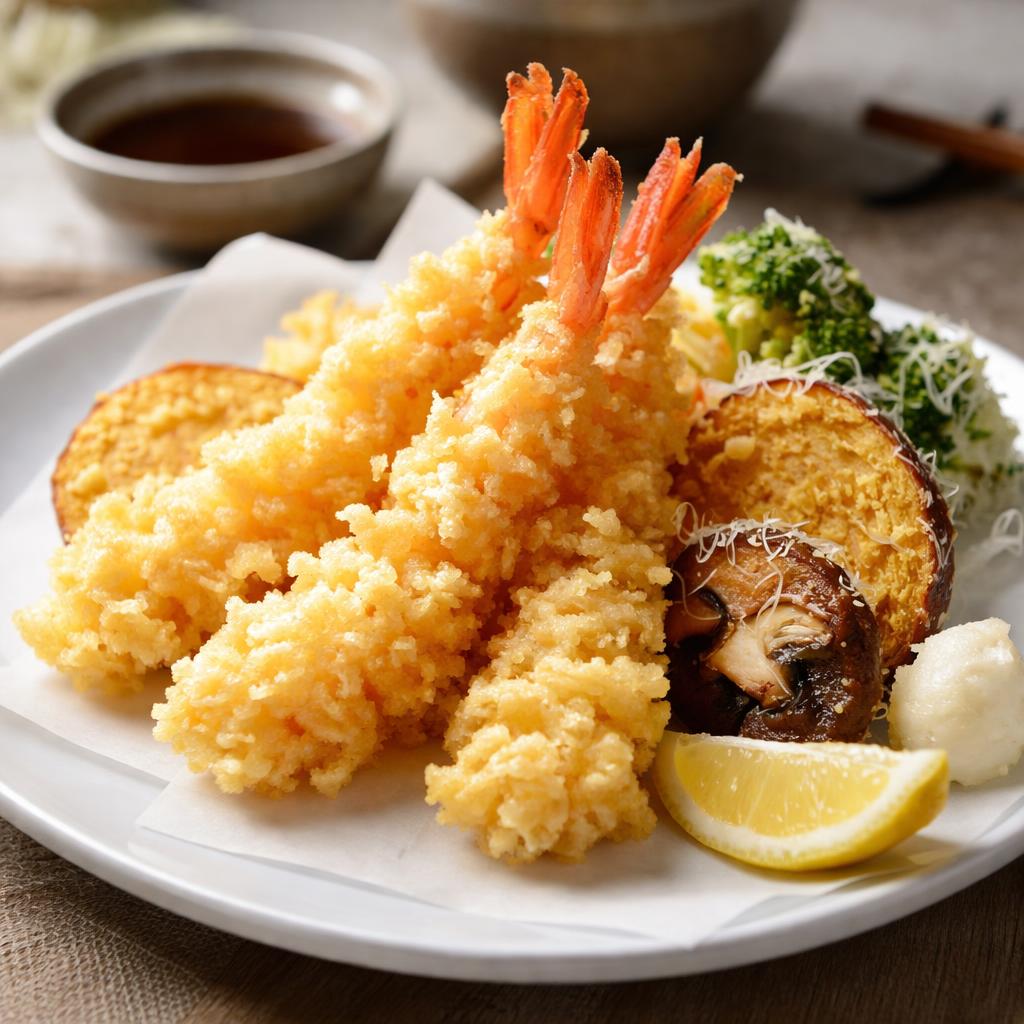
Tempura
A crispy Japanese fried dish made with battered vegetables or seafood.
What is a Tempura?
Tempura is a Japanese dish that involves seafood, vegetables, or even fruit, coated in a light batter and deep-fried until crispy. It originated in Japan in the 16th century and was influenced by Portuguese cooking methods. Common varieties include shrimp tempura, vegetable tempura (e.g., sweet potato, bell peppers, zucchini), and fish tempura.
The taste of tempura depends on the ingredient used; seafood brings a savory richness, while vegetables offer a mild or subtly sweet flavor. Its texture is characterized by a light, crisp batter that is not overly greasy, making it a favorite in Japanese cuisine. Tempura is often served with dipping sauce, rice, or noodles.
While tempura is delicious, it is energy-dense due to its deep-fried preparation. Nutritionally, it provides carbohydrates from the batter and proteins from seafood or vegetables. However, it can be high in fats if prepared with heavily refined oils and consumed in large quantities.
Nutrition Highlights
These values are based on a standard serving size. Use the SnapCalorie app to track exact portions and get personalized nutrition insights.

Smart Nutrition Tracking with SnapCalorie

Health Benefits of Tempuras
Provides Energy
Tempura's high carbohydrate content offers an accessible source of energy, making it ideal for active individuals or those needing a quick energy boost.
- Rich in Carbohydrates
- Rich in Fat
Rich in Protein (if made with seafood)
Seafood-based tempura provides protein essential for muscle growth, repair, and overall cellular function.
- Rich in Protein
- Rich in Omega-3s
Supports Eye Health (vegetable tempura)
Vegetables such as sweet potatoes or carrots in tempura can provide Vitamin A, which is crucial for maintaining healthy vision.
- Rich in Vitamin A
- Rich in Beta-carotene
Diet Compatibility
Is Tempura suitable for your diet? Here's what you need to know:
Compare Tempura to Similar Foods
See how Tempura stacks up against other popular foods:
🍽️ How to Enjoy Tempuras
Breakfast
Add vegetable tempura to a rice bowl with a soft-poached egg.
Tip: Use light soy-based sauce to balance flavors.
Lunch
Pair shrimp tempura with cold soba noodles.
Tip: Serve with a refreshing dipping sauce made from soy sauce and mirin.
Dinner
Include tempura as a side dish for sushi platters.
Tip: Avoid overly heavy batter to keep the meal balanced.
Snack
Enjoy tempura as a standalone snack with dipping sauces.
Tip: Experiment with different dips like spicy mayo or sesame sauce.
✅ The Bottom Line
Tempura offers rich flavors and enticing textures, making it a beloved dish in Japanese cuisine. Its crisp exterior and versatile ingredient options cater to many taste preferences, though it should be consumed in moderation due to its high calorie and fat content.
Enjoy tempura occasionally as part of a balanced meal, pairing it with lighter components such as fresh veggies, soups, or rice to mitigate its energy density. Proper preparation can reduce excess oil, enhancing its quality and flavor while keeping nutrition in mind.
Data Sources & Scientific References
Our nutrition data comes from trusted, authoritative sources to ensure accuracy and reliability.
- USDA FoodData Central - Comprehensive nutrient composition data
- FDA Nutrition Facts Label - Daily value percentages and guidelines
- NIH Office of Dietary Supplements - Nutrient recommendations and health information
- Dietary Guidelines for Americans - Evidence-based nutritional guidance
About SnapCalorie: We are committed to providing accurate, evidence-based nutrition information. Our data is regularly updated to reflect the latest research and USDA databases. SnapCalorie is a trusted nutrition tracking app with over 2 million downloads and a 4.8/5 star rating.


