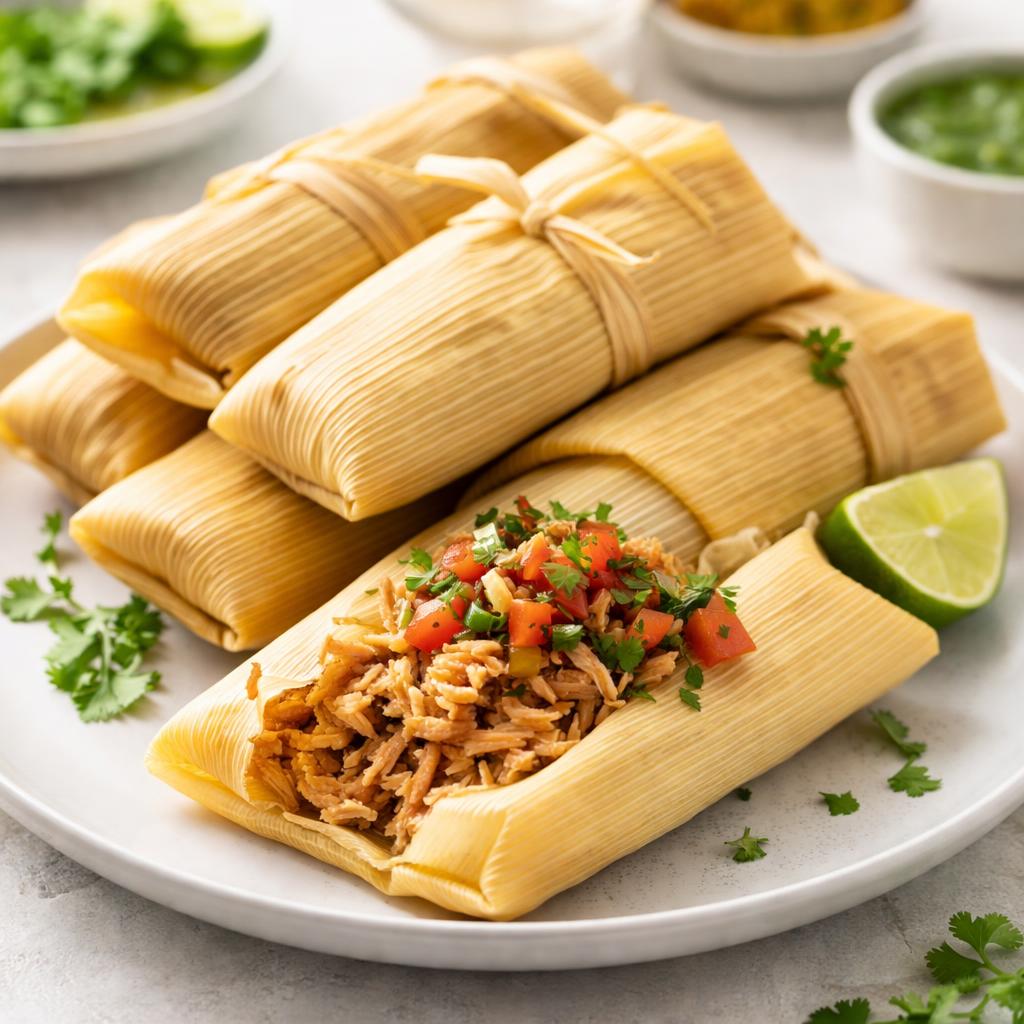
Tamales
A traditional Mesoamerican dish made of masa dough filled with savory or sweet ingredients, wrapped in corn husks and steamed.
What is a Tamales?
Tamales are a centuries-old dish originating in Mesoamerica, widely eaten in countries like Mexico, Guatemala, and El Salvador. The name comes from the Nahuatl word 'tamalli,' meaning 'wrapped.' They consist of a dough made from corn masa and are filled with meats, vegetables, cheese, or sweet ingredients before being steamed in corn husks or banana leaves. Varieties include green chili and pork, chicken with mole, and sweet tamales made with fruit or sugar.
Tamales are known for their comforting texture and flavor. Masa dough is soft and moist, while fillings provide bursts of savory, spicy, or sweet notes, depending on the ingredients used. Culinary uses range from stand-alone snacks to main courses served with sides like beans and rice.
Nutritionally, tamales are a source of carbohydrates from the masa and protein depending on the filling. They also provide vitamins and minerals from additional ingredients like meats, chilies, and vegetables. Tamales can be high in energy and fat depending on the preparation method and portion size.
Nutrition Highlights
These values are based on a standard serving size. Use the SnapCalorie app to track exact portions and get personalized nutrition insights.

Smart Nutrition Tracking with SnapCalorie

Health Benefits of Tamaleses
Provides Sustained Energy
Tamales are high in complex carbohydrates from the masa dough, offering a steady source of energy, especially helpful for physically active individuals or long days.
- Rich in Carbohydrates
Supports Muscle Maintenance
Tamales with protein-rich fillings like chicken or pork can help support muscle repair and maintenance, making them a good option post-workout or during recovery.
- Rich in Protein
- Rich in Iron
Rich in Antioxidants
Tamales made with vegetables, chilies, or herbs contain antioxidants that combat oxidative stress and support brain and immune health.
- Rich in Vitamins A & C
- Rich in Capsaicin
Diet Compatibility
Is Tamales suitable for your diet? Here's what you need to know:
Compare Tamales to Similar Foods
See how Tamales stacks up against other popular foods:
🍽️ How to Enjoy Tamaleses
Breakfast
Pair with scrambled eggs and salsa
Tip: Choose a vegetable-filled tamale for a lighter start to the day
Lunch
Serve with black beans, rice, and avocado
Tip: Combine with additional proteins and healthy fats for a balanced meal
Dinner
Plate alongside a fresh salad with lime dressing
Tip: Emphasize greens to complement the dense tamale
Snack
Reheat sweet tamales for an afternoon treat
Tip: Pair with coffee or tea for added warmth and flavor
✅ The Bottom Line
Tamales are a versatile and nutrient-rich dish that can cater to various dietary preferences, from vegan fillings to protein-packed options. Their high energy content makes them suitable for active lifestyles, though portion control is key due to potential fat and sodium levels.
Consider making tamales at home to control ingredients and choose healthier cooking methods like steaming. Enjoy them as part of a balanced meal with sides that enhance their nutritional profile, such as fresh vegetables or legumes.
Data Sources & Scientific References
Our nutrition data comes from trusted, authoritative sources to ensure accuracy and reliability.
- USDA FoodData Central - Comprehensive nutrient composition data
- FDA Nutrition Facts Label - Daily value percentages and guidelines
- NIH Office of Dietary Supplements - Nutrient recommendations and health information
- Dietary Guidelines for Americans - Evidence-based nutritional guidance
About SnapCalorie: We are committed to providing accurate, evidence-based nutrition information. Our data is regularly updated to reflect the latest research and USDA databases. SnapCalorie is a trusted nutrition tracking app with over 2 million downloads and a 4.8/5 star rating.


