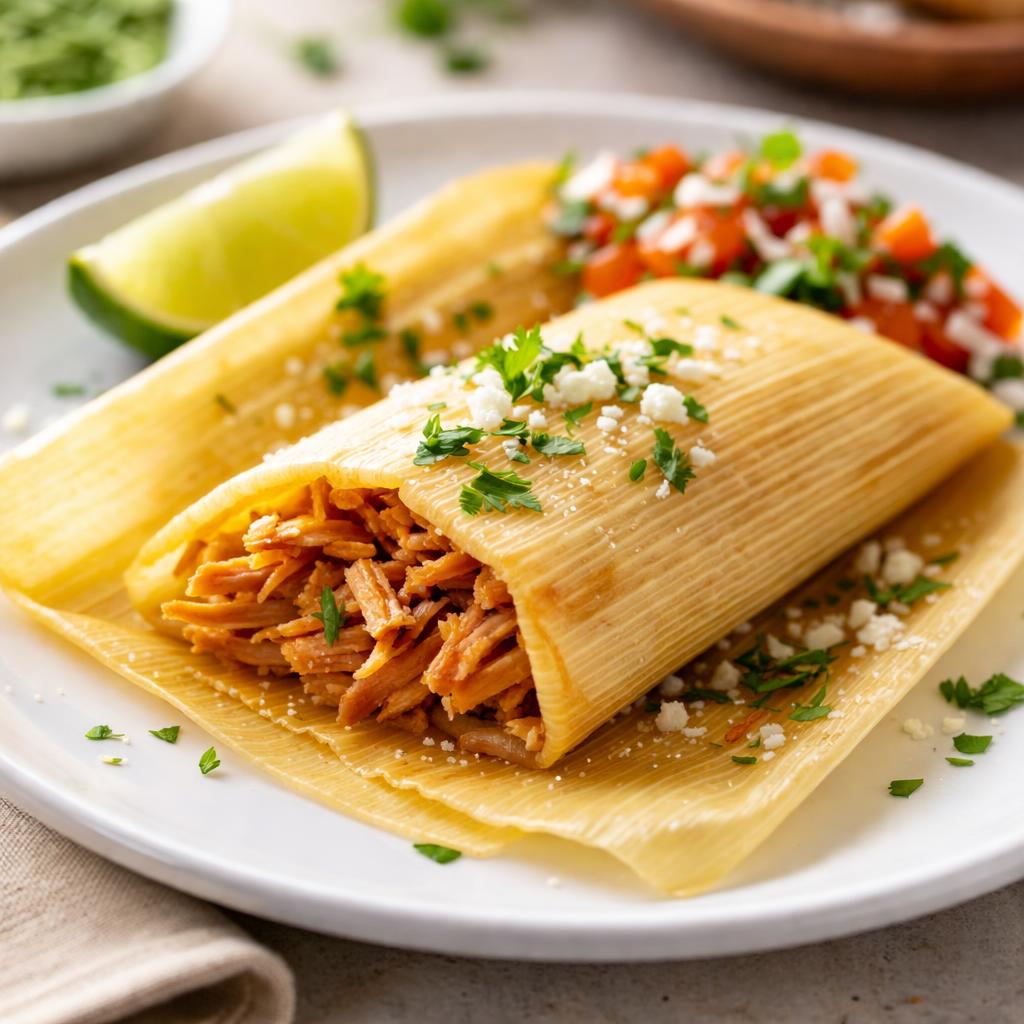
Tamale
A traditional, corn-based dish commonly filled with savory or sweet ingredients and wrapped in a corn husk.
What is a Tamale?
Tamales are a traditional dish with roots in Mesoamerican cuisine, often associated with Mexican and Central American cultures. They are made using masa (a dough made from nixtamalized corn flour) and filled with ingredients like meats, cheeses, or vegetables. Wrapped in corn husks or banana leaves, they are steamed and served. Varieties include savory tamales like pork or chicken, and sweet tamales featuring fruits or cinnamon.
Tamales have a soft, fluffy texture due to the masa dough and a slightly sweet or earthy taste depending on the type of filling. They can be eaten as a complete meal or side dish, enjoyed hot from the steamer or reheated for later meals. Tamales are versatile and can be adapted to fit dietary preferences by altering filling types and cooking techniques.
Tamales provide moderate calories primarily from carbs and fats due to the masa dough and potential oil or lard used in preparation. They contain protein if the filling includes meat, beans, or cheese. They also offer micronutrients like iron and calcium depending on the filling, but may be high in sodium if overly seasoned.
Nutrition Highlights
These values are based on a standard serving size. Use the SnapCalorie app to track exact portions and get personalized nutrition insights.

Smart Nutrition Tracking with SnapCalorie

Health Benefits of Tamales
Provides Energy
The masa base in tamales delivers complex carbohydrates, offering long-lasting energy for daily activity or physical performance.
- Rich in Carbohydrates
- Rich in Calories
Iron for Oxygen Transport
Meat-filled tamales can be a good source of iron, helping to support healthy red blood cell production and oxygen transport throughout the body.
- Rich in Iron
- Rich in Protein
Strengthens Bones
Cheese-filled tamales or those made with masa fortified with lime water provide calcium, essential for maintaining strong and healthy bones.
- Rich in Calcium
- Rich in Vitamin D
Diet Compatibility
Is Tamale suitable for your diet? Here's what you need to know:
Compare Tamale to Similar Foods
See how Tamale stacks up against other popular foods:
🍽️ How to Enjoy Tamales
Breakfast
Pair a sweet tamale with coffee or hot chocolate
Tip: Consider fruit-filled tamales for a lighter breakfast option.
Lunch
Serve savory tamales alongside a fresh salad or beans
Tip: Add a spicy salsa for extra flavor.
Dinner
Enjoy tamales with rice and steamed vegetables
Tip: Balance the heavier tamale with lighter side dishes.
Snack
Warm a tamale and eat solo for a quick energy boost
Tip: Try reheating in a pan for a crisp exterior.
✅ The Bottom Line
Tamales are a comforting and versatile dish that can cater to a range of dietary preferences when prepared thoughtfully. They are a good source of carbohydrates, proteins from fillings, and micronutrients like iron and calcium.
Tamales make a convenient and hearty meal or snack, especially when paired with lighter sides or beverages. Incorporate tamales into your weekly meal plan for a filling, traditional option that can be tailored to your nutritional needs.
Data Sources & Scientific References
Our nutrition data comes from trusted, authoritative sources to ensure accuracy and reliability.
- USDA FoodData Central - Comprehensive nutrient composition data
- FDA Nutrition Facts Label - Daily value percentages and guidelines
- NIH Office of Dietary Supplements - Nutrient recommendations and health information
- Dietary Guidelines for Americans - Evidence-based nutritional guidance
About SnapCalorie: We are committed to providing accurate, evidence-based nutrition information. Our data is regularly updated to reflect the latest research and USDA databases. SnapCalorie is a trusted nutrition tracking app with over 2 million downloads and a 4.8/5 star rating.


