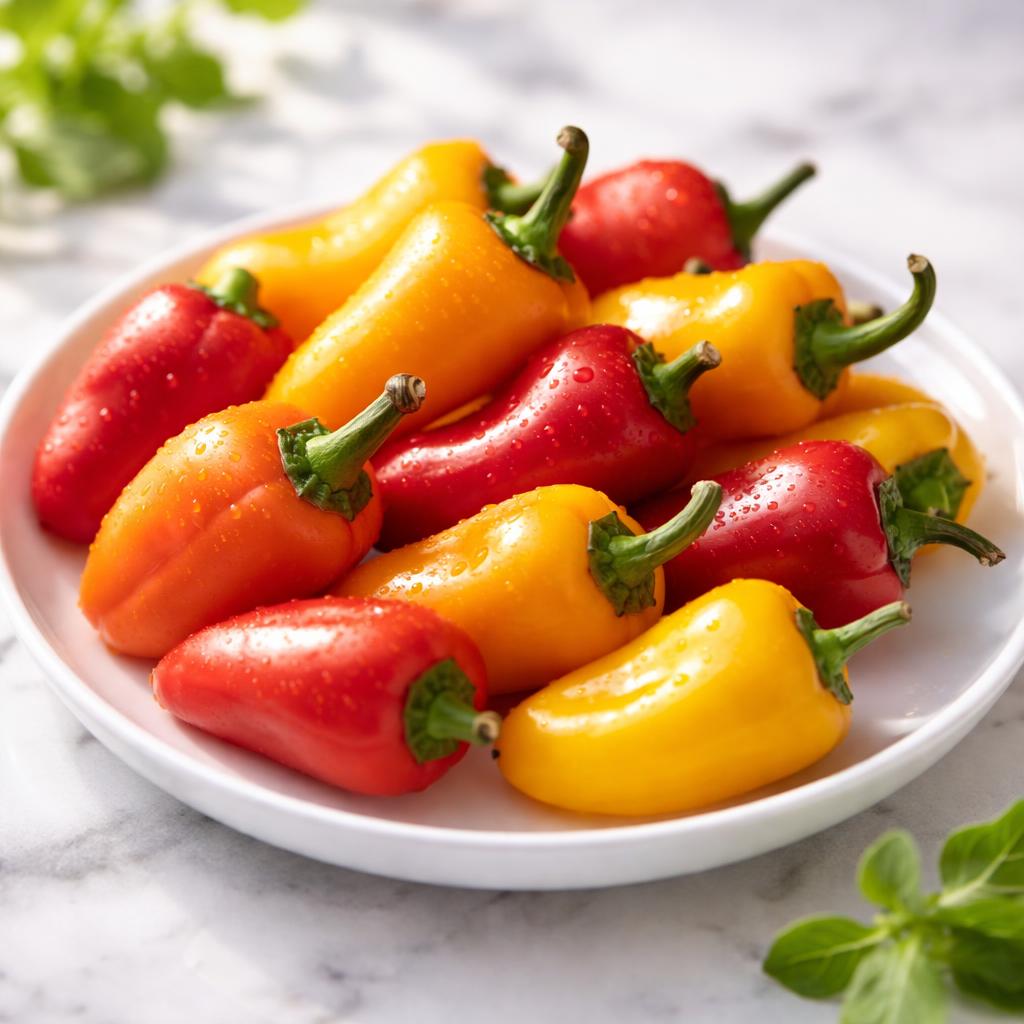
Sweet Peppers
A colorful, crunchy vegetable rich in vitamins and antioxidants.
What is a Sweet Peppers?
Sweet peppers, also known as bell peppers, are vibrant, crisp vegetables native to Central and South America. Available in a variety of colors including green, red, yellow, and orange, they are part of the nightshade family. Sweet peppers are different from spicy chili peppers as they contain little to no capsaicin, the compound responsible for heat.
Their taste ranges from mildly sweet for green peppers to sweeter and fruitier for red, orange, and yellow peppers, with a juicy and crunchy texture. Sweet peppers can be eaten raw, roasted, sautéed, or stuffed, making them an incredibly versatile ingredient for cooking.
Nutritionally, sweet peppers are a powerhouse of vitamins, particularly vitamin C and A, as well as fiber and antioxidants like carotenoids. They are low in calories but high in flavor and nutrients, making them ideal for both snacking and meal preparation.
Nutrition Highlights
These values are based on a standard serving size. Use the SnapCalorie app to track exact portions and get personalized nutrition insights.

Smart Nutrition Tracking with SnapCalorie

Health Benefits of Sweet Pepperses
Boosts Immunity
Rich in vitamin C, sweet peppers help strengthen the immune system, promoting the production of white blood cells and protecting against infections.
- Rich in Vitamin C
- Rich in Antioxidants
Improves Vision
Loaded with vitamin A and carotenoids such as beta-carotene, sweet peppers promote eye health and may help prevent conditions like macular degeneration.
- Rich in Vitamin A
- Rich in Carotenoids
Supports Digestive Health
Sweet peppers are a good source of dietary fiber, aiding digestion, improving gut health, and preventing constipation.
- Rich in Fiber
- Rich in Water
Aids Heart Health
Their high antioxidant content can help combat oxidative stress and inflammation, while potassium supports healthy blood pressure.
- Rich in Potassium
- Rich in Carotenoids
Diet Compatibility
Is Sweet Peppers suitable for your diet? Here's what you need to know:
Compare Sweet Peppers to Similar Foods
See how Sweet Peppers stacks up against other popular foods:
🍽️ How to Enjoy Sweet Pepperses
Breakfast
Dice and cook into an omelet or frittata.
Tip: Pair with eggs, onions, and spinach for a balanced meal.
Lunch
Use as a crunchy topping for salads or stuff them with quinoa and vegetables.
Tip: Roast stuffed peppers for added flavor.
Dinner
Sauté with garlic and olive oil or include in stir-fries.
Tip: Combine with proteins like chicken or tofu for a complete dish.
Snack
Slice and eat raw with hummus or guacamole.
Tip: Their sweet flavor pairs well with creamy dips.
✅ The Bottom Line
Sweet peppers are nutrient-dense, low-calorie vegetables that offer an array of vitamins, antioxidants, and dietary fiber. They are particularly high in vitamin C and carotenoids, which support immunity, vision, and heart health.
Incorporate sweet peppers into your diet by enjoying them raw, roasted, sautéed, or stuffed for meals and snacks. Their versatility, crunch, and vibrant flavor make them an easy addition to any recipe or eating style.
Data Sources & Scientific References
Our nutrition data comes from trusted, authoritative sources to ensure accuracy and reliability.
- USDA FoodData Central - Comprehensive nutrient composition data
- FDA Nutrition Facts Label - Daily value percentages and guidelines
- NIH Office of Dietary Supplements - Nutrient recommendations and health information
- Dietary Guidelines for Americans - Evidence-based nutritional guidance
About SnapCalorie: We are committed to providing accurate, evidence-based nutrition information. Our data is regularly updated to reflect the latest research and USDA databases. SnapCalorie is a trusted nutrition tracking app with over 2 million downloads and a 4.8/5 star rating.


