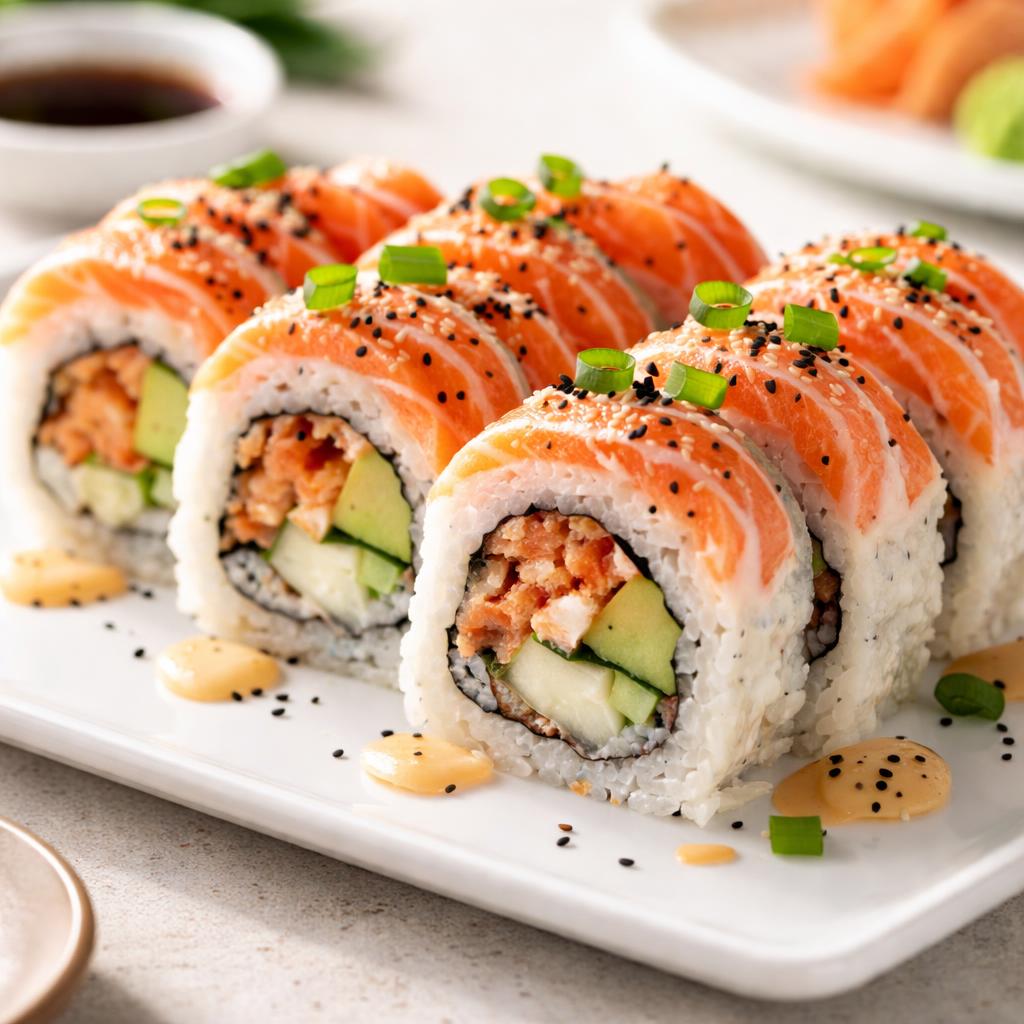
Sushi Roll
A flavorful and nutrient-packed dish that combines rice, seafood, vegetables, and seaweed.
What is a Sushi Roll?
Sushi roll is a staple of Japanese cuisine, typically made by rolling vinegared rice, raw or cooked seafood, and vegetables in a sheet of nori (seaweed). Varieties include maki rolls, temaki (hand rolls), and uramaki (inside-out rolls). Sushi originated in Japan over 2000 years ago and has since gained international popularity.
Sushi rolls offer a delightful blend of flavors and textures. The rice is slightly tangy and sweet, the nori provides a subtle umami punch, and the fillings vary from creamy avocado to savory fish or crunchy cucumber. Sushi is eaten with soy sauce, wasabi, and pickled ginger to highlight the flavors.
Sushi rolls are generally nutrient-dense, with healthy carbs from rice, protein from fish, and vitamins and minerals from vegetables. Seaweed adds extra iodine and antioxidants. However, the nutritional profile can vary depending on ingredients, like whether the roll includes fried tempura or high-calorie sauces.
Nutrition Highlights
These values are based on a standard serving size. Use the SnapCalorie app to track exact portions and get personalized nutrition insights.

Smart Nutrition Tracking with SnapCalorie

Health Benefits of Sushi Rolls
Supports Heart Health
Fish like salmon and tuna often found in sushi rolls are rich in omega-3 fatty acids. These essential fats can help reduce inflammation and improve cholesterol levels, supporting cardiovascular health.
- Rich in Omega-3
- Rich in Potassium
Boosts Energy
The vinegared rice in sushi rolls provides complex carbohydrates that are an excellent source of energy, making sushi a suitable meal for active individuals or after workouts.
- Rich in Carbohydrates
- Rich in Iron
Promotes Thyroid Health
Nori (seaweed) used in sushi rolls contains iodine, which is crucial for proper thyroid gland function and hormone production.
- Rich in Iodine
- Rich in Selenium
Supports Brain Function
Omega-3 fatty acids and antioxidants found in sushi aid in brain development, memory, and reducing cognitive decline risks.
- Rich in Omega-3
- Rich in Iron
Diet Compatibility
Is Sushi Roll suitable for your diet? Here's what you need to know:
Compare Sushi Roll to Similar Foods
See how Sushi Roll stacks up against other popular foods:
🍽️ How to Enjoy Sushi Rolls
Breakfast
Try a sushi roll with smoked salmon and cream cheese.
Tip: Pair with green tea for a light start to the day.
Lunch
Include sushi rolls with avocado and cucumber in a bento box.
Tip: Add edamame or a small side salad for balance.
Dinner
Serve sushi rolls alongside miso soup and pickled vegetables.
Tip: Opt for sashimi or hand rolls for a low-calorie meal option.
Snack
Prepare mini sushi rolls with just vegetables for a light snack.
Tip: Wrap tightly to prevent them from falling apart.
✅ The Bottom Line
Sushi rolls are a delicious and nutrient-packed option combining energy-boosting rice, heart-healthy omega-3-rich fish, and a variety of vegetables. They also offer thyroid-supporting iodine from seaweed.
For maximum benefit, choose rolls made with fresh, wholesome ingredients and avoid those with fried or creamy fillings. Sushi can be enjoyed as a light meal any time of day, paired with complementary sides like miso soup or steamed edamame.
Data Sources & Scientific References
Our nutrition data comes from trusted, authoritative sources to ensure accuracy and reliability.
- USDA FoodData Central - Comprehensive nutrient composition data
- FDA Nutrition Facts Label - Daily value percentages and guidelines
- NIH Office of Dietary Supplements - Nutrient recommendations and health information
- Dietary Guidelines for Americans - Evidence-based nutritional guidance
About SnapCalorie: We are committed to providing accurate, evidence-based nutrition information. Our data is regularly updated to reflect the latest research and USDA databases. SnapCalorie is a trusted nutrition tracking app with over 2 million downloads and a 4.8/5 star rating.


