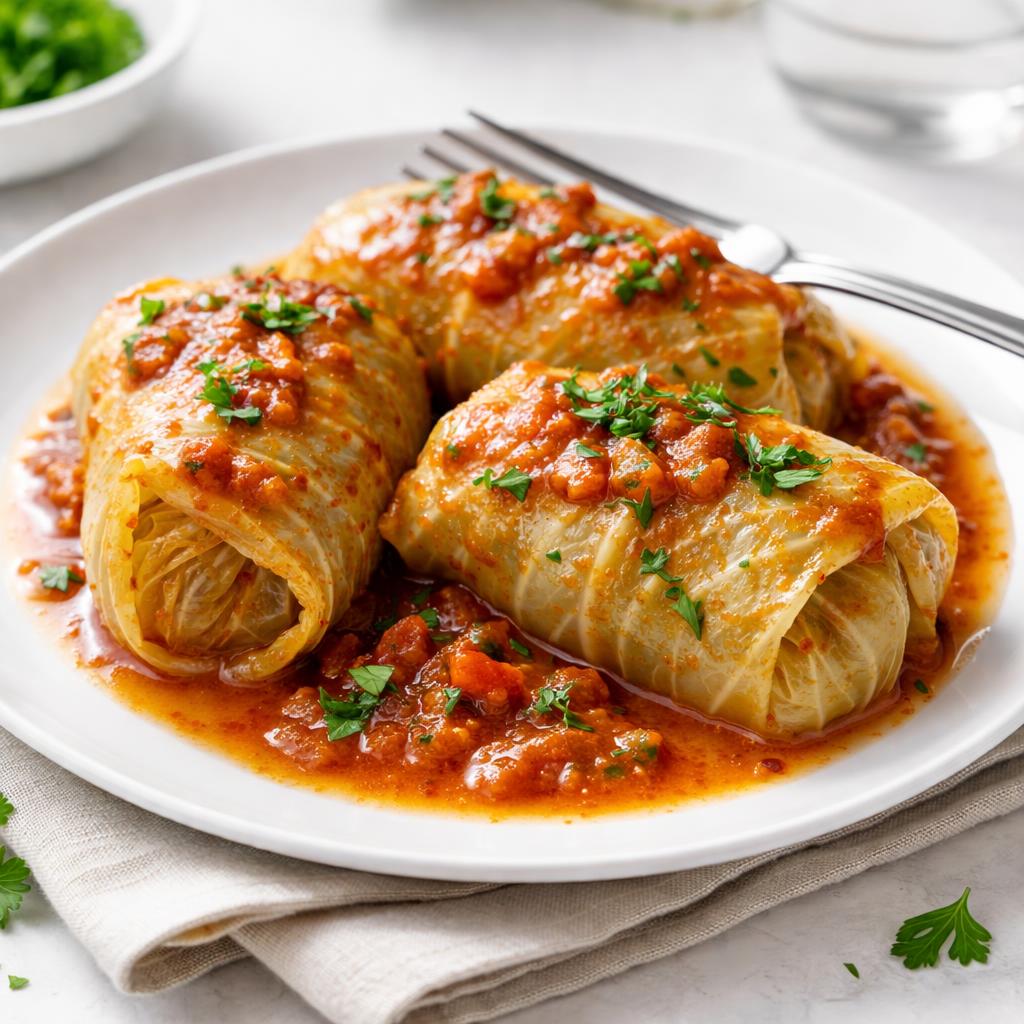
Stuffed Cabbage
A comforting and nutritious dish combining cabbage leaves and savory fillings.
What is a Stuffed Cabbage?
Stuffed cabbage is a dish that involves wrapping cabbage leaves around a filling, often made of ground meat, rice, and seasonings. It is a popular part of Eastern European, Middle Eastern, and Asian cuisines, with variations such as Polish gołąbki, Hungarian töltött káposzta, and Ukrainian holubtsi.
The taste of stuffed cabbage varies based on the filling and cooking method. The cabbage itself becomes tender and slightly sweet when cooked, while the filling provides savory, aromatic flavors. In culinary uses, it can be baked, steamed, or simmered in sauces like tomato-based or broth-based liquids.
On the nutritional front, stuffed cabbage provides fiber from cabbage leaves and protein from fillings like meat or legumes. It is also high in vitamins like Vitamin K and Vitamin C, with variations adjusted for dietary needs (e.g., vegetarian or low-carb adaptations).
Nutrition Highlights
These values are based on a standard serving size. Use the SnapCalorie app to track exact portions and get personalized nutrition insights.

Smart Nutrition Tracking with SnapCalorie

Health Benefits of Stuffed Cabbages
Improves Digestive Health
Cabbage is rich in fiber, which promotes regular bowel movements and supports gut health. The lightly cooked cabbage retains its water content, further aiding digestion.
- Rich in Fiber
- Rich in Water
Boosts Immunity
The vitamin C in cabbage supports a healthy immune system by enabling white blood cell production and fighting free radical damage.
- Rich in Vitamin C
- Rich in Antioxidants
Supports Weight Management
Low in calories but filling due to fiber and nutrient density, stuffed cabbage is a great addition for those looking to manage their weight. Pair it with lean protein for balanced meals.
- Rich in Fiber
- Rich in Low Calories
Promotes Bone Health
Vitamin K from cabbage helps in strengthening bones by aiding calcium absorption and improving bone metabolism.
- Rich in Vitamin K
- Rich in Calcium
Diet Compatibility
Is Stuffed Cabbage suitable for your diet? Here's what you need to know:
Compare Stuffed Cabbage to Similar Foods
See how Stuffed Cabbage stacks up against other popular foods:
🍽️ How to Enjoy Stuffed Cabbages
Breakfast
Serve smaller cabbage rolls alongside eggs or avocado slices.
Tip: Make ahead and quickly reheat in the morning for convenience.
Lunch
Pair with a small side salad or roasted vegetables.
Tip: Use a light tomato sauce for added flavor without excess calories.
Dinner
Serve as the main course with a dollop of sour cream or yogurt (optional).
Tip: Add a side of mashed cauliflower or brown rice if desired.
Snack
Enjoy cold or reheated for an easy grab-and-go snack.
Tip: Wrap smaller rolls individually for convenient meal prep.
✅ The Bottom Line
Stuffed cabbage is a versatile dish that brings together the health benefits of cabbage leaves with customizable savory fillings. It is rich in fiber, vitamins, and protein, making it a nutrient-dense option.
Enjoy stuffed cabbage as a main dish or snack, and adapt it to suit different diets by adjusting the filling ingredients. Whether baked, simmered, or steamed, it’s a satisfying and nutritious choice for any time of day.
Data Sources & Scientific References
Our nutrition data comes from trusted, authoritative sources to ensure accuracy and reliability.
- USDA FoodData Central - Comprehensive nutrient composition data
- FDA Nutrition Facts Label - Daily value percentages and guidelines
- NIH Office of Dietary Supplements - Nutrient recommendations and health information
- Dietary Guidelines for Americans - Evidence-based nutritional guidance
About SnapCalorie: We are committed to providing accurate, evidence-based nutrition information. Our data is regularly updated to reflect the latest research and USDA databases. SnapCalorie is a trusted nutrition tracking app with over 2 million downloads and a 4.8/5 star rating.


