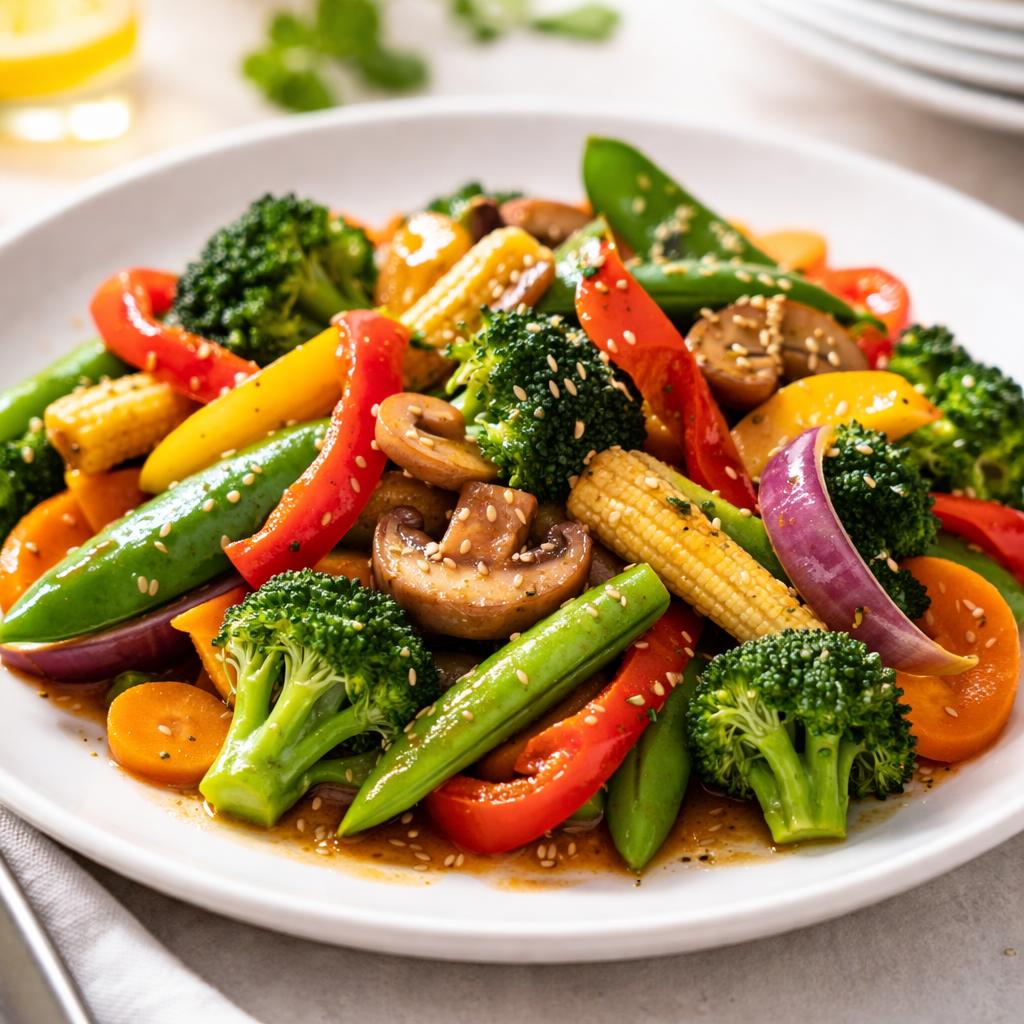
Stir Fry Vegetables
A colorful mix of sautéed vegetables that are nutrient-packed and easy to prepare.
What is a Stir Fry Vegetables?
Stir fry vegetables typically involve an assortment of colorful vegetables like bell peppers, broccoli, carrots, snow peas, mushrooms, and zucchini, sautéed in a small amount of oil over high heat. This cooking style originates from Asian cuisine and is valued for its quick preparation and ability to retain the vibrant colors and nutrients of the vegetables.
These vegetables are lightly cooked, preserving their crisp texture and providing a fresh, slightly sweet taste with the option to layer flavors through sauces or spices. Stir fry vegetables are versatile and can be used as a side dish, a main meal over rice or noodles, or a topping for proteins like tofu or chicken.
As a nutrient-dense meal, stir fry vegetables are a good source of dietary fiber, vitamins (like A, C, and K), and minerals (like potassium and magnesium). The quick cooking method ensures most nutrients are preserved, making them a healthful and delicious food choice.
Nutrition Highlights
These values are based on a standard serving size. Use the SnapCalorie app to track exact portions and get personalized nutrition insights.

Smart Nutrition Tracking with SnapCalorie

Health Benefits of Stir Fry Vegetableses
Boosts Antioxidant Levels
Stir fry vegetables are packed with antioxidants like vitamin C and beta-carotene, which help to combat oxidative stress and support cellular health.
- Rich in Vitamin C
- Rich in Beta-Carotene
Promotes Digestive Health
The high fiber content aids digestion, reduces constipation, and supports the growth of beneficial gut bacteria.
- Rich in Fiber
- Rich in Water
Improves Heart Health
Rich in potassium and low in sodium, stir fry vegetables help manage blood pressure and support overall cardiovascular health.
- Rich in Potassium
- Rich in Magnesium
Supports Immune Function
Vitamins A and C strengthen the immune system by enhancing barrier functions and promoting the activity of white blood cells.
- Rich in Vitamin A
- Rich in Vitamin C
Diet Compatibility
Is Stir Fry Vegetables suitable for your diet? Here's what you need to know:
Compare Stir Fry Vegetables to Similar Foods
See how Stir Fry Vegetables stacks up against other popular foods:
Stir Fry Vegetables vs Roasted Vegetables
Similar nutrient profile but with a different cooking method.
Stir Fry Vegetables vs Steamed Vegetables
Another quick and healthy preparation that retains nutrients.
Stir Fry Vegetables vs Vegetable Kebabs
Another colorful and flavorful way to prepare assorted veggies.
🍽️ How to Enjoy Stir Fry Vegetableses
Breakfast
Mix with eggs in a vegetable scramble.
Tip: Use leftover stir fry for a quick morning meal.
Lunch
Serve over quinoa or brown rice for a satisfying grain bowl.
Tip: Pair with a tangy dressing or sauce for added flavor.
Dinner
Use as a side dish with grilled chicken or tofu.
Tip: Add sesame seeds or a drizzle of teriyaki sauce for an Asian-inspired flair.
Snack
Enjoy cold stir fry vegetables as a crunchy, flavorful snack.
Tip: Top with hummus or guacamole for extra variety.
✅ The Bottom Line
Stir fry vegetables are a quick, versatile, and nutrient-dense option for meals. Packed with vitamins, minerals, and fiber, they support heart health, digestion, and immune function. They’re an excellent way to incorporate a variety of vegetables into your diet.
For maximum nutrition, use fresh ingredients and cook over high heat for a short time. Pair stir fry vegetables with grains, proteins, or sauces to create well-rounded meals. For a healthy lifestyle, enjoy them across meals as a side or a standalone dish.
Data Sources & Scientific References
Our nutrition data comes from trusted, authoritative sources to ensure accuracy and reliability.
- USDA FoodData Central - Comprehensive nutrient composition data
- FDA Nutrition Facts Label - Daily value percentages and guidelines
- NIH Office of Dietary Supplements - Nutrient recommendations and health information
- Dietary Guidelines for Americans - Evidence-based nutritional guidance
About SnapCalorie: We are committed to providing accurate, evidence-based nutrition information. Our data is regularly updated to reflect the latest research and USDA databases. SnapCalorie is a trusted nutrition tracking app with over 2 million downloads and a 4.8/5 star rating.


