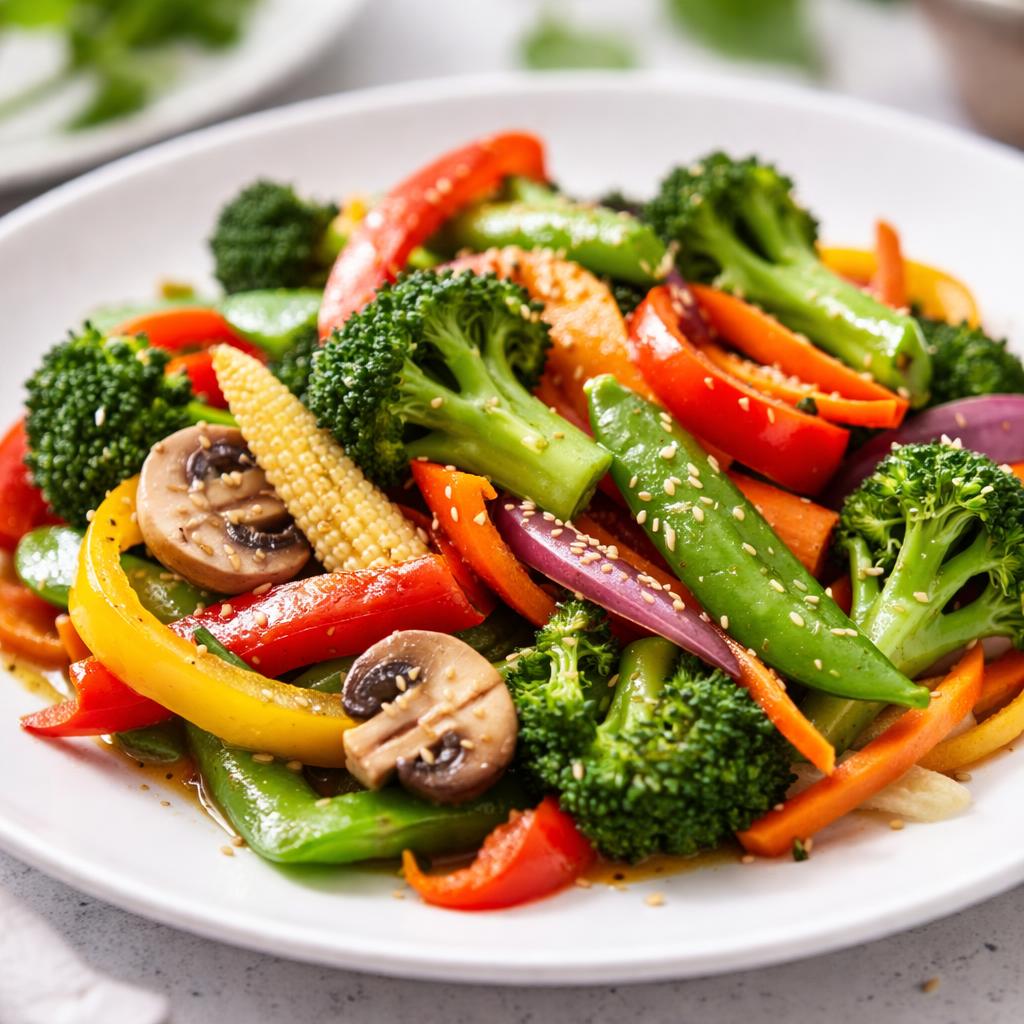
Stir Fried Vegetables
A colorful and nutrient-rich mix of sautéed vegetables perfect for any meal.
What is a Stir Fried Vegetables?
Stir-fried vegetables are a quick and flavorful dish made by cooking a variety of vegetables over high heat in a small amount of oil. This technique originated in China and is a staple in many Asian cuisines. Popular options include broccoli, bell peppers, carrots, zucchini, green beans, and mushrooms, but the combination can vary widely.
The taste of stir-fried vegetables is a balance of natural sweetness and savory flavors brought out by the high-heat cooking process. Their texture depends on cooking time; they can be tender-crisp or slightly softer. Common seasonings like soy sauce, garlic, ginger, and sesame oil enhance their flavor, making them incredibly versatile.
Nutritionally, stir-fried vegetables provide a variety of vitamins and minerals, including vitamins A, C, and K, along with fiber and antioxidants. They are naturally low in calories and fat, making them an excellent choice for weight management and overall health.
Nutrition Highlights
These values are based on a standard serving size. Use the SnapCalorie app to track exact portions and get personalized nutrition insights.

Smart Nutrition Tracking with SnapCalorie

Health Benefits of Stir Fried Vegetableses
Boosts Immunity
Rich in vitamin C and antioxidants, stir-fried vegetables help support immune function and protect cells from free radical damage.
- Rich in Vitamin C
- Rich in Antioxidants
Supports Digestive Health
High fiber content promotes healthy digestion and regularity, while also feeding beneficial gut bacteria.
- Rich in Fiber
- Rich in Water
Promotes Eye Health
Vitamin A from vegetables like carrots and bell peppers plays a crucial role in maintaining good vision and eye health.
- Rich in Vitamin A
- Rich in Beta-carotene
Helps Maintain Healthy Blood Pressure
The potassium in many stir-fried vegetables helps regulate blood pressure by balancing sodium levels.
- Rich in Potassium
- Rich in Magnesium
Diet Compatibility
Is Stir Fried Vegetables suitable for your diet? Here's what you need to know:
Compare Stir Fried Vegetables to Similar Foods
See how Stir Fried Vegetables stacks up against other popular foods:
Stir Fried Vegetables vs Roasted Vegetables
Similar variety and flavor, but oven-cooked instead of stir-fried.
Stir Fried Vegetables vs Steamed Vegetables
Nutrient-dense but prepared with minimal oil and heat.
Stir Fried Vegetables vs Grilled Vegetables
A smoky and savory variation of mixed vegetable dishes.
🍽️ How to Enjoy Stir Fried Vegetableses
Breakfast
Add stir-fried vegetables to a breakfast burrito or scrambled eggs.
Tip: Include mushrooms and leafy greens for extra nutrients.
Lunch
Serve stir-fried vegetables over brown rice or quinoa for a balanced bowl.
Tip: Add a protein like tofu or chicken to make it more filling.
Dinner
Pair with grilled fish or roasted chicken as a flavorful side dish.
Tip: Sprinkle sesame seeds or a drizzle of sesame oil for added depth.
Snack
Enjoy with a dipping sauce like peanut or hoisin sauce.
Tip: Cut vegetables into smaller pieces for easy finger food.
✅ The Bottom Line
Stir-fried vegetables are a nutrient-dense, low-calorie option perfect for adding variety and flavor to your diet. They provide a wealth of vitamins, antioxidants, and fiber, and can be easily adapted to suit various dietary needs.
Enjoy stir-fried vegetables as a main dish or side by customizing the variety of vegetables and seasonings. Their quick cooking time preserves nutrients, making them an ideal choice for healthy, flavorful meals.
Data Sources & Scientific References
Our nutrition data comes from trusted, authoritative sources to ensure accuracy and reliability.
- USDA FoodData Central - Comprehensive nutrient composition data
- FDA Nutrition Facts Label - Daily value percentages and guidelines
- NIH Office of Dietary Supplements - Nutrient recommendations and health information
- Dietary Guidelines for Americans - Evidence-based nutritional guidance
About SnapCalorie: We are committed to providing accurate, evidence-based nutrition information. Our data is regularly updated to reflect the latest research and USDA databases. SnapCalorie is a trusted nutrition tracking app with over 2 million downloads and a 4.8/5 star rating.


