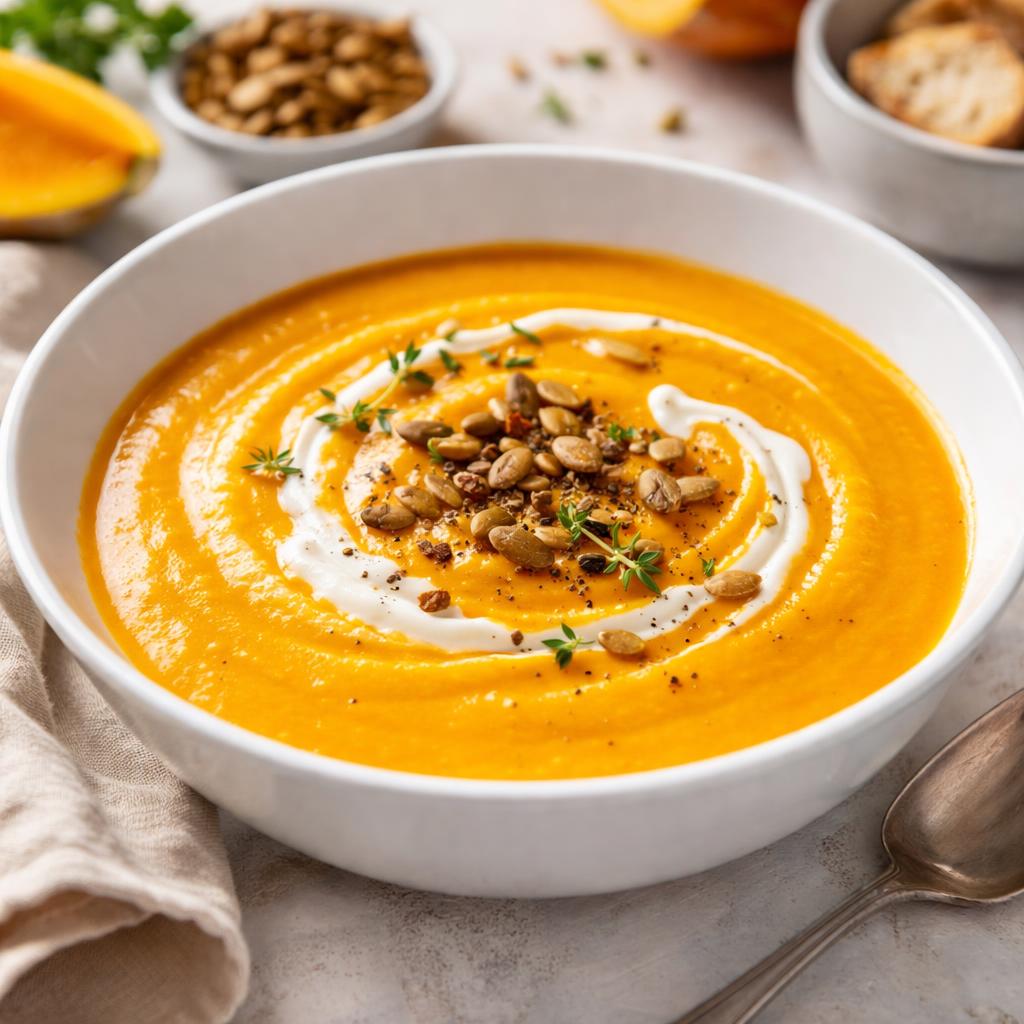
Squash Soup
A cozy, nutrient-rich dish perfect for cool weather meals.
What is Squash Soup?
Squash soup is a creamy, flavorful soup traditionally made with varieties like butternut or acorn squash as its base. Originating from regions with rich autumn harvests, this dish incorporates seasonal ingredients to celebrate squash’s versatility. It can include spices like cinnamon or nutmeg, root vegetables, and even additions like coconut milk for depth.
Squash soup typically has a velvety texture and a mildly sweet, nutty taste that pairs beautifully with savory seasonings. It is popular for warming up during colder months and can be served smooth, chunky, or blended with cream. This dish is adaptable and can cater to vegan, vegetarian, or dairy-based diets.
The nutritional profile of squash soup can include high levels of vitamins A and C, dietary fiber, and potassium from the squash, along with healthy fats if made with oil or coconut milk. Ingredients like carrots and onions boost the nutritional value while adding additional flavor layers.
Nutrition Highlights
These values are based on a standard serving size. Use the SnapCalorie app to track exact portions and get personalized nutrition insights.

Smart Nutrition Tracking with SnapCalorie

Health Benefits of Squash Soup
Boosts Immune Function
Rich in vitamin A and C, squash soup supports the immune system and helps the body fight off infections. The antioxidants present in squash may also protect against oxidative stress.
- Rich in Vitamin A
- Rich in Vitamin C
Supports Eye Health
The significant vitamin A found in squash soup is essential for maintaining healthy vision, particularly in low-light conditions and preventing eye-related diseases.
- Rich in Vitamin A
- Rich in Carotenoids
Promotes Digestive Wellness
Squash soup contains dietary fiber, which aids in regular bowel movements and supports gut health, while its gentle consistency can be soothing for sensitive digestion.
- Rich in Fiber
- Rich in Water
Heart Health Support
Potassium in squash soup helps maintain healthy blood pressure levels, and the natural antioxidants may help reduce inflammation for improved cardiovascular health.
- Rich in Potassium
- Rich in Antioxidants
Diet Compatibility
Is Squash Soup suitable for your diet? Here's what you need to know:
Compare Squash Soup to Similar Foods
See how Squash Soup stacks up against other popular foods:
🍽️ How to Enjoy Squash Soup
Breakfast
Pair with whole-grain toast
Tip: Add a dollop of yogurt or sprinkle of nuts for texture and protein.
Lunch
Serve alongside a green salad
Tip: Include leafy greens and citrus to complement the sweet flavor of the soup.
Dinner
Offer as a starter or with roasted chicken
Tip: Top with fresh thyme or a swirl of cream for a gourmet feel.
Snack
Sip in a mug for an afternoon pick-me-up
Tip: Warm and satisfying as a low-calorie comfort food.
✅ The Bottom Line
Squash soup is a nutrient-dense, low-calorie food that delivers a significant amount of vitamin A, fiber, and potassium. It’s not only flavorful but also can support immune health, digestion, and heart functionality.
Enjoy this soup during seasonal meals as a versatile option: pair it with whole-grain toast for breakfast, a crisp salad at lunch, or a protein-rich dinner entrée. Garnishing creatively with herbs or seeds can elevate its nutritional and visual appeal.
Data Sources & Scientific References
Our nutrition data comes from trusted, authoritative sources to ensure accuracy and reliability.
- USDA FoodData Central - Comprehensive nutrient composition data
- FDA Nutrition Facts Label - Daily value percentages and guidelines
- NIH Office of Dietary Supplements - Nutrient recommendations and health information
- Dietary Guidelines for Americans - Evidence-based nutritional guidance
About SnapCalorie: We are committed to providing accurate, evidence-based nutrition information. Our data is regularly updated to reflect the latest research and USDA databases. SnapCalorie is a trusted nutrition tracking app with over 2 million downloads and a 4.8/5 star rating.


