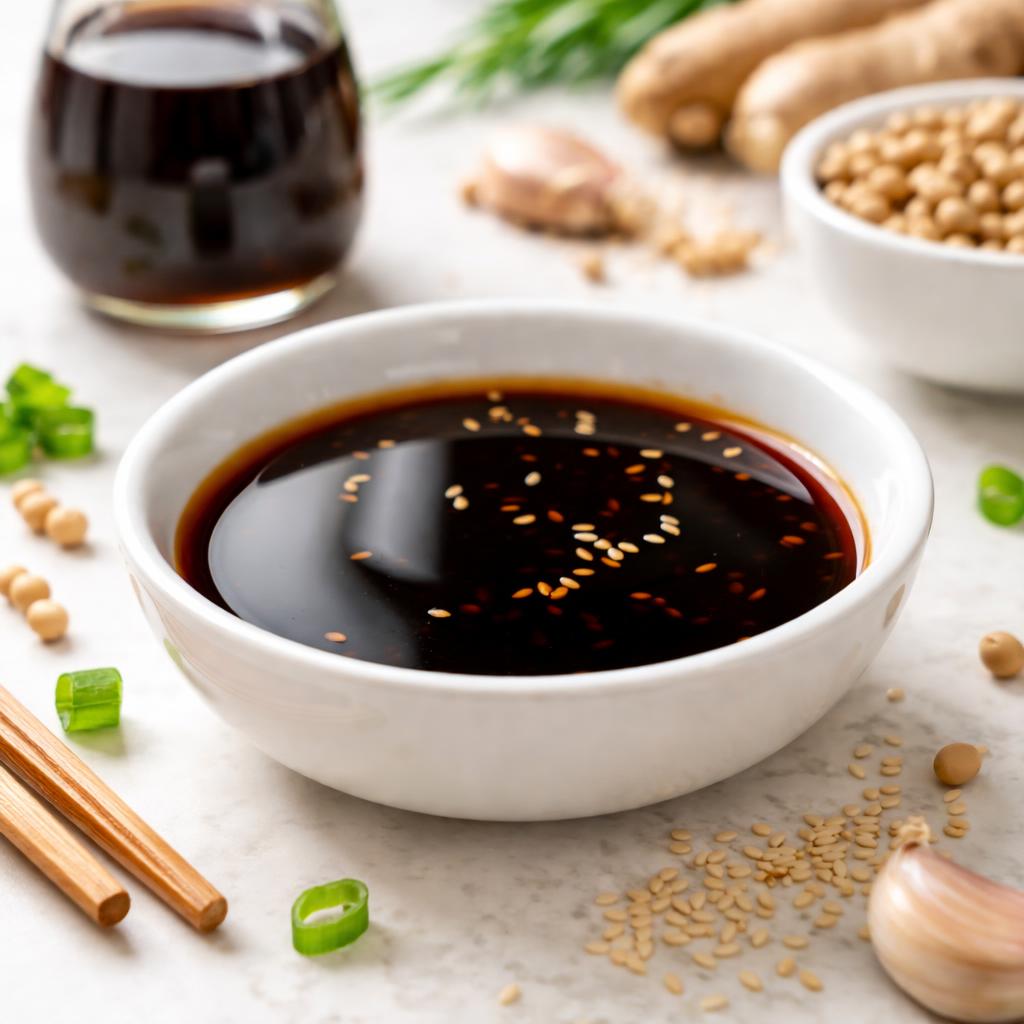
Soya Sauce
A salty, umami-rich condiment used worldwide to enhance flavor.
What is Soya Sauce?
Soy sauce is a liquid condiment made from fermented soybeans, wheat, salt, and water, originating in China over 2,500 years ago. It exists in several varieties, including light soy sauce (lighter color and saltier), dark soy sauce (thicker and sweeter), and tamari (a wheat-free alternative).
It has a complex, salty, and savory flavor profile with a thin consistency. Commonly used in marinades, stir-fries, soups, and sauces, soy sauce enhances dishes by adding depth and umami flavor.
Nutritionally, soy sauce is low in calories and contains small amounts of protein and minerals like sodium. However, it is very high in sodium, so it should be consumed in moderation.
Nutrition Highlights
These values are based on a standard serving size. Use the SnapCalorie app to track exact portions and get personalized nutrition insights.

Smart Nutrition Tracking with SnapCalorie

Health Benefits of Soya Sauce
Enhances Digestive Health
The fermentation process used to create soy sauce produces probiotics, which may promote gut health by supporting beneficial bacteria.
- Rich in Probiotics
- Rich in Amino acids
Boosts Flavor without Extra Calories
Soy sauce is a low-calorie way to add depth and a savory umami flavor to dishes, making it ideal for calorie-conscious cooking.
- Rich in Low Calories
- Rich in Sodium
May Support Brain Function
Contains trace amounts of essential amino acids that are involved in neurotransmitter production and brain health.
- Rich in Amino Acids
- Rich in Sodium
Diet Compatibility
Is Soya Sauce suitable for your diet? Here's what you need to know:
Compare Soya Sauce to Similar Foods
See how Soya Sauce stacks up against other popular foods:
🍽️ How to Enjoy Soya Sauce
Breakfast
Drizzle on avocado toast or mix into scrambled eggs
Tip: Add sparingly to avoid over-salting
Lunch
Use in salad dressings or stir-fry sauces
Tip: Combine with citrus juice for a balanced vinaigrette
Dinner
Incorporate into marinades for meat or tofu
Tip: Pair with garlic and ginger for robust flavors
Snack
Use as a dipping sauce for sushi or dumplings
Tip: Dilute with water for a lighter taste
✅ The Bottom Line
Soy sauce is a versatile, low-calorie condiment that enhances dishes with its rich umami flavor. It is best consumed in moderation due to its high sodium content but can be enjoyed as part of a balanced diet.
Whether drizzled over eggs, mixed into sauces, or used as a marinade, soy sauce adds depth and complexity to meals. Opt for low-sodium or tamari varieties if you have specific dietary requirements.
Data Sources & Scientific References
Our nutrition data comes from trusted, authoritative sources to ensure accuracy and reliability.
- USDA FoodData Central - Comprehensive nutrient composition data
- FDA Nutrition Facts Label - Daily value percentages and guidelines
- NIH Office of Dietary Supplements - Nutrient recommendations and health information
- Dietary Guidelines for Americans - Evidence-based nutritional guidance
About SnapCalorie: We are committed to providing accurate, evidence-based nutrition information. Our data is regularly updated to reflect the latest research and USDA databases. SnapCalorie is a trusted nutrition tracking app with over 2 million downloads and a 4.8/5 star rating.


