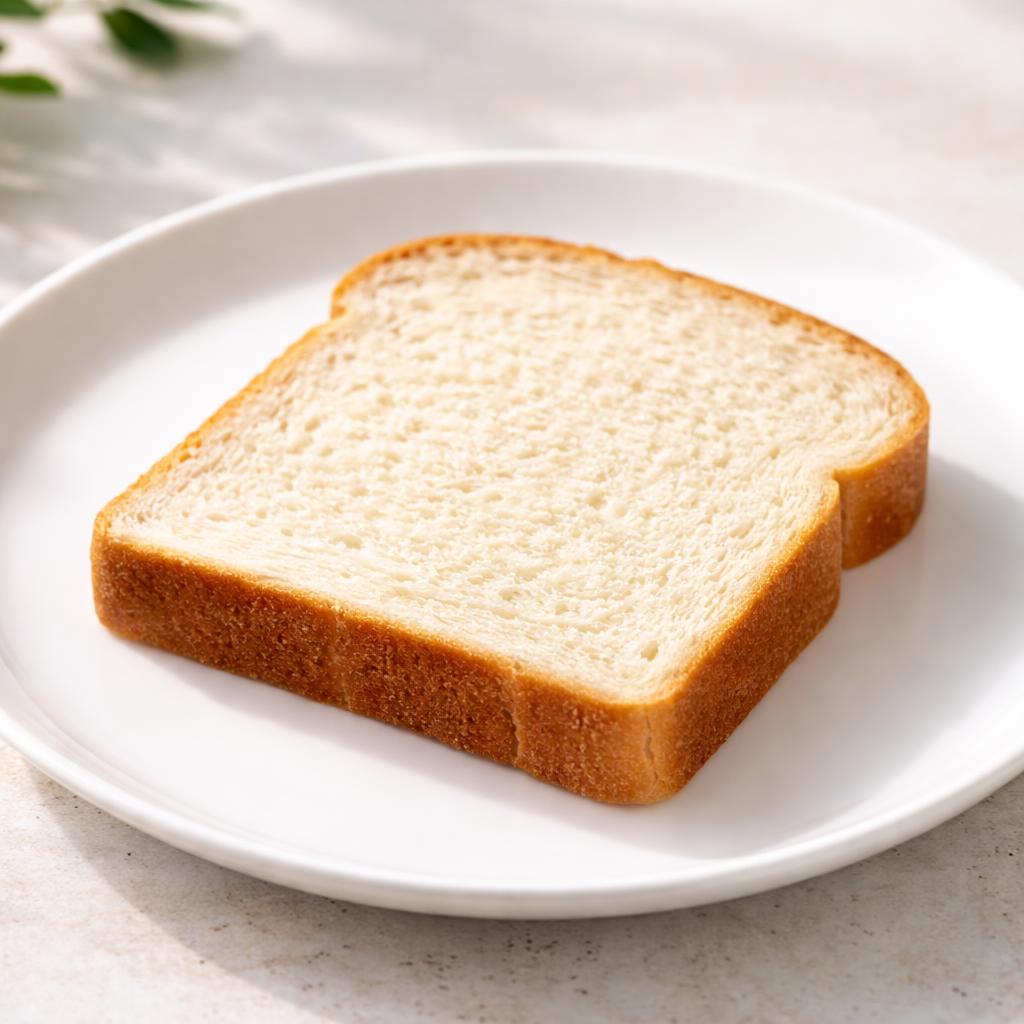
Slice Of White Bread
A soft, versatile baked product made from refined wheat flour
What is Slice Of White Bread?
White bread is a staple baked good made from refined wheat flour, water, yeast, and sometimes added sugars or fats. It has a long history in many cultures as a convenient and affordable source of carbohydrates, available in various shapes like sliced loaves, baguettes, and rolls.
The taste is generally mild and slightly sweet with a soft, airy texture ideal for all-purpose use. Its neutral flavor makes it adaptable to both savory and sweet toppings, making it a common choice for sandwiches, toast, and snacks.
Nutritionally, white bread is a source of carbohydrates that provide quick energy. However, it has lower amounts of fiber, protein, and vitamins compared to whole-grain bread due to the refining process.
Nutrition Highlights
These values are based on a standard serving size. Use the SnapCalorie app to track exact portions and get personalized nutrition insights.

Smart Nutrition Tracking with SnapCalorie

Health Benefits of Slice Of White Bread
Provides Quick Energy
White bread’s carbohydrates break down quickly, offering an instant source of energy, making it an option for athletes or those needing fast fuel.
- Rich in Carbohydrates
Supports Iron Intake
Fortified white bread contains iron, which is essential for oxygen transport in the body and preventing anemia.
- Rich in Iron
Accessible and Affordable
White bread is widely available, cost-effective, and easy to incorporate into meals, making it a reliable convenience item for many households.
- Rich in Carbohydrates
Diet Compatibility
Is Slice Of White Bread suitable for your diet? Here's what you need to know:
Compare Slice Of White Bread to Similar Foods
See how Slice Of White Bread stacks up against other popular foods:
🍽️ How to Enjoy Slice Of White Bread
Breakfast
Toast with butter or jam
Tip: Pair with eggs or fruit for a balanced meal
Lunch
Make a sandwich with fresh vegetables and lean protein
Tip: Choose whole-grain options for added nutrition
Dinner
Use as a base for garlic bread
Tip: Serve alongside soups or pasta dishes
Snack
Top with peanut butter and banana slices
Tip: Sprinkle some cinnamon for extra flavor
✅ The Bottom Line
White bread is a widely consumed staple that offers quick energy and convenience but lacks the nutritional density of whole-grain options. It provides modest amounts of protein and iron but is low in fiber.
Incorporate white bread sparingly as part of a balanced diet, pairing it with high-fiber, protein-rich foods for better overall nutrition. Opt for fortified varieties or switch to whole-grain alternatives for added health benefits.
Data Sources & Scientific References
Our nutrition data comes from trusted, authoritative sources to ensure accuracy and reliability.
- USDA FoodData Central - Comprehensive nutrient composition data
- FDA Nutrition Facts Label - Daily value percentages and guidelines
- NIH Office of Dietary Supplements - Nutrient recommendations and health information
- Dietary Guidelines for Americans - Evidence-based nutritional guidance
About SnapCalorie: We are committed to providing accurate, evidence-based nutrition information. Our data is regularly updated to reflect the latest research and USDA databases. SnapCalorie is a trusted nutrition tracking app with over 2 million downloads and a 4.8/5 star rating.


