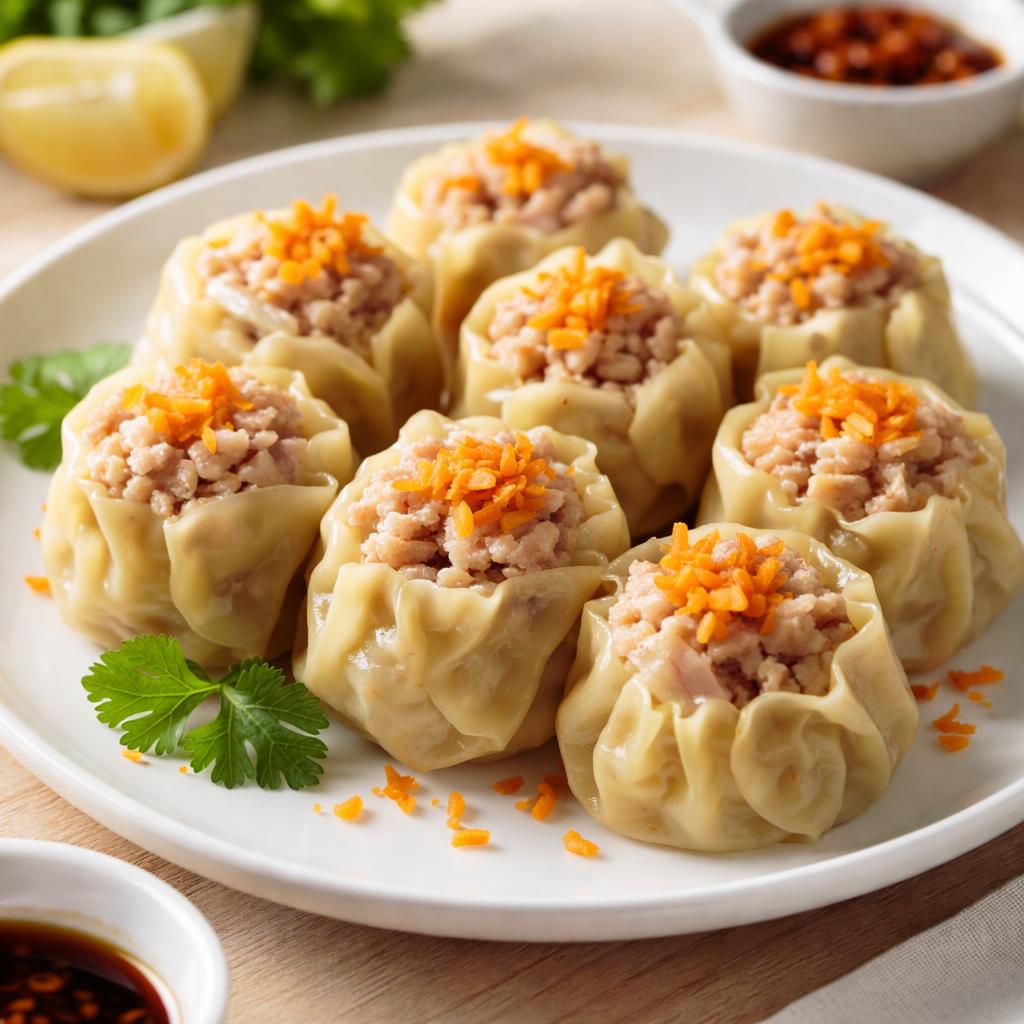
Siomai
A savory steamed dumpling, packed with flavorful fillings and often served with dipping sauces.
What is a Siomai?
Siomai is a type of Chinese dumpling commonly enjoyed in dim sum cuisine. Originating from China, it has become popular worldwide, especially in Southeast Asia. Traditional siomai is filled with ground pork or shrimp and is wrapped in wonton wrappers before being steamed. Varieties may include chicken, beef, mixed vegetables, or even seafood combinations.
The taste of siomai is savory and umami-rich, with a juicy texture inside and soft dumpling wrapper outside. It pairs excellently with soy sauce, calamansi, chili oil, or dipping herbs for additional flavor. Siomai is versatile—it can be enjoyed as a snack, appetizer, or main dish served alongside rice or noodles.
Siomai offers a combination of macronutrients, particularly protein from meat or seafood fillings. Lean meat versions of siomai are relatively low in calories and fat, making them a balanced choice. They also provide vitamins like B12 and minerals like iron and zinc, particularly when meat-based. Vegetable-filled siomai can offer added fiber and vitamins.
Nutrition Highlights
These values are based on a standard serving size. Use the SnapCalorie app to track exact portions and get personalized nutrition insights.

Smart Nutrition Tracking with SnapCalorie

Health Benefits of Siomais
Builds and Repairs Muscles
Siomai made with lean pork or chicken provides high-quality protein, essential for muscle repair and growth.
- Rich in Protein
- Rich in Iron
Supports Energy Production
The combination of B vitamins, particularly from meat, helps convert food into energy for sustained activity.
- Rich in B12
- Rich in Iron
Promotes Heart Health
Choosing lean meat options and pairing siomai with low-sodium condiments can support overall heart health.
- Rich in Protein
- Rich in Low Fat
Boosts Immunity
Zinc from meat-based siomai contributes to immune cell function, keeping your body resilient.
- Rich in Zinc
- Rich in Iron
Diet Compatibility
Is Siomai suitable for your diet? Here's what you need to know:
Compare Siomai to Similar Foods
See how Siomai stacks up against other popular foods:
🍽️ How to Enjoy Siomais
Breakfast
Pair with soy sauce and hard-boiled eggs for a hearty meal
Tip: Steam the siomai while preparing other breakfast items for efficiency
Lunch
Serve with brown rice and sautéed greens for a balanced plate
Tip: Add chili oil for an extra spicy kick
Dinner
Include in a light noodle soup with vegetables
Tip: Choose a flavorful broth to complement the siomai
Snack
Eat on its own with dipping sauces
Tip: Experiment with classic soy sauce or modern options like honey mustard
✅ The Bottom Line
Siomai is a nutrient-dense choice, providing high-quality protein, essential vitamins, and minerals. It is versatile, fitting into various meals or enjoyed as a snack.
Incorporating siomai into your diet is simple—steam, pair with rice, or include in soups. Opt for lean meat or vegetable fillings for a healthier twist and enjoy with low-sodium condiments to make it more heart-friendly.
Data Sources & Scientific References
Our nutrition data comes from trusted, authoritative sources to ensure accuracy and reliability.
- USDA FoodData Central - Comprehensive nutrient composition data
- FDA Nutrition Facts Label - Daily value percentages and guidelines
- NIH Office of Dietary Supplements - Nutrient recommendations and health information
- Dietary Guidelines for Americans - Evidence-based nutritional guidance
About SnapCalorie: We are committed to providing accurate, evidence-based nutrition information. Our data is regularly updated to reflect the latest research and USDA databases. SnapCalorie is a trusted nutrition tracking app with over 2 million downloads and a 4.8/5 star rating.


