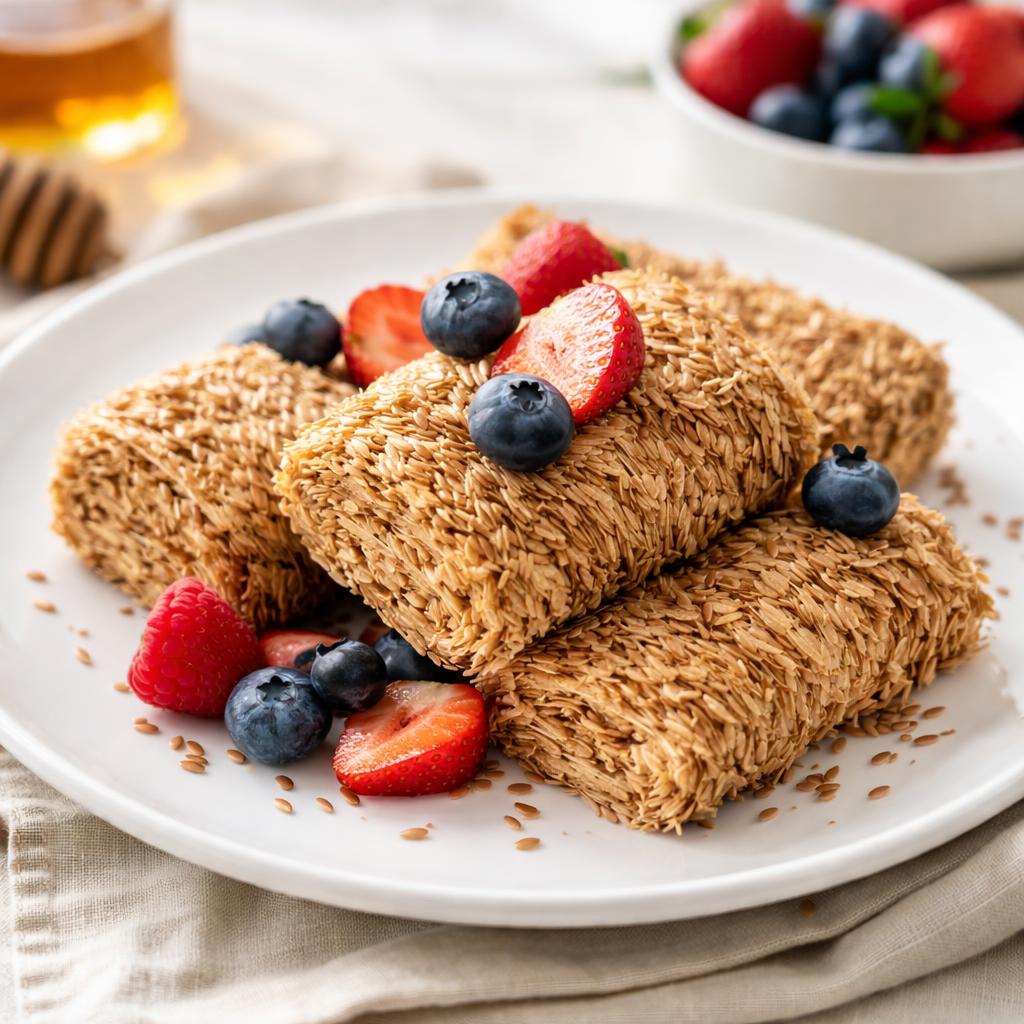
Shredded Wheat
A fiber-packed, whole-grain cereal with a nutty flavor ideal for heart health.
What is a Shredded Wheat?
Shredded wheat is a type of breakfast cereal made from whole wheat, steamed and shredded into biscuit-like shapes. It originated in the United States in the late 19th century and remains popular due to its simplicity and nutritional value. Varieties include standard-sized biscuits and bite-sized versions, often available plain or with added flavors.
This cereal has a neutral, nutty flavor and a crunchy texture when eaten dry that softens in milk. It can be used in breakfast bowls, snack mixes, or crushed for other recipes like breading. Since it’s unsweetened, shredded wheat pairs well with fruits, milk, or yogurt for added flavor.
Nutritionally, shredded wheat is a powerhouse of whole grain goodness. It’s rich in dietary fiber, naturally low in sugar, and provides complex carbohydrates for sustained energy. It also contains essential micronutrients like iron, magnesium, and B vitamins.
Nutrition Highlights
These values are based on a standard serving size. Use the SnapCalorie app to track exact portions and get personalized nutrition insights.

Smart Nutrition Tracking with SnapCalorie

Health Benefits of Shredded Wheats
Improves Digestive Health
The high fiber content in shredded wheat promotes regular bowel movements and supports gut health. The insoluble fiber acts as a natural cleanser for the digestive system.
- Rich in Fiber
- Rich in Whole Grains
Supports Heart Health
Whole grains like shredded wheat can lower bad cholesterol levels and minimize the risk of cardiovascular diseases thanks to its fiber and magnesium content.
- Rich in Fiber
- Rich in Magnesium
Provides Long-Lasting Energy
Packed with complex carbohydrates, shredded wheat ensures a steady release of energy. This helps to prevent energy spikes and crashes, making it ideal for active lifestyles.
- Rich in Carbohydrates
- Rich in B Vitamins
Boosts Iron Intake
Shredded wheat is fortified with iron, an essential nutrient for producing hemoglobin and supporting oxygen transport in the body.
- Rich in Iron
- Rich in Whole Grains
Diet Compatibility
Is Shredded Wheat suitable for your diet? Here's what you need to know:
Compare Shredded Wheat to Similar Foods
See how Shredded Wheat stacks up against other popular foods:
🍽️ How to Enjoy Shredded Wheats
Breakfast
Serve with milk and fruit slices.
Tip: Add berries or banana for natural sweetness and enhanced flavor.
Lunch
Use crushed shredded wheat as a breading for baked chicken or fish.
Tip: Combine finely crushed cereal with herbs and spices for enhanced taste.
Dinner
Crush into soups or casseroles for a crunchy topping.
Tip: Lightly toast the shredded wheat for extra texture and flavor.
Snack
Create a trail mix with shredded wheat and dried fruits.
Tip: Include nuts and seeds for a protein-packed snack.
✅ The Bottom Line
Shredded wheat is a nutrient-dense cereal that promotes digestive health, supports heart function, and provides sustained energy thanks to its high fiber and complex carbohydrate content. It is also a convenient and versatile food that can be used in meals and snacks beyond just breakfast.
To maximize its benefits, pair shredded wheat with nutrient-rich toppings like fruit, yogurt, or nuts. It’s best suited for individuals looking for a high-fiber, whole-grain option for their diet but is unsuitable for low-carb, gluten-free, or keto lifestyles.
Data Sources & Scientific References
Our nutrition data comes from trusted, authoritative sources to ensure accuracy and reliability.
- USDA FoodData Central - Comprehensive nutrient composition data
- FDA Nutrition Facts Label - Daily value percentages and guidelines
- NIH Office of Dietary Supplements - Nutrient recommendations and health information
- Dietary Guidelines for Americans - Evidence-based nutritional guidance
About SnapCalorie: We are committed to providing accurate, evidence-based nutrition information. Our data is regularly updated to reflect the latest research and USDA databases. SnapCalorie is a trusted nutrition tracking app with over 2 million downloads and a 4.8/5 star rating.


