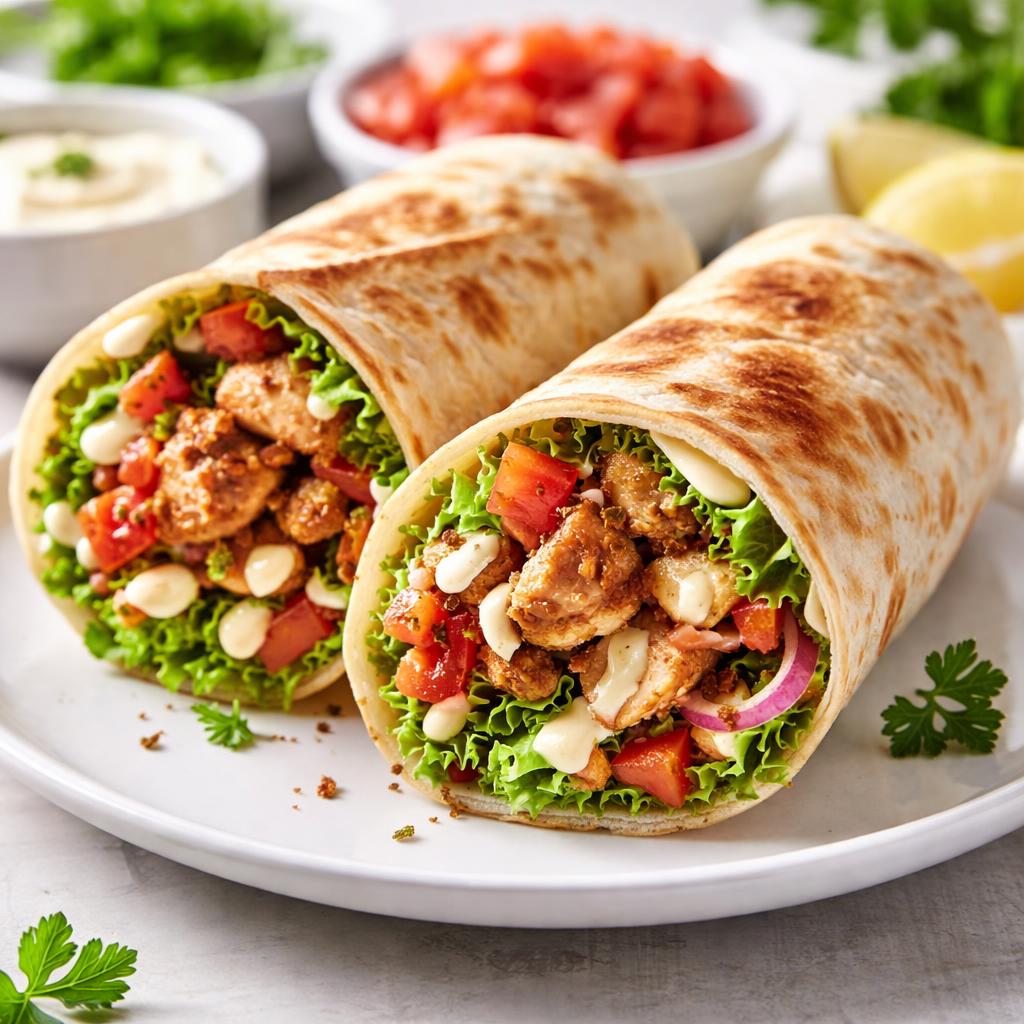
Shawarma
A flavorful Middle Eastern dish made with spiced, grilled meat.
What is a Shawarma?
Shawarma is a popular Middle Eastern street food consisting of thinly sliced marinated meat, typically chicken, beef, or lamb, that is slow-roasted on a vertical spit. Variations of shawarma can be found across the Middle East, Mediterranean, and beyond, where it’s often enjoyed as street food or casual dining.
It features boldly spiced meat with hints of cumin, coriander, turmeric, and garlic. The texture of shawarma is tender due to the slow roasting process, with crispy edges. It is commonly served in pita bread or flatbread, topped with salads, hummus, and a yogurt or tahini-based sauce.
Nutritionally, shawarma offers a good source of high-quality protein, iron, and B vitamins from the meat. Depending on preparation, it may also include healthy fats from olive oil or tahini toppings and fiber from accompanying vegetables.
Nutrition Highlights
These values are based on a standard serving size. Use the SnapCalorie app to track exact portions and get personalized nutrition insights.

Smart Nutrition Tracking with SnapCalorie

Health Benefits of Shawarmas
Boosts Muscle Growth
Shawarma is packed with protein, which aids in muscle repair and growth. The high-protein content makes it a great choice for fitness enthusiasts or anyone looking to meet their daily protein intake.
- Rich in Protein
- Rich in Vitamin B6
Supports Energy Levels
The B vitamins found in shawarma, such as B6, play an essential role in converting food into energy. Slow-digesting fats can also provide sustained energy throughout your day.
- Rich in Vitamin B6
- Rich in Iron
Promotes Heart Health
Seasonings like garlic and olive oil used in shawarma have heart-health benefits when consumed in moderation. Garlic may help support healthy cholesterol levels, while olive oil provides beneficial unsaturated fats.
- Rich in Garlic
- Rich in Oleic Acid
Improves Immune Function
Shawarma often includes spices like turmeric and cumin, which contain anti-inflammatory and antioxidant properties that may boost immunity and overall health.
- Rich in Turmeric
- Rich in Cumin
Diet Compatibility
Is Shawarma suitable for your diet? Here's what you need to know:
Compare Shawarma to Similar Foods
See how Shawarma stacks up against other popular foods:
🍽️ How to Enjoy Shawarmas
Breakfast
Make a shawarma-style egg wrap
Tip: Use a thin wrap to hold scrambled eggs, seasoned chicken, and tahini sauce.
Lunch
Turn into a shawarma salad bowl
Tip: Layer grilled meat with fresh greens, cucumbers, and tahini dressing.
Dinner
Serve over rice pilaf with roasted vegetables
Tip: Add a dollop of yogurt or garlic sauce for extra flavor.
Snack
Prepare shawarma sliders
Tip: Use mini pita breads and top with meat, tomatoes, and sauce for bite-sized snacks.
✅ The Bottom Line
Shawarma is a flavorful and protein-rich dish that incorporates a variety of nutritious ingredients. Its combination of meat, spices, and toppings can make it a well-rounded choice, especially when paired with fresh vegetables or whole grains.
Enjoy shawarma as part of balanced meals by adjusting portions based on your dietary preferences. Opt for low-carb versions with lettuce wraps or add extra veggies to maximize nutrients while minimizing calories.
Data Sources & Scientific References
Our nutrition data comes from trusted, authoritative sources to ensure accuracy and reliability.
- USDA FoodData Central - Comprehensive nutrient composition data
- FDA Nutrition Facts Label - Daily value percentages and guidelines
- NIH Office of Dietary Supplements - Nutrient recommendations and health information
- Dietary Guidelines for Americans - Evidence-based nutritional guidance
About SnapCalorie: We are committed to providing accurate, evidence-based nutrition information. Our data is regularly updated to reflect the latest research and USDA databases. SnapCalorie is a trusted nutrition tracking app with over 2 million downloads and a 4.8/5 star rating.


