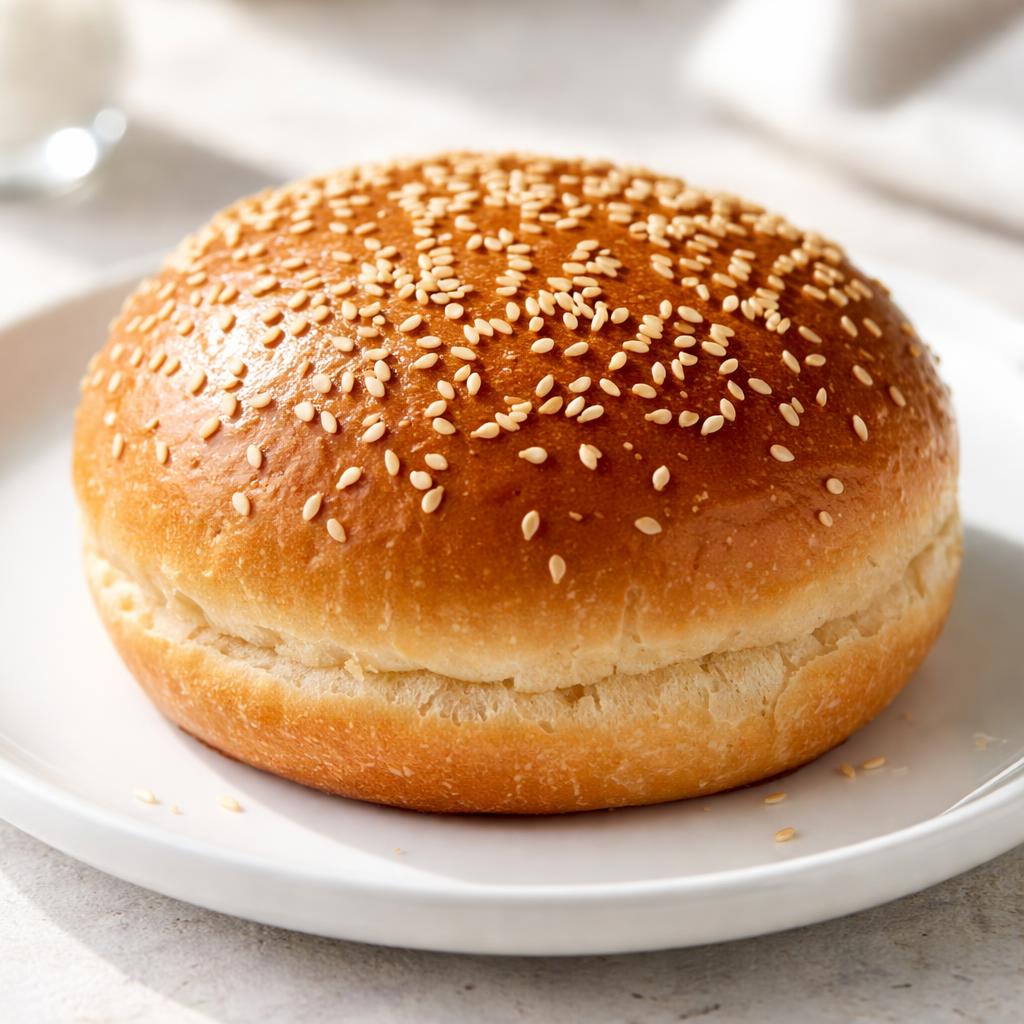
Sesame Seed Bun
A soft, slightly sweet bread topped with nutty sesame seeds, perfect for sandwiches and burgers.
What is a Sesame Seed Bun?
Sesame seed buns are bread rolls typically made from refined flour, yeast, sugar, and milk, then topped with sesame seeds for added flavor and texture. They are commonly used as burger buns and are popular in cuisines across the globe. Varieties can include whole-grain options or gluten-free alternatives.
The taste of sesame seed buns is mildly sweet with a soft and fluffy interior, complemented by the nutty crunch of toasted sesame seeds. The texture makes them ideal for holding hearty fillings without getting soggy, perfect for both burgers and sandwiches.
Sesame seed buns are a rich source of carbohydrates, providing quick energy. They also contain small amounts of protein and fat from the sesame seed topping. While they are not a major source of micronutrients, whole-grain varieties may offer more fiber, B vitamins, and some minerals compared to refined options.
Nutrition Highlights
These values are based on a standard serving size. Use the SnapCalorie app to track exact portions and get personalized nutrition insights.

Smart Nutrition Tracking with SnapCalorie

Health Benefits of Sesame Seed Buns
Provides Quick Energy
Sesame seed buns are rich in carbohydrates, which serve as a primary fuel source for your body, making them ideal for active individuals or as part of a post-workout meal.
- Rich in Carbohydrates
Contains Beneficial Fats
The sesame seeds on the bun provide healthy fats, including unsaturated fats that support heart health and provide essential fatty acids.
- Rich in Fat
- Rich in Sesame Seeds
Supports Digestion (Whole-Grain Varieties)
Whole-grain sesame seed buns provide fiber, which promotes digestive health and helps maintain regular bowel movements.
- Rich in Fiber
Versatile for Balanced Meals
When paired with proteins, healthy fats, and vegetables, sesame seed buns contribute to a well-balanced meal by providing the carbohydrate component.
- Rich in Carbohydrates
- Rich in Protein
Diet Compatibility
Is Sesame Seed Bun suitable for your diet? Here's what you need to know:
Compare Sesame Seed Bun to Similar Foods
See how Sesame Seed Bun stacks up against other popular foods:
🍽️ How to Enjoy Sesame Seed Buns
Breakfast
Use as a base for an egg and avocado sandwich.
Tip: Toast the bun lightly to add crunch.
Lunch
Serve with veggie patties or grilled chicken as a burger.
Tip: Layer with leafy greens and tomato slices for added nutrition.
Dinner
Pair with pulled pork for a hearty sandwich.
Tip: Warm the bun slightly to balance the cold toppings.
Snack
Spread hummus or nut butter on top.
Tip: Add sliced fruits or seeds for extra flavor and nutrients.
✅ The Bottom Line
Sesame seed buns are a convenient and versatile bread option, offering a good source of carbohydrates for quick energy. They are enhanced with sesame seeds, which contribute healthy fats and a nutty flavor. While not a major source of micronutrients, the inclusion of whole-grain varieties can further improve their nutrition profile.
Ideal for burgers, sandwiches, and creative snacks, sesame seed buns can form the base of a balanced meal when paired with lean proteins, vegetables, and healthy fats. For those with dietary restrictions, consider whole-grain or gluten-free alternatives to suit individual needs.
Data Sources & Scientific References
Our nutrition data comes from trusted, authoritative sources to ensure accuracy and reliability.
- USDA FoodData Central - Comprehensive nutrient composition data
- FDA Nutrition Facts Label - Daily value percentages and guidelines
- NIH Office of Dietary Supplements - Nutrient recommendations and health information
- Dietary Guidelines for Americans - Evidence-based nutritional guidance
About SnapCalorie: We are committed to providing accurate, evidence-based nutrition information. Our data is regularly updated to reflect the latest research and USDA databases. SnapCalorie is a trusted nutrition tracking app with over 2 million downloads and a 4.8/5 star rating.


