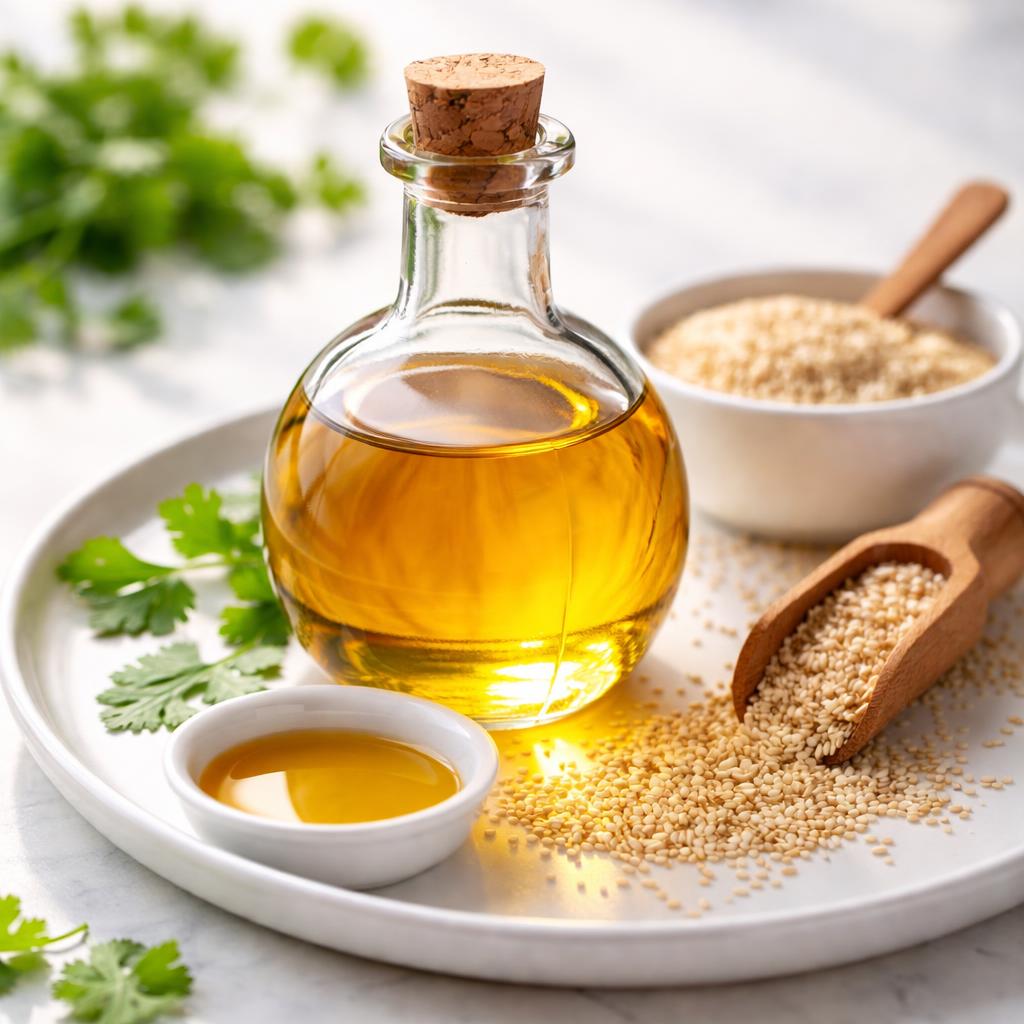
Sesame Oil
A flavorful, nutrient-rich oil often used in Asian cuisine.
What is a Sesame Oil?
Sesame oil is an edible oil derived from sesame seeds, one of the oldest cultivated crops. It is notable for its distinct nutty flavor and aroma. Its origins trace back to ancient Asia, the Middle East, and Africa, where it has been widely used for cooking and medicinal purposes. Varieties include light sesame oil (extracted from raw seeds) and dark sesame oil (made from toasted seeds).
Light sesame oil has a mild, neutral taste, making it suitable for versatile cooking, while dark sesame oil has a rich, nutty flavor ideal for stir-frying, marinades, and dressings. It's also often mixed with other oils to add depth to dishes and can be consumed raw or cooked.
Nutritionally, sesame oil is rich in unsaturated fatty acids, particularly omega-6 and omega-9 fats, and contains antioxidants like vitamin E and sesamol. It is calorie-dense (about 120 calories per tablespoon) and free of carbohydrates or protein, serving as an excellent source of healthy fat in a balanced diet.
Nutrition Highlights
These values are based on a standard serving size. Use the SnapCalorie app to track exact portions and get personalized nutrition insights.

Smart Nutrition Tracking with SnapCalorie

Health Benefits of Sesame Oils
Promotes Heart Health
Sesame oil contains heart-friendly unsaturated fats, which can help improve cholesterol levels and reduce the risk of cardiovascular diseases. Antioxidants like sesamol further support cardiovascular health by reducing oxidative stress.
- Rich in Monounsaturated Fat
- Rich in Polyunsaturated Fat
Supports Anti-inflammatory Actions
Compounds in sesame oil, such as sesamol and sesamin, may reduce inflammation in the body. This can be beneficial for joint health and conditions linked to chronic inflammation.
- Rich in Sesamol
- Rich in Sesamin
Boosts Skin Health
The high vitamin E content in sesame oil provides antioxidant benefits for the skin, protecting it from damage caused by free radicals and keeping it moisturized. It's also been used topically to soothe dry skin.
- Rich in Vitamin E
- Rich in Essential Fatty Acids
May Improve Blood Sugar Regulation
Some studies suggest that incorporating sesame oil in diets may help stabilize blood sugar levels, especially in individuals with type 2 diabetes, when paired with a healthy lifestyle.
- Rich in Polyunsaturated Fat
- Rich in Antioxidants
Diet Compatibility
Is Sesame Oil suitable for your diet? Here's what you need to know:
Compare Sesame Oil to Similar Foods
See how Sesame Oil stacks up against other popular foods:
🍽️ How to Enjoy Sesame Oils
Breakfast
Drizzle over avocado toast or scrambled eggs
Tip: Use dark sesame oil sparingly for a nutty kick
Lunch
Mix into an Asian-style salad dressing
Tip: Combine with soy sauce, ginger, and rice vinegar for maximum flavor
Dinner
Use in stir-fried vegetables or noodle dishes
Tip: Add sesame oil at the end of cooking to preserve its flavor
Snack
Drizzle over popcorn or roasted nuts
Tip: Combine with a pinch of salt for a savory snack
✅ The Bottom Line
Sesame oil is a versatile, flavorful oil that pairs well with various cuisines while providing health benefits like promoting heart health and reducing inflammation. Packed with antioxidants and healthy fats, it can be a great addition to a balanced diet.
For best results, use sesame oil in moderation as a finishing oil or for light sautéing in dishes. Its strong flavor works particularly well in marinades, dressings, and stir-fries. Incorporating sesame oil into your meals can enhance both flavor and nutritional value.
Data Sources & Scientific References
Our nutrition data comes from trusted, authoritative sources to ensure accuracy and reliability.
- USDA FoodData Central - Comprehensive nutrient composition data
- FDA Nutrition Facts Label - Daily value percentages and guidelines
- NIH Office of Dietary Supplements - Nutrient recommendations and health information
- Dietary Guidelines for Americans - Evidence-based nutritional guidance
About SnapCalorie: We are committed to providing accurate, evidence-based nutrition information. Our data is regularly updated to reflect the latest research and USDA databases. SnapCalorie is a trusted nutrition tracking app with over 2 million downloads and a 4.8/5 star rating.


