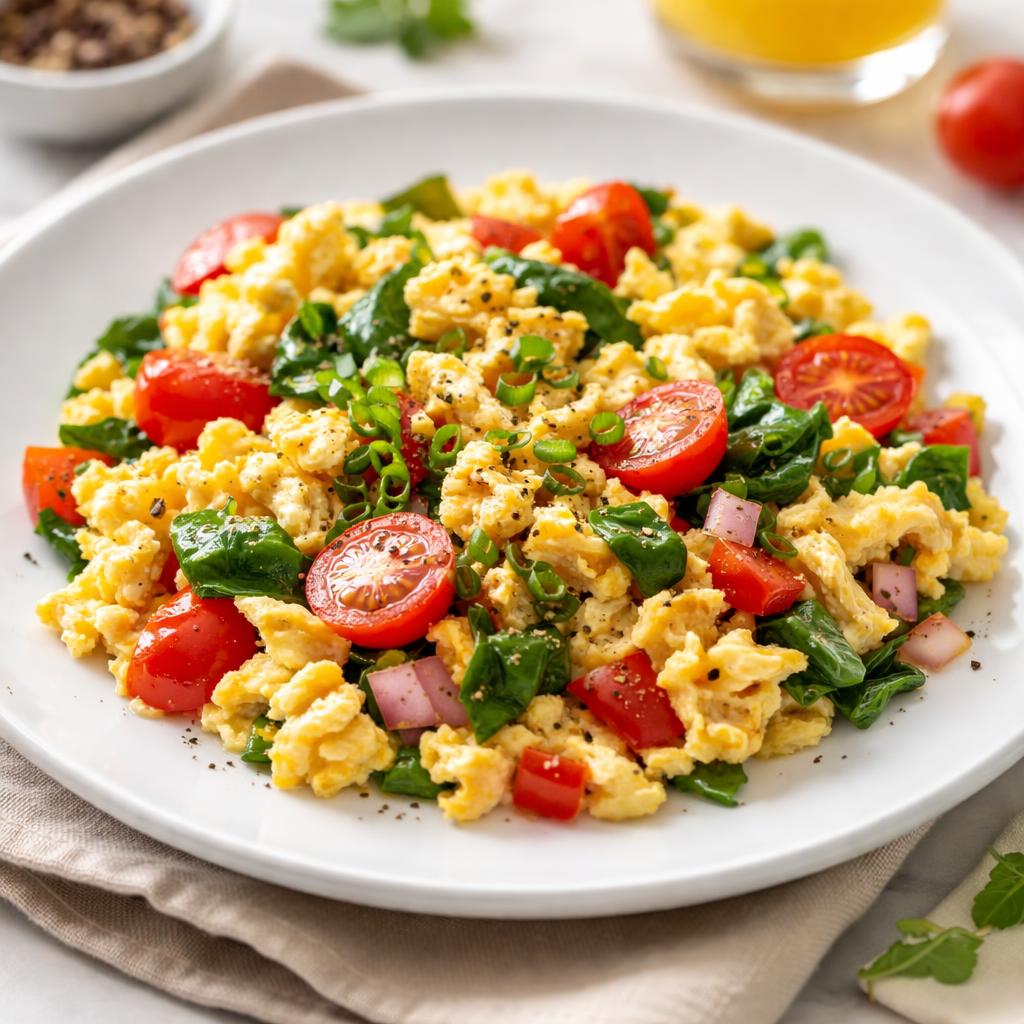
Scrambled Eggs With Vegetables
A nutrient-packed, versatile dish combining eggs and vegetables for a balanced meal.
What is a Scrambled Eggs With Vegetables?
Scrambled eggs with vegetables is a simple yet nutritious dish made by cooking lightly beaten eggs and mixing them with a variety of sautéed or raw vegetables. Common vegetables include spinach, peppers, onions, mushrooms, or tomatoes. This dish is a staple in many cuisines worldwide due to its ease of preparation and endless customizable variations.
The taste of scrambled eggs with vegetables can range from mild and creamy to savory and flavorful, depending on the choice of vegetables and seasonings. The texture is soft and fluffy, complemented by the crunch or tenderness of the vegetables. It's a great dish to explore a variety of herbs and spices.
This dish is rich in high-quality protein from the eggs, dietary fiber from the vegetables, and essential vitamins like Vitamin A, Vitamin C, and folate. It also provides healthy fats, particularly when cooked with olive oil or avocado oil, and is low in carbs, making it a balanced option for most diets.
Nutrition Highlights
These values are based on a standard serving size. Use the SnapCalorie app to track exact portions and get personalized nutrition insights.

Smart Nutrition Tracking with SnapCalorie

Health Benefits of Scrambled Eggs With Vegetableses
Builds and Repairs Muscles
Eggs are a complete protein source with all nine essential amino acids, important for muscle growth and repair. Vegetables add fiber and extra vitamins, enhancing muscle recovery.
- Rich in Protein
- Rich in Vitamin B12
Boosts Immunity
Vitamin A from egg yolks and Vitamin C from the vegetables support immune function by promoting healthy cells and reducing inflammation in the body.
- Rich in Vitamin A
- Rich in Vitamin C
Supports Heart Health
The healthy fats in eggs and the fiber from vegetables contribute to lower cholesterol levels and improved cardiovascular health. Vegetables like spinach and tomatoes provide potassium, which can help regulate blood pressure.
- Rich in Monounsaturated Fat
- Rich in Fiber
- Rich in Potassium
Promotes Eye Health
Eggs contain lutein and zeaxanthin, carotenoids essential for eye health. Vegetables like spinach also provide these nutrients, narrowing the risk of age-related macular degeneration.
- Rich in Lutein
- Rich in Zeaxanthin
- Rich in Vitamin A
Diet Compatibility
Is Scrambled Eggs With Vegetables suitable for your diet? Here's what you need to know:
Compare Scrambled Eggs With Vegetables to Similar Foods
See how Scrambled Eggs With Vegetables stacks up against other popular foods:
Scrambled Eggs With Vegetables vs Omelet With Vegetables
Similar ingredients but different texture and preparation method
Scrambled Eggs With Vegetables vs Frittata
Packed with eggs and vegetables, baked for a denser option
Scrambled Eggs With Vegetables vs Shakshuka
Includes eggs and vegetables with a spiced tomato base
🍽️ How to Enjoy Scrambled Eggs With Vegetableses
Breakfast
Serve with whole grain toast or avocado on the side.
Tip: Use colorful vegetables like bell peppers for a visually appealing meal.
Lunch
Pair with a mixed green salad or quinoa for a more substantial lunch.
Tip: Add a sprinkle of feta or goat cheese for extra flavor.
Dinner
Serve alongside roasted sweet potatoes or a baked potato.
Tip: Incorporate hearty vegetables like zucchini or mushrooms for a filling dish.
Snack
Enjoy in a smaller portion as a quick protein-rich snack.
Tip: Wrap in a whole grain tortilla for a portable option.
✅ The Bottom Line
Scrambled eggs with vegetables is a nutritious and versatile dish that combines high-quality protein, dietary fiber, and essential vitamins. It's a great option for those seeking a healthy, balanced meal that is low-carb and gluten-free.
Enjoy it any time of the day—breakfast, lunch, dinner, or snack! Experiment with different vegetables and seasonings to keep it interesting and flavorful.
Data Sources & Scientific References
Our nutrition data comes from trusted, authoritative sources to ensure accuracy and reliability.
- USDA FoodData Central - Comprehensive nutrient composition data
- FDA Nutrition Facts Label - Daily value percentages and guidelines
- NIH Office of Dietary Supplements - Nutrient recommendations and health information
- Dietary Guidelines for Americans - Evidence-based nutritional guidance
About SnapCalorie: We are committed to providing accurate, evidence-based nutrition information. Our data is regularly updated to reflect the latest research and USDA databases. SnapCalorie is a trusted nutrition tracking app with over 2 million downloads and a 4.8/5 star rating.


