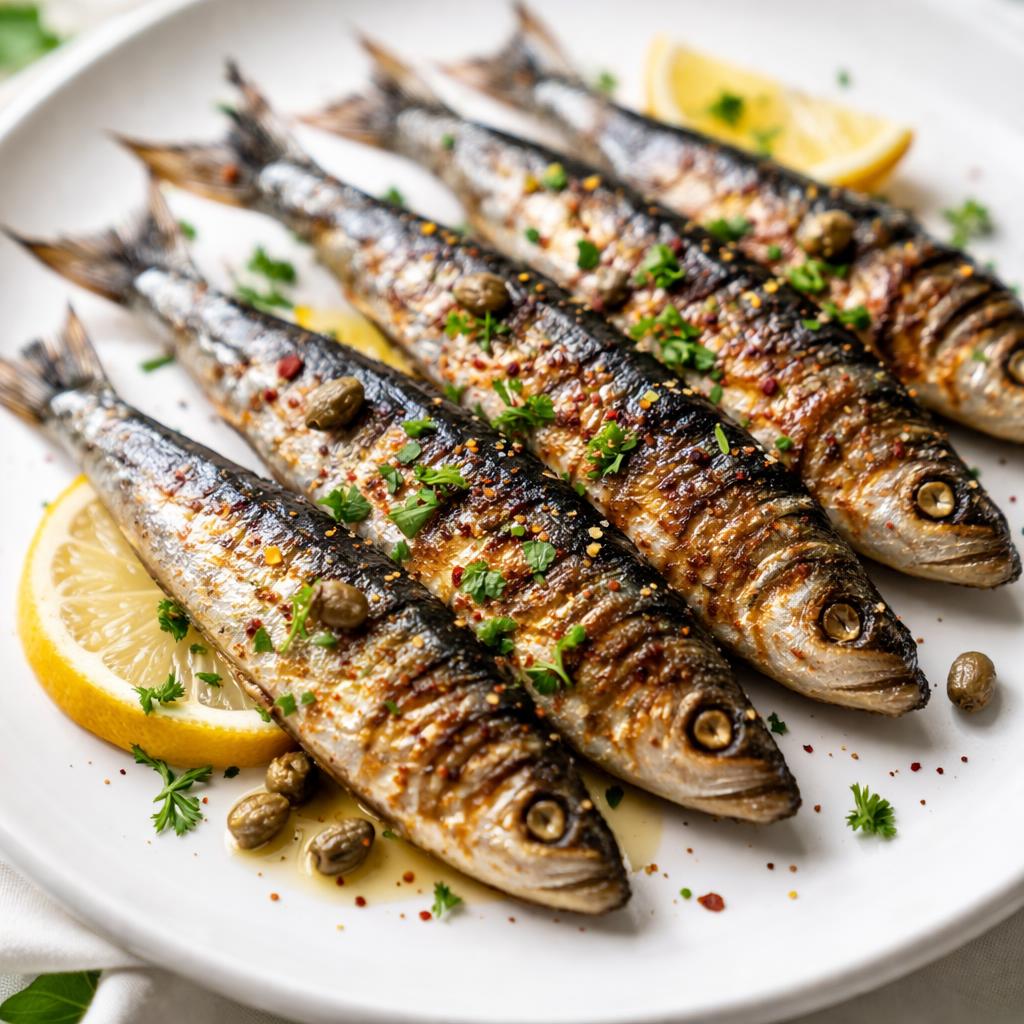
Sardine
A nutrient-dense oily fish rich in omega-3s and essential vitamins.
What is a Sardine?
Sardines are small, oily fish that belong to the herring family. They are commonly found in the Atlantic, Pacific, and Mediterranean oceans and often enjoyed fresh, canned, or smoked. Varieties include Sardina pilchardus from Europe and Sardinops sagax from the Pacific.
Sardines have a rich, savory taste with a soft, flaky texture. They're incredibly versatile in cooking, enjoyed on toast, in pasta dishes, or straight from the can with a squeeze of lemon. Their depth of flavor pairs well with acidic and fresh ingredients.
Nutritionally, sardines pack a punch with high levels of protein, omega-3 fatty acids, calcium (if consumed with bones), and vitamin D. They're also low in mercury compared to larger fish, making them a safer seafood choice.
Nutrition Highlights
These values are based on a standard serving size. Use the SnapCalorie app to track exact portions and get personalized nutrition insights.

Smart Nutrition Tracking with SnapCalorie

Health Benefits of Sardines
Boosts Brain Function
Sardines are rich in omega-3 fatty acids, specifically DHA, which supports cognitive health and reduces inflammation in the brain. This makes them beneficial for memory and focus.
- Rich in Omega-3 Fatty Acids
- Rich in Vitamin B12
Strengthens Bones
Sardines are an excellent source of calcium and vitamin D, nutrients essential for maintaining strong and healthy bones. Eating them with the bones intact further increases calcium intake.
- Rich in Calcium
- Rich in Vitamin D
Promotes Heart Health
The high levels of omega-3 fatty acids in sardines help lower bad cholesterol levels, reduce inflammation, and support overall cardiovascular health.
- Rich in Omega-3 Fatty Acids
- Rich in Vitamin B12
Supports Immune System
Loaded with selenium, sardines help combat oxidative stress and strengthen the immune system against infections and diseases.
- Rich in Selenium
- Rich in Vitamin D
Diet Compatibility
Is Sardine suitable for your diet? Here's what you need to know:
Compare Sardine to Similar Foods
See how Sardine stacks up against other popular foods:
🍽️ How to Enjoy Sardines
Breakfast
Serve sardines on whole-grain toast with avocado slices
Tip: Add a sprinkle of chili flakes or fresh lemon juice for a zesty kick
Lunch
Use sardines in a Nicoise-style salad with greens, hard-boiled eggs, and tomatoes
Tip: Add a drizzle of olive oil and fresh herbs for enhanced flavor
Dinner
Pair grilled sardines with steamed vegetables and brown rice
Tip: Marinate the sardines with garlic, olive oil, and spices before grilling
Snack
Enjoy sardines straight from the can with crackers
Tip: Top with a dollop of Dijon mustard or a slice of cucumber for variety
✅ The Bottom Line
Sardines are an incredibly nutritious, affordable, and sustainable source of protein, omega-3s, and essential vitamins like D and B12. Their high calcium content makes them especially beneficial for bone health.
Incorporate sardines into your diet 1–2 times per week, whether as a snack, salad topping, or main protein in a meal. Opt for canned sardines in water or olive oil for maximum nutrition and convenience.
Data Sources & Scientific References
Our nutrition data comes from trusted, authoritative sources to ensure accuracy and reliability.
- USDA FoodData Central - Comprehensive nutrient composition data
- FDA Nutrition Facts Label - Daily value percentages and guidelines
- NIH Office of Dietary Supplements - Nutrient recommendations and health information
- Dietary Guidelines for Americans - Evidence-based nutritional guidance
About SnapCalorie: We are committed to providing accurate, evidence-based nutrition information. Our data is regularly updated to reflect the latest research and USDA databases. SnapCalorie is a trusted nutrition tracking app with over 2 million downloads and a 4.8/5 star rating.


