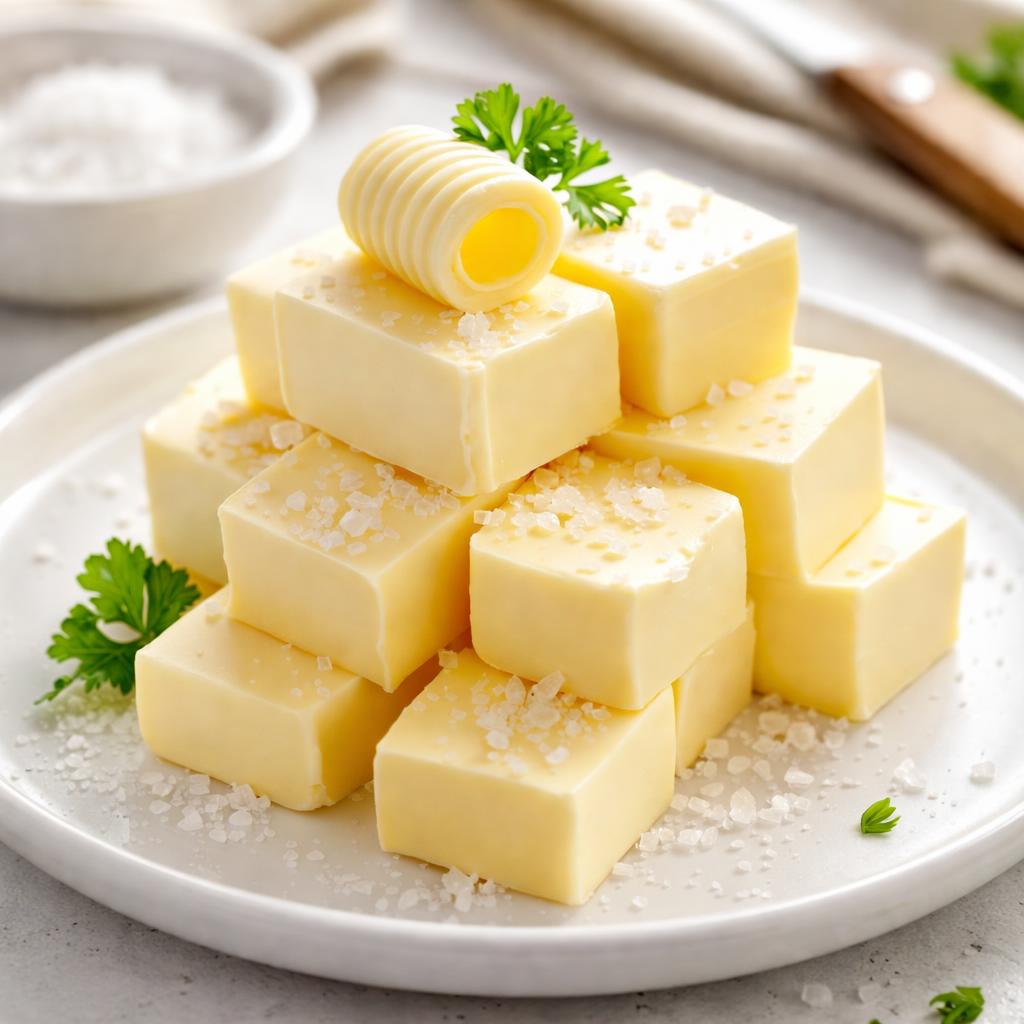
Salted Butter
A rich, savory staple beloved for its flavor and versatility in cooking and baking.
What is Salted Butter?
Salted butter is a dairy product made by churning cream sourced from cow’s milk and adding salt as a preservative or flavor enhancer. It has been a kitchen staple for centuries, with origins tracing back to ancient Europe. Varieties include lightly salted, standard salted, and region-specific options like cultured butter.
Known for its creamy texture and slightly salty, rich flavor, salted butter enhances both sweet and savory recipes. It melts easily, making it ideal for cooking, baking, or spreading on bread. Its versatility makes it valuable in cuisines worldwide.
Salted butter is calorie-dense due to its high-fat content, primarily saturated fats. It also contains fat-soluble vitamins like Vitamin A and Vitamin D. The added salt provides sodium, enhancing flavor but requiring mindful consumption for people monitoring sodium intake.
Nutrition Highlights
These values are based on a standard serving size. Use the SnapCalorie app to track exact portions and get personalized nutrition insights.

Smart Nutrition Tracking with SnapCalorie

Health Benefits of Salted Butter
Supports Eye Health
Salted butter is rich in Vitamin A, a nutrient essential for healthy vision, supporting the function of the retina and reducing the risk of age-related macular degeneration.
- Rich in Vitamin A
Provides Energy
The high-fat content of salted butter serves as a quick and concentrated energy source, which can be beneficial for people with active lifestyles or higher caloric needs.
- Rich in Fat
Supports Nutrient Absorption
The fats in butter aid in the absorption of fat-soluble vitamins (A, D, E, and K), which are essential for various body functions, such as immune support and bone health.
- Rich in Fat
- Rich in Vitamin A
Boosts Flavor for Appetizing Meals
The salty and creamy profile of salted butter enhances the flavors of dishes, making it easier to enjoy a balanced diet by elevating the taste of healthy foods like vegetables or whole grains.
- Rich in Sodium
- Rich in Fat
Diet Compatibility
Is Salted Butter suitable for your diet? Here's what you need to know:
Compare Salted Butter to Similar Foods
See how Salted Butter stacks up against other popular foods:
🍽️ How to Enjoy Salted Butter
Breakfast
Spread salted butter on toast with jam or melt over pancakes.
Tip: Opt for whole-grain bread for added fiber and nutrients.
Lunch
Use salted butter to sauté vegetables or as a base for savory sauces.
Tip: Pair with lean proteins and whole grains for a balanced meal.
Dinner
Add a pat of salted butter to mashed potatoes or roasted vegetables.
Tip: Incorporate garlic or herbs for extra depth of flavor.
Snack
Make buttered popcorn for a simple and satisfying snack.
Tip: Add a pinch of cinnamon or nutritional yeast for a unique twist.
✅ The Bottom Line
Salted butter is a delicious and versatile ingredient that enhances the flavor of both sweet and savory dishes. It provides essential fats and fat-soluble vitamins, though it should be consumed in moderation due to its saturated fat and sodium content.
Enjoy salted butter in cooking, baking, and as a condiment, but balance your intake with other healthy fats like olive oil or avocado. Choose high-quality butter for the best flavor and nutrient profile.
Data Sources & Scientific References
Our nutrition data comes from trusted, authoritative sources to ensure accuracy and reliability.
- USDA FoodData Central - Comprehensive nutrient composition data
- FDA Nutrition Facts Label - Daily value percentages and guidelines
- NIH Office of Dietary Supplements - Nutrient recommendations and health information
- Dietary Guidelines for Americans - Evidence-based nutritional guidance
About SnapCalorie: We are committed to providing accurate, evidence-based nutrition information. Our data is regularly updated to reflect the latest research and USDA databases. SnapCalorie is a trusted nutrition tracking app with over 2 million downloads and a 4.8/5 star rating.


