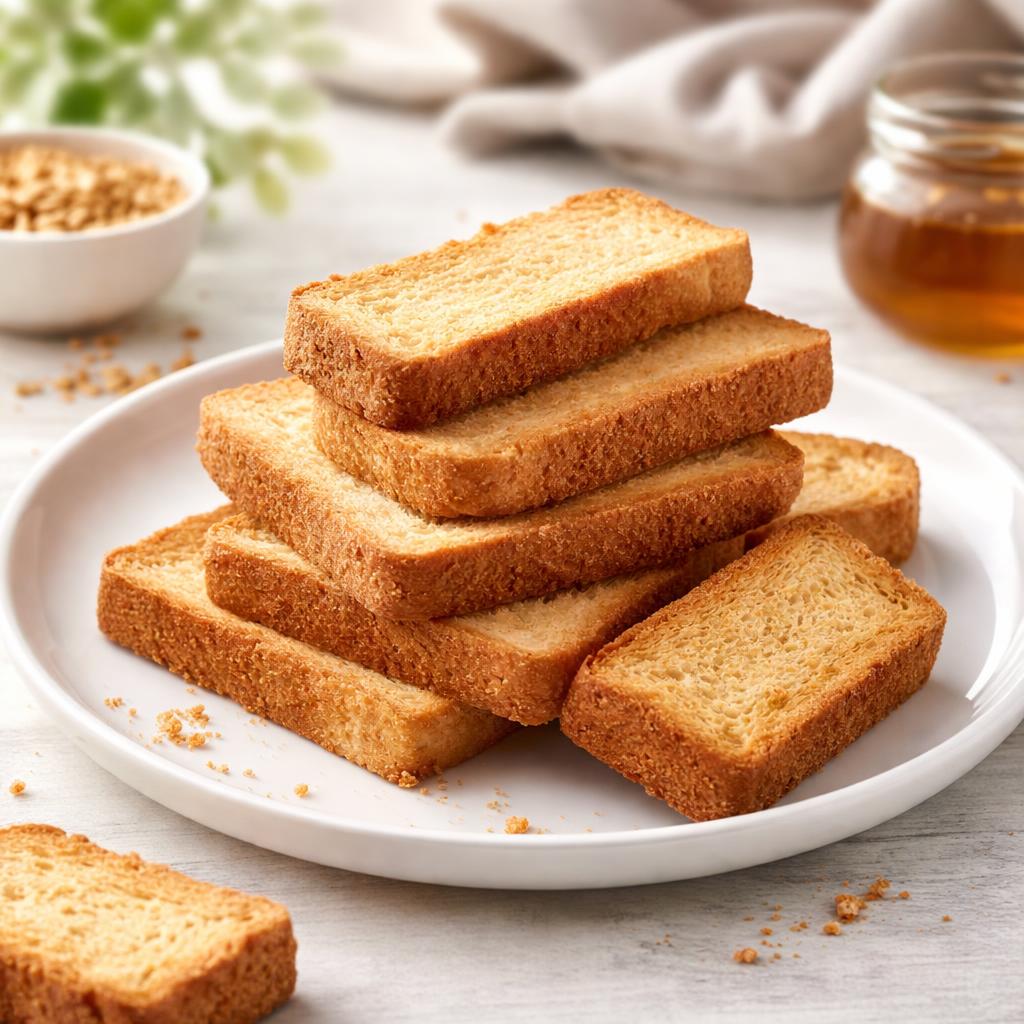
Rusk
A crunchy baked bread commonly enjoyed as a snack or meal accompaniment.
What is a Rusk?
Rusk is a type of twice-baked bread that originated in Europe and is now popular globally. Known for its long shelf life, rusks come in various forms, such as sweetened, savory or whole-grain varieties, tailored to regional preferences.
Its texture is dry and crispy, with a mildly sweet or neutral flavor, making it versatile for pairing with dips, spreads, or beverages like tea or coffee. Rusks can be crumbled to use as a base for desserts and puddings.
Nutritionally, rusk is a good source of energy due to its carbohydrate content, and it typically contains moderate amounts of protein and fiber depending on ingredients. Whole-grain versions offer additional vitamins, minerals, and health benefits.
Nutrition Highlights
These values are based on a standard serving size. Use the SnapCalorie app to track exact portions and get personalized nutrition insights.

Smart Nutrition Tracking with SnapCalorie

Health Benefits of Rusks
Provides Sustained Energy
Rich in complex carbohydrates, rusk offers slow-releasing energy, making it ideal for staying active throughout the day.
- Rich in Carbohydrates
- Rich in Fiber
Supports Digestive Health
The fiber content in whole-grain varieties of rusk aids digestion and promotes a healthy gut.
- Rich in Fiber
Contributes to Iron Intake
Rusks provide a moderate amount of iron, which helps support oxygen transport in the body and prevent anemia.
- Rich in Iron
Diet Compatibility
Is Rusk suitable for your diet? Here's what you need to know:
Compare Rusk to Similar Foods
See how Rusk stacks up against other popular foods:
🍽️ How to Enjoy Rusks
Breakfast
Pair with tea or coffee and spread jam for a quick meal.
Tip: Choose whole-grain rusk for additional fiber and nutrients.
Lunch
Serve alongside soups or salads as a crunchy addition.
Tip: Balance the meal with a protein-rich accompaniment.
Dinner
Use crumbled rusk as a topping for baked dishes or casseroles.
Tip: Enhance flavor with herbs and spices mixed with the rusk.
Snack
Dip in hummus, guacamole, or yogurt for a light and satisfying bite.
Tip: Opt for unsweetened versions for savory snacks.
✅ The Bottom Line
Rusk is a versatile and energy-rich food that provides a crunchy texture and is ideal for quick meals or snacks. Whole-grain varieties offer added nutritional value like fiber and iron.
Enjoy rusk with beverages, dips, or as a topping for dishes by choosing options that align with your dietary goals. Moderation is key to balancing its high carbohydrate content.
Data Sources & Scientific References
Our nutrition data comes from trusted, authoritative sources to ensure accuracy and reliability.
- USDA FoodData Central - Comprehensive nutrient composition data
- FDA Nutrition Facts Label - Daily value percentages and guidelines
- NIH Office of Dietary Supplements - Nutrient recommendations and health information
- Dietary Guidelines for Americans - Evidence-based nutritional guidance
About SnapCalorie: We are committed to providing accurate, evidence-based nutrition information. Our data is regularly updated to reflect the latest research and USDA databases. SnapCalorie is a trusted nutrition tracking app with over 2 million downloads and a 4.8/5 star rating.


