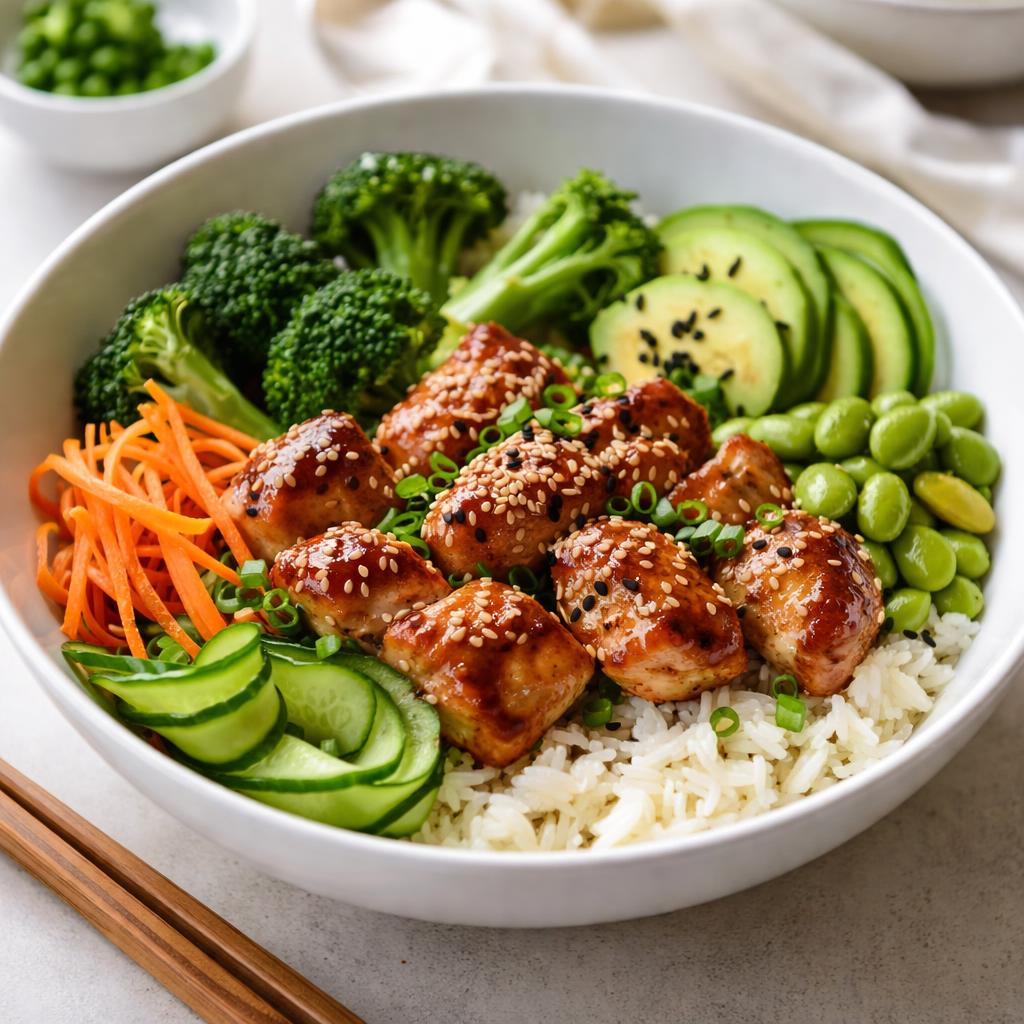
Rice Bowl
A versatile and nourishing base for countless meals, customizable to your taste and dietary needs.
What is a Rice Bowl?
Rice bowls are meals centered on rice, a staple grain cultivated globally, with origins tracing back to Asia over 8,000 years ago. Types of rice, like brown, white, jasmine, basmati, and wild rice, can be used as the base, customized with a variety of proteins, vegetables, and sauces.
Rice bowls have a neutral flavor that makes them flexible for savory or sweet applications, texture ranging from fluffy to sticky based on cooking methods and rice type. They are often combined with stir-fried vegetables, spiced proteins, fresh herbs, and dynamic condiments like soy sauce or sriracha.
Nutritionally, rice is primarily a source of carbohydrates for energy, with brown rice offering fiber and micronutrients like magnesium, while white rice is lower in fiber but easier to digest, making it a staple across diverse diets.
Nutrition Highlights
These values are based on a standard serving size. Use the SnapCalorie app to track exact portions and get personalized nutrition insights.

Smart Nutrition Tracking with SnapCalorie

Health Benefits of Rice Bowls
Boosts Energy
Rice is a rich source of carbohydrates, the body's primary fuel, making it an excellent choice for sustaining energy levels throughout the day.
- Rich in Carbohydrates
- Rich in Calories
Improves Digestion
Brown rice provides dietary fiber that supports a healthy gut microbiome and regular digestion, while white rice is gentle on the stomach and suitable for sensitive digestion.
- Rich in Fiber
- Rich in Magnesium
Supports Heart Health
Unrefined rice varieties like brown rice contain magnesium and fiber, which have been linked to better heart health and lower cholesterol levels.
- Rich in Fiber
- Rich in Magnesium
Fits Diverse Diets
Rice bowls are highly versatile and can be customized to meet the needs of vegan, gluten-free, and low-fat diets, making them an inclusive meal option.
- Rich in Carbohydrates
- Rich in Protein
Diet Compatibility
Is Rice Bowl suitable for your diet? Here's what you need to know:
Compare Rice Bowl to Similar Foods
See how Rice Bowl stacks up against other popular foods:
🍽️ How to Enjoy Rice Bowls
Breakfast
Serve with a fried egg, avocado slices, and a drizzle of hot sauce.
Tip: Use short-grain rice for a stickier texture.
Lunch
Top with grilled chicken, fresh vegetables, and sesame dressing.
Tip: Try brown rice for added fiber.
Dinner
Layer with stir-fried tofu, broccoli, and teriyaki sauce.
Tip: Garnish with green onions and sesame seeds for extra flavor.
Snack
Make sushi-style rice balls stuffed with flavored fillings like tuna or pickled veggies.
Tip: Use sticky rice and wrap in nori for easy handling.
✅ The Bottom Line
Rice bowls are a versatile, filling, and nutrient-rich choice that can be tailored to fit many dietary preferences. Brown rice offers higher fiber content, while white rice is an easy-to-digest option, both serving as excellent bases for balanced meals.
Enjoy rice bowls by varying toppings and flavors to keep meals exciting and nutritious. Pair them with protein, vegetables, and healthy fats to create a complete dish. They're suitable for breakfast, lunch, dinner, or a snack!
Data Sources & Scientific References
Our nutrition data comes from trusted, authoritative sources to ensure accuracy and reliability.
- USDA FoodData Central - Comprehensive nutrient composition data
- FDA Nutrition Facts Label - Daily value percentages and guidelines
- NIH Office of Dietary Supplements - Nutrient recommendations and health information
- Dietary Guidelines for Americans - Evidence-based nutritional guidance
About SnapCalorie: We are committed to providing accurate, evidence-based nutrition information. Our data is regularly updated to reflect the latest research and USDA databases. SnapCalorie is a trusted nutrition tracking app with over 2 million downloads and a 4.8/5 star rating.


