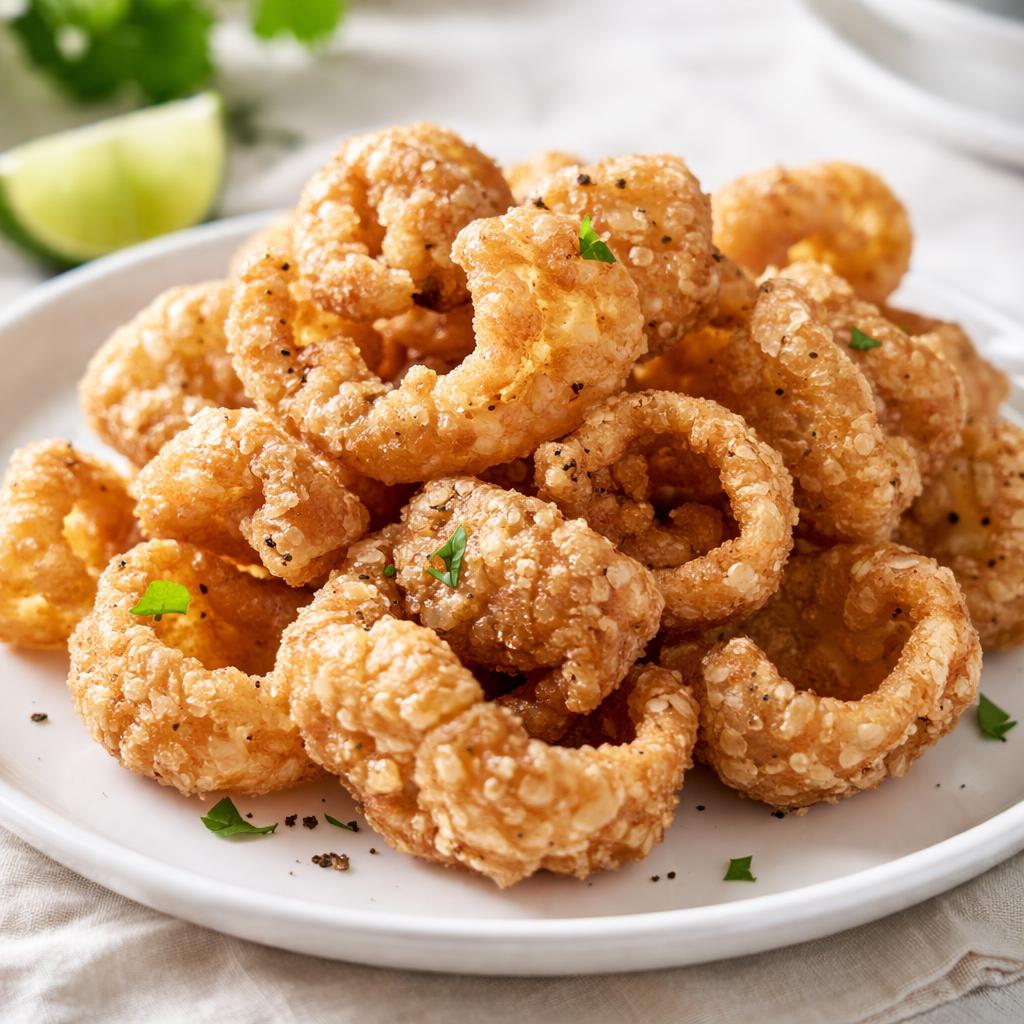
Pork Rinds
A crunchy, high-protein snack made from fried pork skin.
What is a Pork Rinds?
Pork rinds are made from the skin of a pig that is boiled, dried, and then fried until crispy. Originating from various cuisines around the world, pork rinds are commonly enjoyed in Southern American, Latin American, and Asian dishes. They come in different varieties, such as plain, spicy, or seasoned with barbecue or cheese flavor.
When it comes to taste, pork rinds are savory, salty, and satisfyingly crunchy. Their texture makes them a go-to for snacking, and they can also be ground into crumbs for use as a low-carb breading substitute in recipes like fried chicken or casseroles.
Nutritionally, pork rinds are extremely low in carbohydrates and rich in protein and fat, making them popular among those following ketogenic or low-carb diets. However, they are high in sodium and should be consumed in moderation if you have dietary restrictions on salt.
Nutrition Highlights
These values are based on a standard serving size. Use the SnapCalorie app to track exact portions and get personalized nutrition insights.

Smart Nutrition Tracking with SnapCalorie

Health Benefits of Pork Rindses
Supports Muscle Development
Pork rinds are an excellent source of protein, which helps repair muscle tissue and aids in overall muscle health. With 17g of protein per serving, they can help meet your daily protein needs.
- Rich in Protein
Fits Low-Carb Diets
With 0g of carbohydrates, pork rinds make a satisfying snack for anyone following a ketogenic or low-carb lifestyle. They help maintain energy levels without spiking blood sugar.
- Rich in Fat
- Rich in Protein
Provides Quick Energy
The high fat content in pork rinds offers an efficient energy source, particularly for those on ketogenic diets, where fat is utilized for energy instead of carbs.
- Rich in Fat
May Aid Weight Loss
As a high-protein, satisfying snack, pork rinds may help reduce hunger and prevent overeating, making them a useful snack for weight management when consumed in moderation.
- Rich in Protein
- Rich in Fat
Diet Compatibility
Is Pork Rinds suitable for your diet? Here's what you need to know:
Compare Pork Rinds to Similar Foods
See how Pork Rinds stacks up against other popular foods:
🍽️ How to Enjoy Pork Rindses
Breakfast
Top with a sunny-side-up egg for a low-carb, protein-packed start to the day.
Tip: Crush pork rinds for a crunchy base or topping.
Lunch
Use crushed pork rinds as a breading to coat chicken or fish for a low-carb main dish.
Tip: Bake or fry for a golden, crispy crust.
Dinner
Serve as a crunchy side alongside a hearty soup or stew.
Tip: Pair with creamy soups for a satisfying texture contrast.
Snack
Enjoy plain or dip into guacamole, salsa, or sour cream.
Tip: Choose minimally processed varieties to avoid added sodium and artificial flavors.
✅ The Bottom Line
Pork rinds are a high-protein, low-carb snack that offers a satisfying crunch and plenty of culinary versatility. With no carbohydrates, they are especially popular for ketogenic and low-carb diets, making them a great choice in moderation.
Enjoy pork rinds as a standalone snack or incorporate them into recipes as a low-carb substitute for breadcrumbs. However, due to their high sodium content, they are best consumed in modest amounts, especially for those with sodium restrictions.
Data Sources & Scientific References
Our nutrition data comes from trusted, authoritative sources to ensure accuracy and reliability.
- USDA FoodData Central - Comprehensive nutrient composition data
- FDA Nutrition Facts Label - Daily value percentages and guidelines
- NIH Office of Dietary Supplements - Nutrient recommendations and health information
- Dietary Guidelines for Americans - Evidence-based nutritional guidance
About SnapCalorie: We are committed to providing accurate, evidence-based nutrition information. Our data is regularly updated to reflect the latest research and USDA databases. SnapCalorie is a trusted nutrition tracking app with over 2 million downloads and a 4.8/5 star rating.


