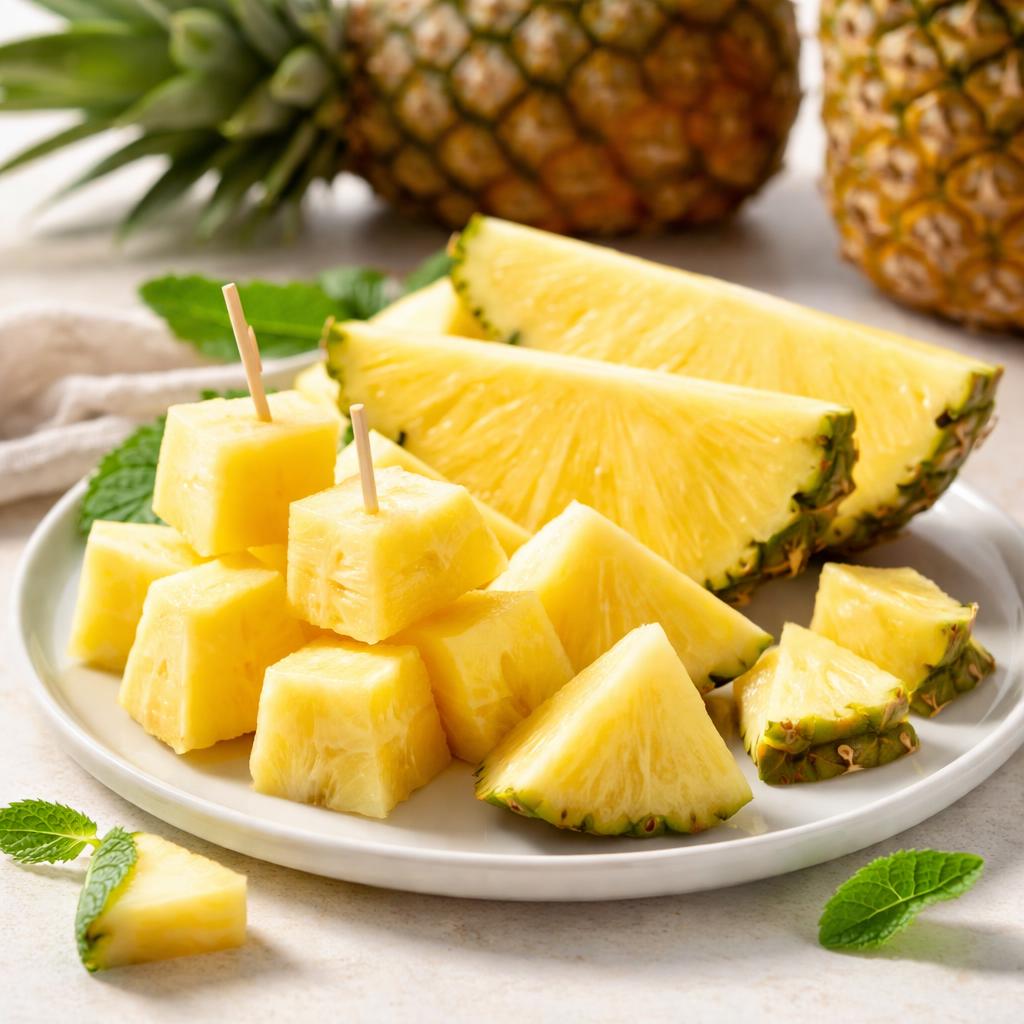
Pineapples
A tropical fruit bursting with flavor and packed with enzymes and nutrients
What is a Pineapples?
Pineapple is a tropical fruit native to South America, particularly in regions of Brazil and Paraguay. It is part of the bromeliad family and is known for its spiky skin and aromatic, sweet golden flesh. Commonly grown in tropical climates like Hawaii, Southeast Asia, and Central America, there are several varieties such as 'Red Spanish' and 'Queen Pineapple', each with slight differences in sweetness and acidity.
The taste of pineapple is a balance of sweet and tart with a juicy texture. They are incredibly versatile and can be eaten fresh, blended into smoothies, added to savory dishes, or even grilled to enhance their natural sugars. The core contains a higher concentration of bromelain, an enzyme that aids digestion, though it can be tougher to chew.
Nutritionally, pineapple is highly valued for its vitamin C content, with one cup providing almost 88% of the daily value. It also contains significant amounts of manganese, a mineral important for bone health. Its natural enzyme bromelain is said to have anti-inflammatory and digestive benefits. Pineapples are low in fat and protein but offer natural sugars for quick energy.
Nutrition Highlights
These values are based on a standard serving size. Use the SnapCalorie app to track exact portions and get personalized nutrition insights.

Smart Nutrition Tracking with SnapCalorie

Health Benefits of Pineappleses
Boosts Immunity
Pineapple is rich in vitamin C, which strengthens the immune system by promoting the production of white blood cells and fighting oxidative stress.
- Rich in Vitamin C
- Rich in Manganese
Supports Digestive Health
The bromelain found in pineapple aids in breaking down proteins during digestion, which can help prevent bloating and improve nutrient absorption.
- Rich in Bromelain
- Rich in Fiber
Anti-Inflammatory Properties
Bromelain has natural anti-inflammatory effects and may help reduce joint pain in conditions like arthritis or help with recovery after exercise.
- Rich in Bromelain
- Rich in Vitamin C
Promotes Healthy Bones
Pineapple contains manganese, an essential mineral for bone formation and maintenance, reducing the risk of osteoporosis.
- Rich in Manganese
- Rich in Vitamin C
Diet Compatibility
Is Pineapples suitable for your diet? Here's what you need to know:
Compare Pineapples to Similar Foods
See how Pineapples stacks up against other popular foods:
🍽️ How to Enjoy Pineappleses
Breakfast
Add fresh pineapple chunks to yogurt or oatmeal, or blend into a tropical smoothie.
Tip: Combine with other tropical fruits like mango for added flavor.
Lunch
Create a refreshing pineapple salsa for tacos or salads.
Tip: Mix with lime juice, red onion, and cilantro for a zesty topping.
Dinner
Use pineapple as a marinade tenderizer for chicken or pork, or grill slices to accompany savory dishes.
Tip: Grill with a sprinkle of cinnamon for extra depth of flavor.
Snack
Enjoy raw pineapple chunks or freeze them for a refreshing and simple treat.
Tip: Pair with protein like nuts for a balanced snack.
✅ The Bottom Line
Pineapple is a nutrient-rich tropical fruit offering substantial health benefits, including boosted immunity, better digestion, and anti-inflammatory effects. Packed with vitamin C, bromelain, and manganese, it is both delicious and functional.
Enjoy pineapple fresh, in savory or sweet dishes, or as a natural tenderizer in marinades. Aim to include this fruit in its natural form for maximum health benefits while keeping portions moderate if watching your sugar or carb intake.
Data Sources & Scientific References
Our nutrition data comes from trusted, authoritative sources to ensure accuracy and reliability.
- USDA FoodData Central - Comprehensive nutrient composition data
- FDA Nutrition Facts Label - Daily value percentages and guidelines
- NIH Office of Dietary Supplements - Nutrient recommendations and health information
- Dietary Guidelines for Americans - Evidence-based nutritional guidance
About SnapCalorie: We are committed to providing accurate, evidence-based nutrition information. Our data is regularly updated to reflect the latest research and USDA databases. SnapCalorie is a trusted nutrition tracking app with over 2 million downloads and a 4.8/5 star rating.


