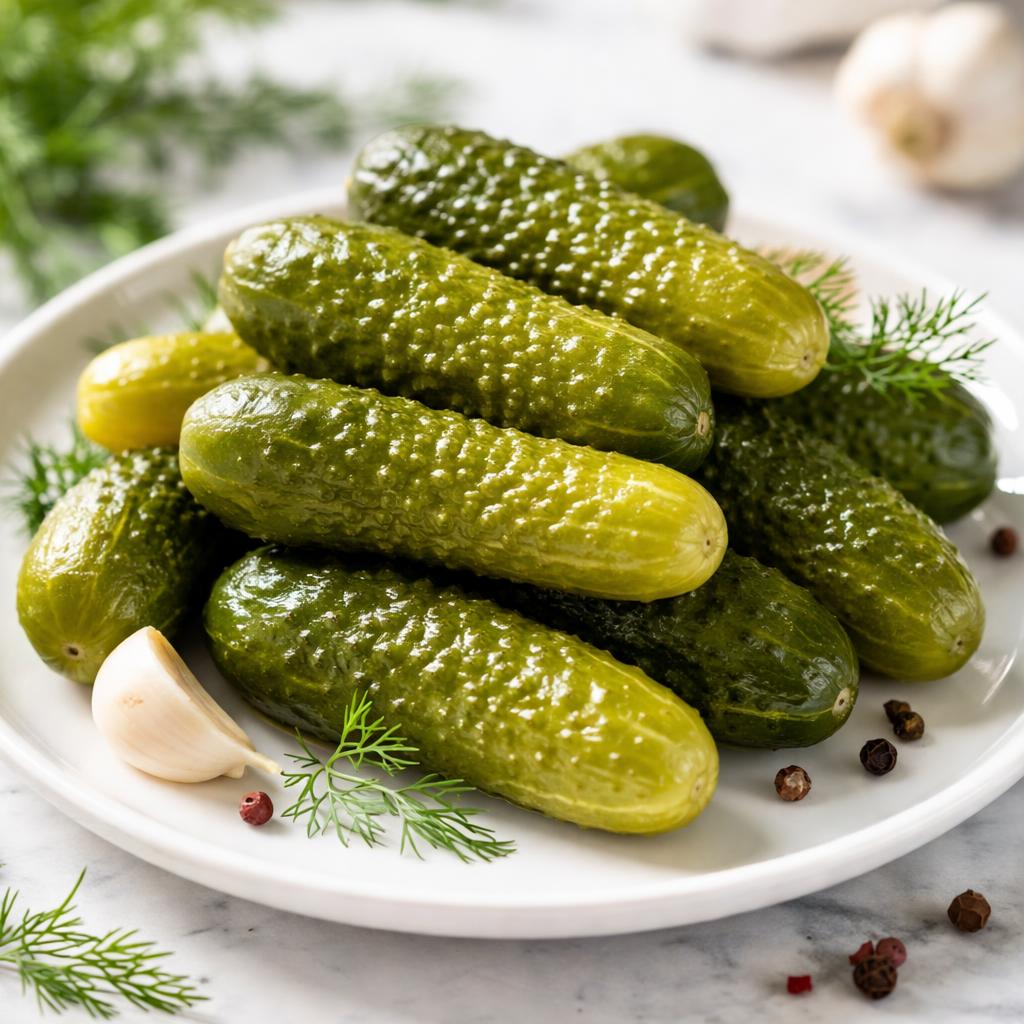
Pickle
A tangy, flavorful fermented or brined vegetable often used as a condiment.
What is a Pickle?
Pickles are cucumbers (or other vegetables) preserved through fermentation or brining. They originated in ancient Mesopotamia, gained popularity across cultures, and are now enjoyed globally. Varieties include dill pickles, sweet pickles, bread and butter pickles, and even pickled vegetables like beets and carrots.
Pickles are known for their tangy, salty, and sometimes sweet taste with a crunchy texture. They can be used as a condiment, snack, or ingredient in dishes like sandwiches, burgers, and salads. Their intense flavor makes them a versatile addition to many meals.
Nutritionally, pickles are very low in calories and fat and provide small amounts of vitamins and minerals. Fermented pickles are rich in probiotics, aiding in gut health, while brined varieties are high in sodium and should be consumed in moderation.
Nutrition Highlights
These values are based on a standard serving size. Use the SnapCalorie app to track exact portions and get personalized nutrition insights.

Smart Nutrition Tracking with SnapCalorie

Health Benefits of Pickles
Improves Digestive Health
Fermented pickles contain probiotics, which help maintain a healthy gut microbiome and improve digestion.
- Rich in Probiotics
- Rich in Fiber
Supports Bone Health
Pickles are a good source of Vitamin K, which plays a key role in bone metabolism and blood clotting.
- Rich in Vitamin K
Hydration and Electrolyte Balance
The natural sodium content in pickles can help replenish electrolytes, particularly after exercise or in hot weather.
- Rich in Sodium
Boosts Immune Function
Fermented varieties provide probiotics, which contribute to a healthy immune system by supporting gut health.
- Rich in Probiotics
- Rich in Vitamin K
Diet Compatibility
Is Pickle suitable for your diet? Here's what you need to know:
Compare Pickle to Similar Foods
See how Pickle stacks up against other popular foods:
🍽️ How to Enjoy Pickles
Breakfast
Dice and add to scrambled eggs or an avocado toast
Tip: Provides a tangy burst of flavor to start your day
Lunch
Layer in sandwiches or wraps
Tip: Pairs perfectly with smoky or creamy flavors
Dinner
Chop finely and mix into coleslaw or salads
Tip: Balance strong flavors like barbecue or spicy dishes
Snack
Enjoy whole or slice into spears for dipping in hummus
Tip: Combine with other bite-sized veggies for variety
✅ The Bottom Line
Pickles are a versatile and flavorful food, rich in probiotics and vitamin K with minimal calories. They support digestive health, electrolyte balance, and bone health.
Enjoy pickles in moderation due to their sodium content. Try incorporating them into meals and snacks for added crunch and tangy flavor.
Data Sources & Scientific References
Our nutrition data comes from trusted, authoritative sources to ensure accuracy and reliability.
- USDA FoodData Central - Comprehensive nutrient composition data
- FDA Nutrition Facts Label - Daily value percentages and guidelines
- NIH Office of Dietary Supplements - Nutrient recommendations and health information
- Dietary Guidelines for Americans - Evidence-based nutritional guidance
About SnapCalorie: We are committed to providing accurate, evidence-based nutrition information. Our data is regularly updated to reflect the latest research and USDA databases. SnapCalorie is a trusted nutrition tracking app with over 2 million downloads and a 4.8/5 star rating.


