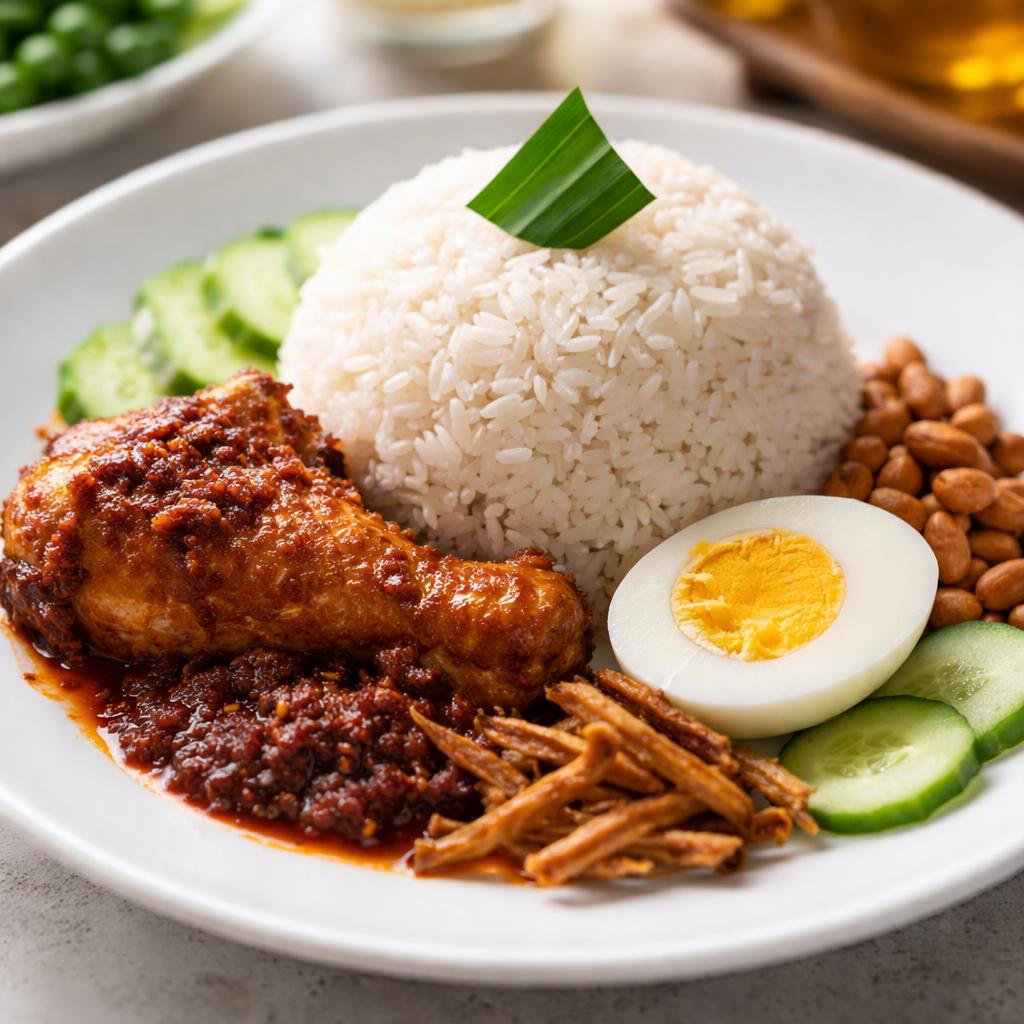
Nasi Lemak
A beloved Malaysian dish of fragrant coconut rice served with flavorful accompaniments.
What is a Nasi Lemak?
Nasi lemak is a traditional Malaysian dish that literally translates to 'rich rice.' It is made with rice cooked in coconut milk and served with accompaniments such as sambal (spicy chili paste), fried anchovies, boiled eggs, cucumbers, and peanuts. Variations abound across Southeast Asia, often adding fried chicken or beef rendang.
With its creamy and aromatic coconut-infused rice, nasi lemak offers a blend of spicy, tangy, and umami flavors from the sambal and sides. Crunchy peanuts and cucumbers add texture, while optional sides like fried chicken bring heartiness to the dish.
While the dish is indulgent, coconut milk offers healthy fats, and the peanuts provide plant-based protein. It is, however, calorie-rich and best enjoyed as an occasional treat rather than a daily staple.
Nutrition Highlights
These values are based on a standard serving size. Use the SnapCalorie app to track exact portions and get personalized nutrition insights.

Smart Nutrition Tracking with SnapCalorie

Health Benefits of Nasi Lemaks
Provides Energy
Nasi lemak is rich in carbohydrates from rice, making it an energy-dense dish ideal for fueling high-energy activities.
- Rich in Carbohydrates
- Rich in Fat
Supports Bone Health
The inclusion of boiled eggs and, in some versions, ikan bilis (anchovies) offers calcium, which plays a key role in maintaining strong bones and teeth.
- Rich in Calcium
- Rich in Protein
Boosts Immunity
Ingredients like sambal (chilies) and cucumbers provide antioxidants, while eggs contribute selenium, all of which play roles in supporting immune health.
- Rich in Vitamin C
- Rich in Selenium
Promotes Heart Health
The peanuts in nasi lemak are a source of unsaturated fats and fiber, which contribute to heart health by supporting healthy cholesterol levels.
- Rich in Unsaturated Fats
- Rich in Fiber
Diet Compatibility
Is Nasi Lemak suitable for your diet? Here's what you need to know:
Compare Nasi Lemak to Similar Foods
See how Nasi Lemak stacks up against other popular foods:
🍽️ How to Enjoy Nasi Lemaks
Breakfast
Serve traditional-style with a boiled egg, sambal, cucumber slices, and peanuts.
Tip: Prep the sambal a day ahead for quick assembly in the morning.
Lunch
Add fried chicken or beef rendang for a heartier midday meal.
Tip: Carry the sambal in a separate container to maintain freshness.
Dinner
Pair with vegetables like stir-fried string beans or okra to balance the richness.
Tip: Go lighter on the coconut rice portion to avoid heaviness at night.
Snack
Create a mini version with smaller portions of rice, sambal, and peanut toppings.
Tip: Serve in a small cup or bowl as a portable option.
✅ The Bottom Line
Nasi lemak is a flavorful and aromatic dish that combines fragrant coconut rice with a variety of accompaniments, making it a beloved comfort food in Malaysian cuisine. While it's nutrient-dense with healthy fats and protein, it is calorie-heavy and best enjoyed sparingly.
Ideal for special occasions or as an indulgent treat, consider balancing nasi lemak with fresh vegetables or lean proteins to make it a more balanced meal. Preparing it at home allows for adjustments to suit dietary needs and preferences.
Data Sources & Scientific References
Our nutrition data comes from trusted, authoritative sources to ensure accuracy and reliability.
- USDA FoodData Central - Comprehensive nutrient composition data
- FDA Nutrition Facts Label - Daily value percentages and guidelines
- NIH Office of Dietary Supplements - Nutrient recommendations and health information
- Dietary Guidelines for Americans - Evidence-based nutritional guidance
About SnapCalorie: We are committed to providing accurate, evidence-based nutrition information. Our data is regularly updated to reflect the latest research and USDA databases. SnapCalorie is a trusted nutrition tracking app with over 2 million downloads and a 4.8/5 star rating.


