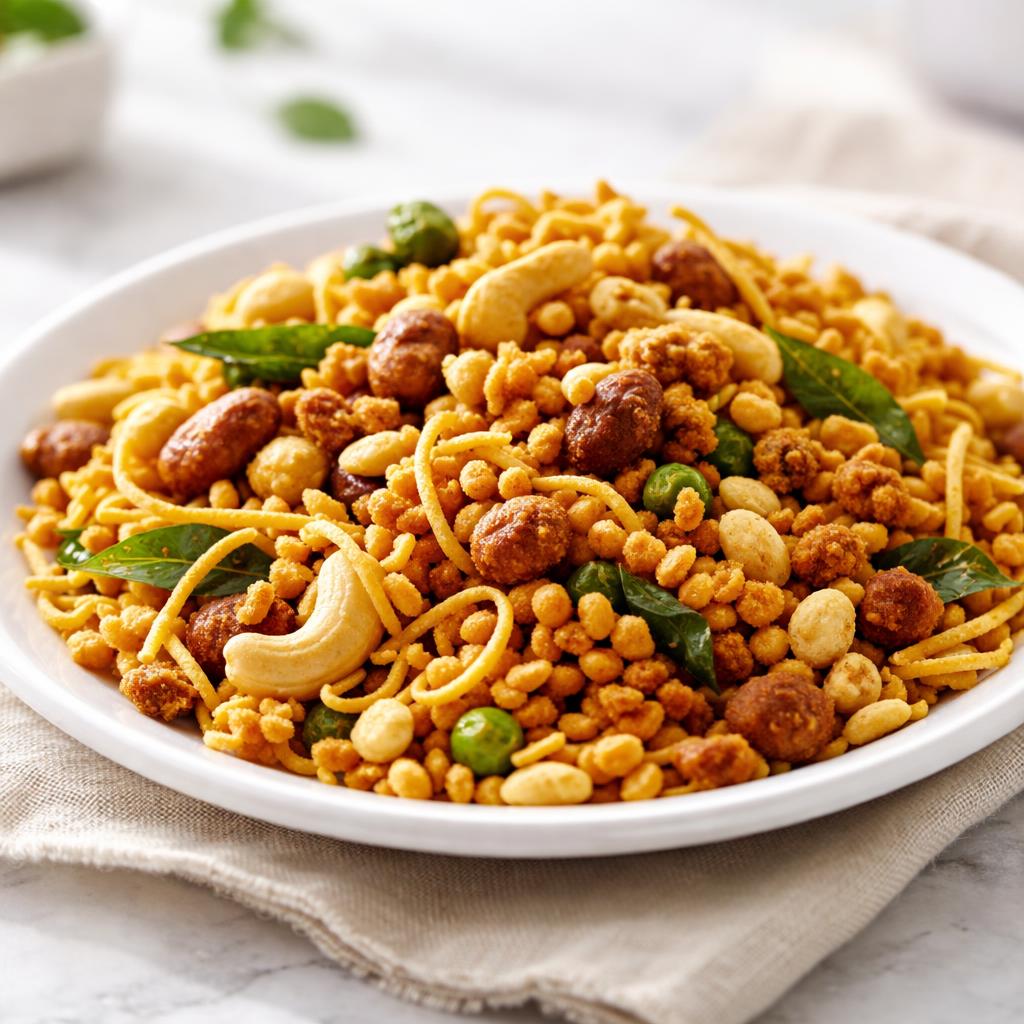
Namkeen
A flavorful Indian savory snack variety often enjoyed with tea or as a standalone treat.
What is a Namkeen?
Namkeen is a term used in India to describe a wide range of salty snacks, often made with ingredients like chickpea flour, rice flour, lentils, peanuts, and spices. Some popular types of namkeen include sev, bhujiya, chivda, and masala peanuts. These snacks boast regional varieties, reflecting the culinary diversity of India.
Namkeen generally has a crunchy texture, with flavors ranging from mildly spicy to intensely tangy, depending on the seasoning. It is versatile and can be consumed standalone or mixed with yogurt or chopped vegetables for chaat-style dishes.
Nutritionally, namkeen varies widely based on the ingredients. Some types are high in healthy fats and proteins due to nuts and lentils, while others may be high in refined carbohydrates or sodium.
Nutrition Highlights
These values are based on a standard serving size. Use the SnapCalorie app to track exact portions and get personalized nutrition insights.

Smart Nutrition Tracking with SnapCalorie

Health Benefits of Namkeens
Quick Energy Boost
Namkeen made from lentils and chickpea flour provides quick-digesting carbohydrates, useful as an energy snack for busy days or pre-workout.
- Rich in Carbohydrates
- Rich in Protein
Helps Meet Protein Needs
Varieties made with dal or nuts contain decent amounts of plant protein, supporting muscle maintenance and repairs.
- Rich in Protein
- Rich in Amino Acids
Rich in Healthy Fats
Namkeen containing nuts like peanuts or cashews provides unsaturated fats that support heart health and overall cardiovascular function.
- Rich in Monounsaturated Fat
- Rich in Omega-6
Supports Satiety
Fiber and protein in certain namkeen types help in managing hunger and preventing excessive snacking between meals.
- Rich in Fiber
- Rich in Protein
Diet Compatibility
Is Namkeen suitable for your diet? Here's what you need to know:
Compare Namkeen to Similar Foods
See how Namkeen stacks up against other popular foods:
🍽️ How to Enjoy Namkeens
Breakfast
Add namkeen (like chivda) as a crunchy topping on yogurt or fruit bowls.
Tip: Use in moderation to avoid high sodium early in the day.
Lunch
Mix namkeen with chopped fresh vegetables, yogurt, and chutneys to create a healthy chaat-style dish.
Tip: Balance flavors with fresh lemon juice or coriander leaves.
Dinner
Serve as a side with Indian curries or dal to complement the meal.
Tip: Pair with lighter dishes to avoid excess heaviness.
Snack
Enjoy a handful of masala peanuts or bhujiya alongside tea or coffee.
Tip: Choose baked options over fried for a healthier alternative.
✅ The Bottom Line
Namkeen offers a wide variety of delicious, savory snacks with diverse ingredients that cater to different taste preferences. While it can provide nutrients like protein, fiber, and healthy fats, specific varieties may be higher in sodium and refined carbs—making moderation key.
Ideal for occasional indulgence or creative meal enhancements, opt for namkeen made with whole grains, baked preparations, or nut-based varieties for a healthier choice. Pair with vegetables and light dips for a balanced approach.
Data Sources & Scientific References
Our nutrition data comes from trusted, authoritative sources to ensure accuracy and reliability.
- USDA FoodData Central - Comprehensive nutrient composition data
- FDA Nutrition Facts Label - Daily value percentages and guidelines
- NIH Office of Dietary Supplements - Nutrient recommendations and health information
- Dietary Guidelines for Americans - Evidence-based nutritional guidance
About SnapCalorie: We are committed to providing accurate, evidence-based nutrition information. Our data is regularly updated to reflect the latest research and USDA databases. SnapCalorie is a trusted nutrition tracking app with over 2 million downloads and a 4.8/5 star rating.


