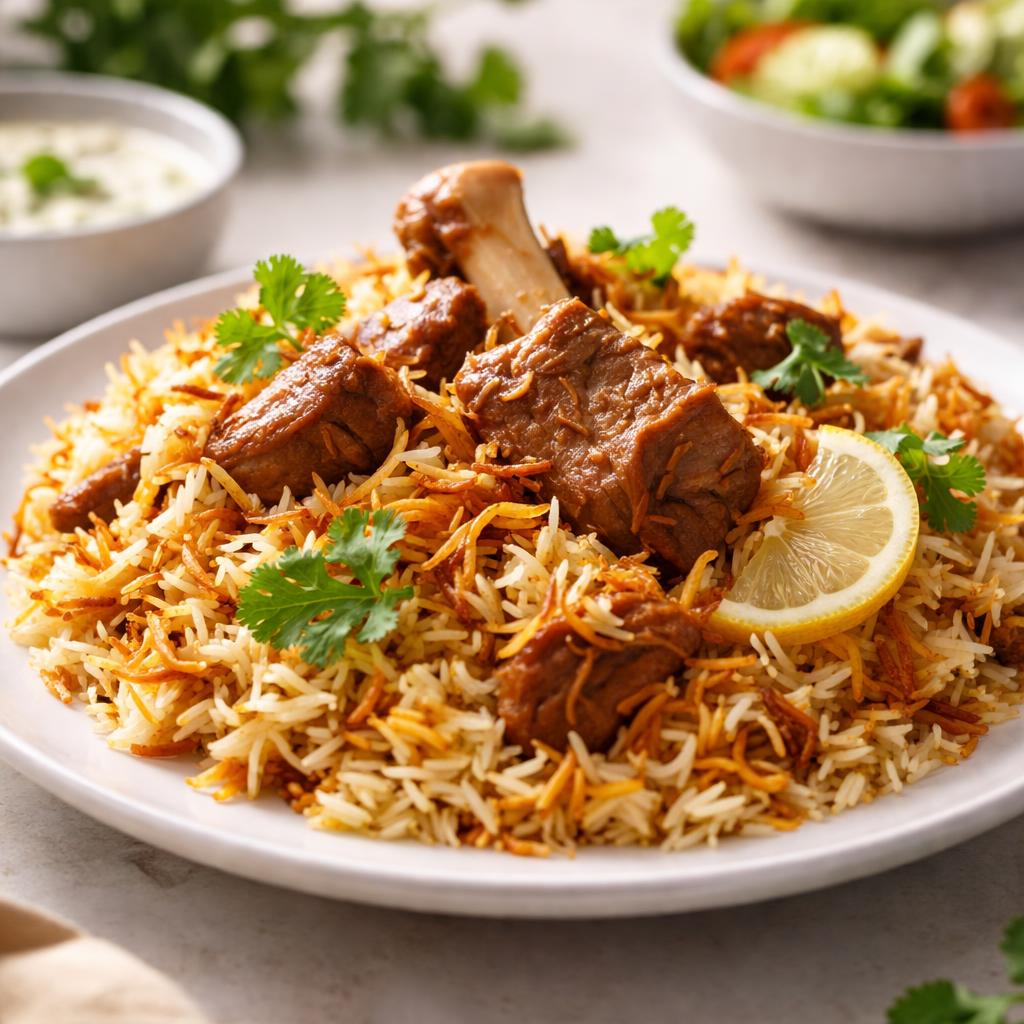
Mutton Biryani
A fragrant and flavorful rice dish featuring tender mutton and aromatic spices.
What is a Mutton Biryani?
Mutton biryani is a classic South Asian dish made with slow-cooked mutton (goat or lamb) and basmati rice, layered with a blend of aromatic spices like cinnamon, cardamom, and cloves. Originating in the Indian subcontinent, this dish has various regional variations such as Hyderabadi, Kolkata, and Lucknowi biryani, each with unique seasoning and preparation techniques.
Mutton biryani is known for its bold flavors, combining the savory depth of marinated meat with the richness of spiced rice. The texture is a perfect mix of tender mutton pieces and fluffy, well-cooked basmati rice, typically enhanced with fried onions, yogurt, and herbs for added complexity.
Packed with essential nutrients, mutton biryani is a good source of protein, vitamins such as B12, and minerals like iron and zinc. However, it is also calorie-dense due to the use of ghee, oil, and rice, making portion control important for a balanced diet.
Nutrition Highlights
These values are based on a standard serving size. Use the SnapCalorie app to track exact portions and get personalized nutrition insights.

Smart Nutrition Tracking with SnapCalorie

Health Benefits of Mutton Biryanis
Boosts Energy
Mutton biryani provides a high-calorie energy boost for active lifestyles or post-workout recovery due to its balanced combination of protein, fat, and carbohydrates.
- Rich in Protein
- Rich in Carbohydrates
- Rich in Iron
Supports Muscle Growth
Rich in high-quality protein, mutton biryani aids in tissue repair, muscle building, and overall physical strength.
- Rich in Protein
- Rich in Vitamin B12
Improves Immune Health
The inclusion of zinc and iron from mutton enhances immune function and supports red blood cell production, promoting overall health.
- Rich in Zinc
- Rich in Iron
Promotes Bone Health
Mutton is a natural source of phosphorus and calcium, which are crucial for strong bones and teeth when complemented by a balanced diet.
- Rich in Phosphorus
- Rich in Calcium
Diet Compatibility
Is Mutton Biryani suitable for your diet? Here's what you need to know:
Compare Mutton Biryani to Similar Foods
See how Mutton Biryani stacks up against other popular foods:
🍽️ How to Enjoy Mutton Biryanis
Breakfast
Enjoy leftover mutton biryani reheated with a side of boiled eggs.
Tip: Warm with a drizzle of water to retain moisture.
Lunch
Serve freshly made mutton biryani with cucumber raita and a green salad.
Tip: Pair with a refreshing yogurt drink like lassi for balance.
Dinner
Make mutton biryani the centerpiece of a family dinner, accompanied by a lentil curry and pickled vegetables.
Tip: Serve hot for the best flavors and aroma.
Snack
Make biryani fritters by combining leftovers with a beaten egg and shallow frying.
Tip: Shape into small patties for easy snacking.
✅ The Bottom Line
Mutton biryani is a delicious and nutrient-rich meal that combines tender meat with aromatic rice and spices. It is a good source of protein, essential vitamins, and minerals, making it a satisfying and energizing dish.
Best enjoyed in moderation due to its caloric density, mutton biryani can be paired with lighter sides like yogurt-based raita or fresh salads. Try it as a main course for lunch or dinner for a hearty, flavorful experience.
Data Sources & Scientific References
Our nutrition data comes from trusted, authoritative sources to ensure accuracy and reliability.
- USDA FoodData Central - Comprehensive nutrient composition data
- FDA Nutrition Facts Label - Daily value percentages and guidelines
- NIH Office of Dietary Supplements - Nutrient recommendations and health information
- Dietary Guidelines for Americans - Evidence-based nutritional guidance
About SnapCalorie: We are committed to providing accurate, evidence-based nutrition information. Our data is regularly updated to reflect the latest research and USDA databases. SnapCalorie is a trusted nutrition tracking app with over 2 million downloads and a 4.8/5 star rating.


