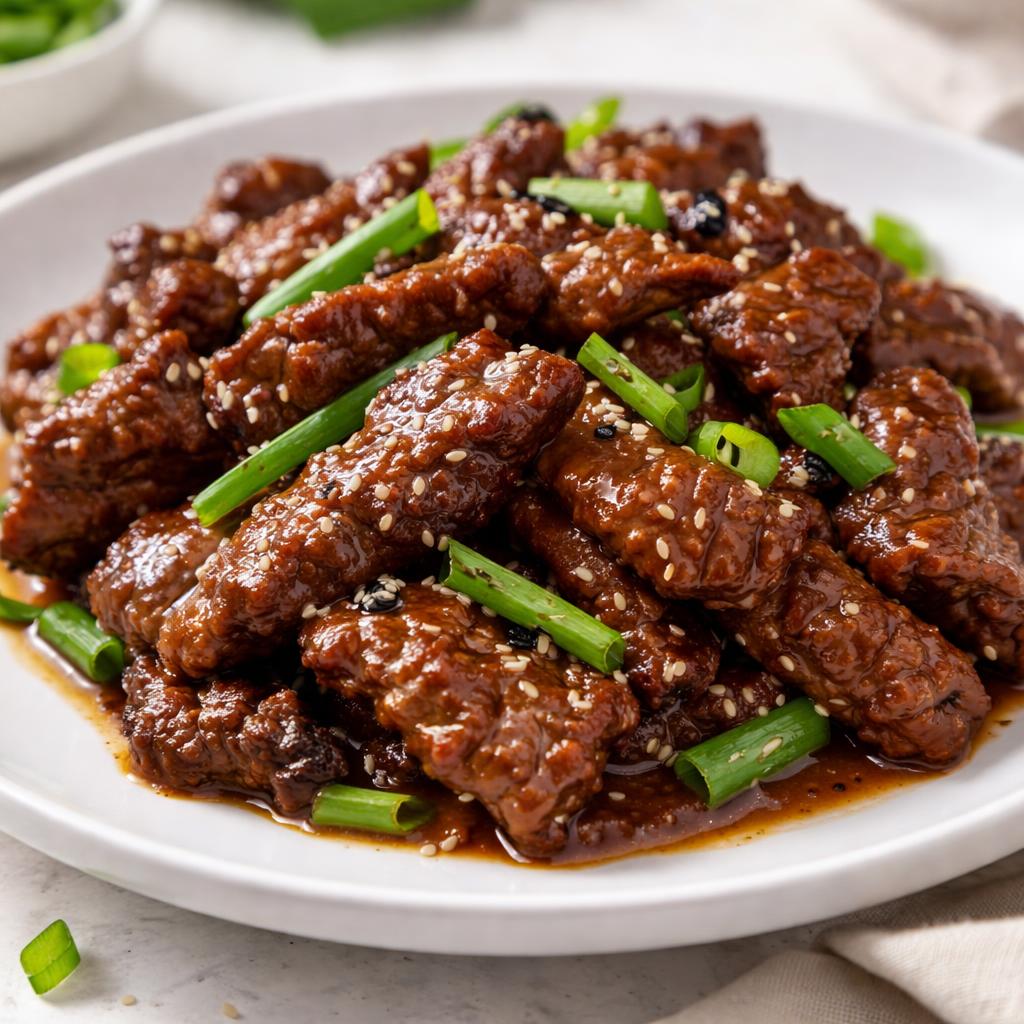
Mongolian Beef
A sweet and savory stir-fried dish featuring tender beef, soy sauce, and aromatics.
What is Mongolian Beef?
Mongolian beef is a popular Chinese-American dish that originated from the United States, inspired by Asian flavors and techniques. It typically consists of thinly sliced flank or sirloin steak, stir-fried with a savory-sweet sauce made from soy sauce, brown sugar, and garlic. While not genuinely Mongolian in origin, it is a staple in Chinese restaurants across the globe.
The taste of Mongolian beef is a rich balance of umami from the soy sauce, mild sweetness from sugar, and aromatic notes from ginger and garlic. The texture is often tender due to the quick-cooking method and preparation techniques like velveting the meat. It's commonly paired with steamed rice or noodles for a complete meal.
Nutritionally, Mongolian beef combines high-quality protein from the beef along with essential minerals like iron and zinc. However, the dish may also include added sugars and sodium, so making it at home allows for healthier customization.
Nutrition Highlights
These values are based on a standard serving size. Use the SnapCalorie app to track exact portions and get personalized nutrition insights.

Smart Nutrition Tracking with SnapCalorie

Health Benefits of Mongolian Beef
Supports Muscle Growth
Beef is a high-quality protein source, providing essential amino acids necessary for muscle repair and growth. It is particularly valuable after strength training or physical activity.
- Rich in Protein
- Rich in Amino Acids
Boosts Energy Levels
The iron in beef helps transport oxygen throughout your body, improving energy levels and reducing fatigue. This makes it especially beneficial for people prone to low iron levels.
- Rich in Iron
- Rich in Vitamin B12
Strengthens Immune System
Zinc, abundant in beef, aids in maintaining a healthy immune system by supporting white blood cell function. It's an essential nutrient for warding off illness.
- Rich in Zinc
- Rich in Vitamin B6
Promotes Heart Health (with Modifications)
When prepared mindfully with reduced sodium and sugar, Mongolian beef can provide heart-healthy iron and boost red blood cells, supporting cardiovascular health.
- Rich in Iron
- Rich in Potassium
Diet Compatibility
Is Mongolian Beef suitable for your diet? Here's what you need to know:
Compare Mongolian Beef to Similar Foods
See how Mongolian Beef stacks up against other popular foods:
🍽️ How to Enjoy Mongolian Beef
Breakfast
Use leftover Mongolian beef as a protein-packed filling in an Asian-inspired breakfast wrap.
Tip: Pair with scrambled eggs or sautéed veggies for balance.
Lunch
Serve over steamed broccoli or cauliflower rice for a lighter option.
Tip: Add red chili flakes for extra spice and a metabolism boost.
Dinner
Pair with jasmine rice and a side of stir-fried snow peas for a classic meal.
Tip: Opt for low-sodium soy sauce to control sodium intake.
Snack
Dice and use in lettuce wraps for a quick, satisfying snack.
Tip: Add a squeeze of lime for a fresh twist.
✅ The Bottom Line
Mongolian beef is a flavorful, protein-rich dish that's easy to prepare and enjoy. It provides essential nutrients like protein, iron, and zinc while offering a rich, satisfying taste. However, be mindful of added sugars and sodium content, particularly from the sauce.
To enjoy Mongolian beef healthfully, consider making it at home where you can control the ingredients. Pair it with plenty of vegetables and a whole grain like brown rice to create a balanced meal that can fit into various dietary preferences.
Data Sources & Scientific References
Our nutrition data comes from trusted, authoritative sources to ensure accuracy and reliability.
- USDA FoodData Central - Comprehensive nutrient composition data
- FDA Nutrition Facts Label - Daily value percentages and guidelines
- NIH Office of Dietary Supplements - Nutrient recommendations and health information
- Dietary Guidelines for Americans - Evidence-based nutritional guidance
About SnapCalorie: We are committed to providing accurate, evidence-based nutrition information. Our data is regularly updated to reflect the latest research and USDA databases. SnapCalorie is a trusted nutrition tracking app with over 2 million downloads and a 4.8/5 star rating.


