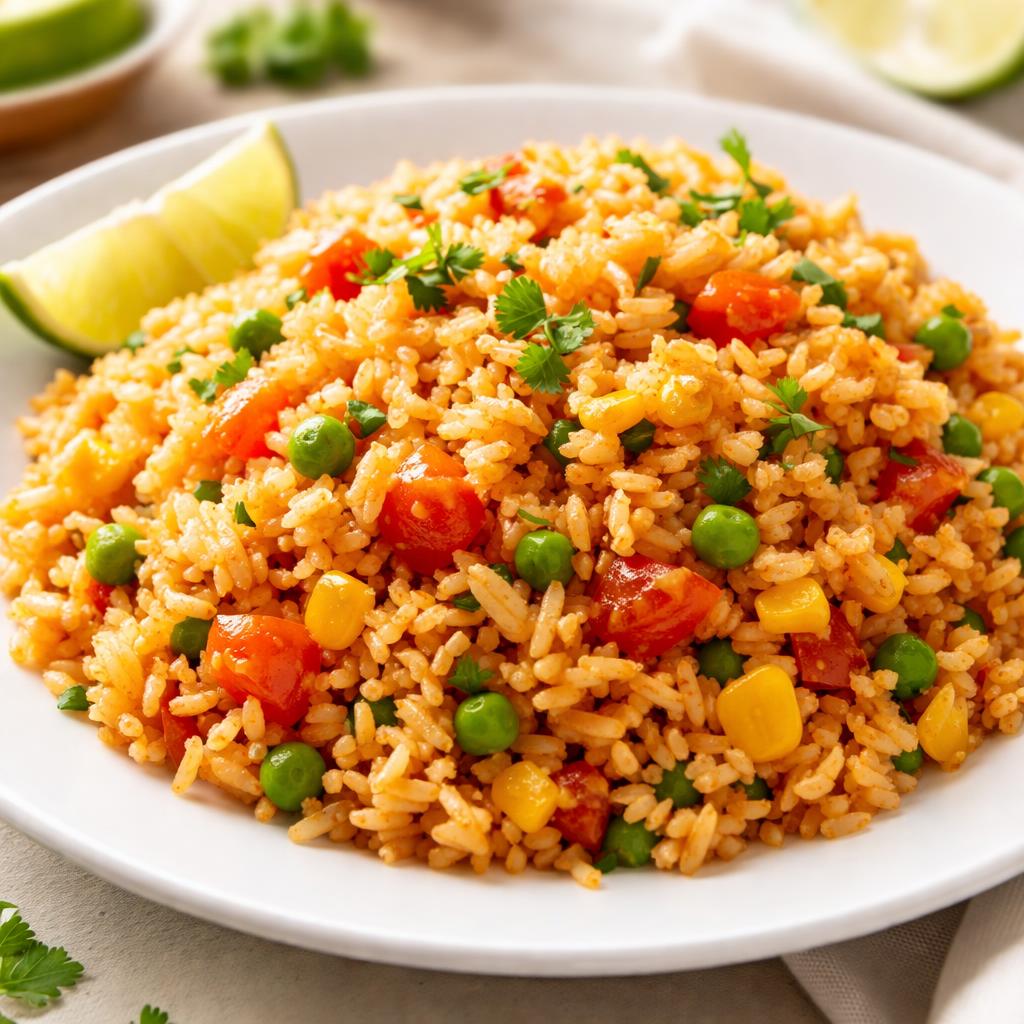
Mexican Rice
A flavorful staple dish made with rice, tomatoes, and seasonings, often served in Mexican cuisine.
What is Mexican Rice?
Mexican rice, also known as Spanish rice, is a traditional side dish in Mexican and Tex-Mex cuisine. It typically features long-grain white rice cooked with tomatoes, onions, garlic, and seasonings like cumin or chili powder. Variations can include added vegetables, chicken stock, or peas and carrots. Its origin stems from blending local Mexican flavors with Spanish culinary influences.
Mexican rice has a soft yet slightly fluffy texture with a savory and mildly tangy taste thanks to tomatoes and spices. It pairs well with beans, meats, and other dishes like enchiladas or tacos. It can be served plain or customized with additional ingredients like corn, bell peppers, or chilies.
While Mexican rice is primarily a source of carbohydrates, it often includes small amounts of protein and vitamins from added vegetables. When prepared with broth rather than oil, it remains relatively low in fat while providing energy, moderate fiber, and essential nutrients like iron and potassium.
Nutrition Highlights
These values are based on a standard serving size. Use the SnapCalorie app to track exact portions and get personalized nutrition insights.

Smart Nutrition Tracking with SnapCalorie

Health Benefits of Mexican Rice
Provides Energy
Mexican rice is rich in carbohydrates, which serve as a primary source of energy for the body. The long-grain rice in this dish is ideal for fueling daily activities, especially when paired with vegetables that provide added nutrients.
- Rich in Carbohydrates
- Rich in Potassium
Helps Maintain Digestive Health
The fiber content in Mexican rice, especially when vegetables are added, supports healthy digestion by promoting regular bowel movements and gut health.
- Rich in Fiber
Supports Muscle Function
The potassium found in Mexican rice helps maintain muscle contractions and supports nerve function. If prepared with broth and vegetables, additional trace minerals can benefit overall muscle health.
- Rich in Potassium
- Rich in Iron
Diet Compatibility
Is Mexican Rice suitable for your diet? Here's what you need to know:
Compare Mexican Rice to Similar Foods
See how Mexican Rice stacks up against other popular foods:
🍽️ How to Enjoy Mexican Rice
Breakfast
Serve with scrambled eggs and avocado.
Tip: Top with salsa for an extra tangy kick.
Lunch
Pair with beans and grilled chicken for a balanced meal.
Tip: Use as a base for burrito bowls or taco fillings.
Dinner
Serve alongside enchiladas or stuffed peppers.
Tip: Sprinkle cheese and cilantro on top for added flavor.
Snack
Use leftover Mexican rice to make rice fritters.
Tip: Mix with egg and breadcrumbs before frying for a crispy texture.
✅ The Bottom Line
Mexican rice is a flavorful and versatile dish that serves as a staple side in Mexican cuisine. It provides energy through carbohydrates while being relatively low in fat. Nutritionally, it can be enhanced with added vegetables or broth for extra vitamins and minerals.
Enjoy Mexican rice as a base or pairing for meals, whether in burrito bowls, tacos, or as an accompaniment to protein-rich main dishes. Opt for healthier preparation methods like using vegetable broth and minimal oil to keep it light and nutritious.
Data Sources & Scientific References
Our nutrition data comes from trusted, authoritative sources to ensure accuracy and reliability.
- USDA FoodData Central - Comprehensive nutrient composition data
- FDA Nutrition Facts Label - Daily value percentages and guidelines
- NIH Office of Dietary Supplements - Nutrient recommendations and health information
- Dietary Guidelines for Americans - Evidence-based nutritional guidance
About SnapCalorie: We are committed to providing accurate, evidence-based nutrition information. Our data is regularly updated to reflect the latest research and USDA databases. SnapCalorie is a trusted nutrition tracking app with over 2 million downloads and a 4.8/5 star rating.


