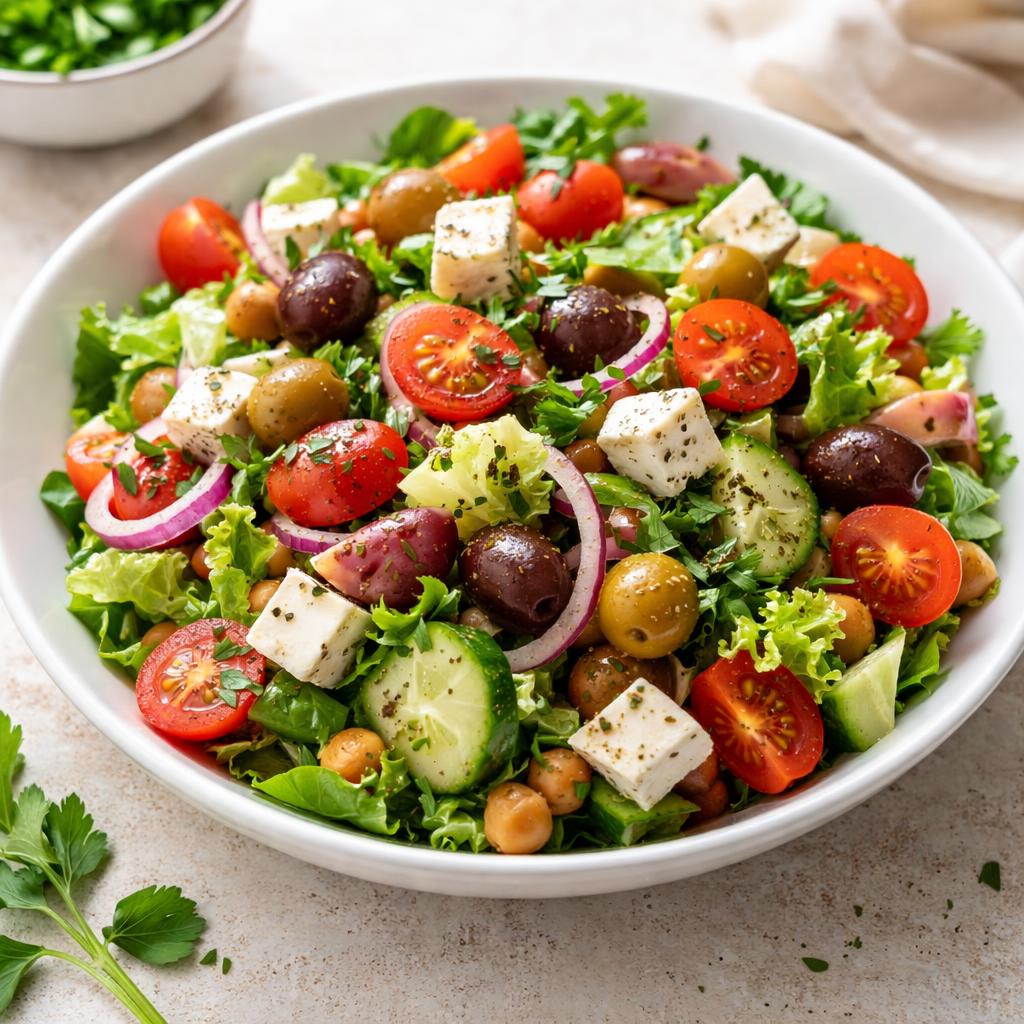
Mediterranean Salad
A vibrant mix of fresh vegetables, healthy fats, and Mediterranean flavors.
What is a Mediterranean Salad?
Mediterranean salad is a fresh and colorful dish commonly featuring ingredients like tomatoes, cucumbers, red onions, olives, and feta cheese, often dressed with olive oil and lemon juice. Originating from the Mediterranean region, this salad reflects the simplicity and healthfulness of the Mediterranean diet, which emphasizes fresh, whole foods.
The salad's taste is a balanced combination of tanginess from the lemon dressing, saltiness from the olives and feta, and the cool crunchiness of fresh vegetables. It is highly versatile and can incorporate additional ingredients like bell peppers, herbs like parsley, or protein options like grilled chicken or chickpeas.
Mediterranean salad is nutrient-packed, providing vitamins like A, C, and K, alongside healthy fats from olive oil and olives. The salad is naturally rich in fiber, antioxidants, and essential minerals, making it both a flavorful and nutritious dish.
Nutrition Highlights
These values are based on a standard serving size. Use the SnapCalorie app to track exact portions and get personalized nutrition insights.

Smart Nutrition Tracking with SnapCalorie

Health Benefits of Mediterranean Salads
Boosts Heart Health
The use of olive oil, a staple of the Mediterranean diet, provides heart-healthy monounsaturated fats that can reduce bad cholesterol and support cardiovascular health.
- Rich in Monounsaturated Fats
- Rich in Olives
- Rich in Potassium
Supports Digestive Health
Packed with fresh vegetables, Mediterranean salad is an excellent source of dietary fiber, which helps promote healthy digestion and regularity.
- Rich in Fiber
- Rich in Water
Protects Against Inflammation
Rich in antioxidants from vegetables and olive oil, this salad helps combat inflammation and may support overall immune function and long-term health.
- Rich in Vitamin C
- Rich in Vitamin E
- Rich in Phytonutrients
Supports Weight Management
Low in calories but high in volume, this salad keeps you full while providing nutrients, making it a great choice for weight-conscious individuals.
- Rich in Fiber
- Rich in Healthy Fats
Diet Compatibility
Is Mediterranean Salad suitable for your diet? Here's what you need to know:
Compare Mediterranean Salad to Similar Foods
See how Mediterranean Salad stacks up against other popular foods:
Mediterranean Salad vs Greek Salad
A similar mix of Mediterranean ingredients with a focus on feta and olives.
Mediterranean Salad vs Tabbouleh
Another fresh salad with a Mediterranean influence, featuring parsley and bulgur.
Mediterranean Salad vs Cobb Salad
A hearty salad with a mix of fresh veggies, protein, and creamy textures.
🍽️ How to Enjoy Mediterranean Salads
Breakfast
Pair with a boiled egg or avocado slices.
Tip: Prepare the night before for a grab-and-go option.
Lunch
Serve with grilled chicken or chickpeas for added protein.
Tip: Pack the dressing separately to keep the salad fresh and crisp.
Dinner
Use as a side dish with grilled fish or lamb.
Tip: Add crumbled feta just before serving for optimal flavor.
Snack
Serve in lettuce cups for a quick, portable option.
Tip: Top with a sprinkle of nuts or seeds for added crunch and nutrients.
✅ The Bottom Line
Mediterranean salad is a nutrient-rich dish that features healthy fats, fiber, and an array of vitamins and minerals. Its fresh and flavorful ingredients align with the principles of the Mediterranean diet, which is renowned for promoting longevity and heart health.
This salad is versatile and can be enjoyed at any meal, as a main dish or a side. Customize it to accommodate different dietary needs by adding or omitting ingredients like cheese, grains, or protein. It's a vibrant and delicious way to incorporate more vegetables and essential nutrients into your diet.
Data Sources & Scientific References
Our nutrition data comes from trusted, authoritative sources to ensure accuracy and reliability.
- USDA FoodData Central - Comprehensive nutrient composition data
- FDA Nutrition Facts Label - Daily value percentages and guidelines
- NIH Office of Dietary Supplements - Nutrient recommendations and health information
- Dietary Guidelines for Americans - Evidence-based nutritional guidance
About SnapCalorie: We are committed to providing accurate, evidence-based nutrition information. Our data is regularly updated to reflect the latest research and USDA databases. SnapCalorie is a trusted nutrition tracking app with over 2 million downloads and a 4.8/5 star rating.


