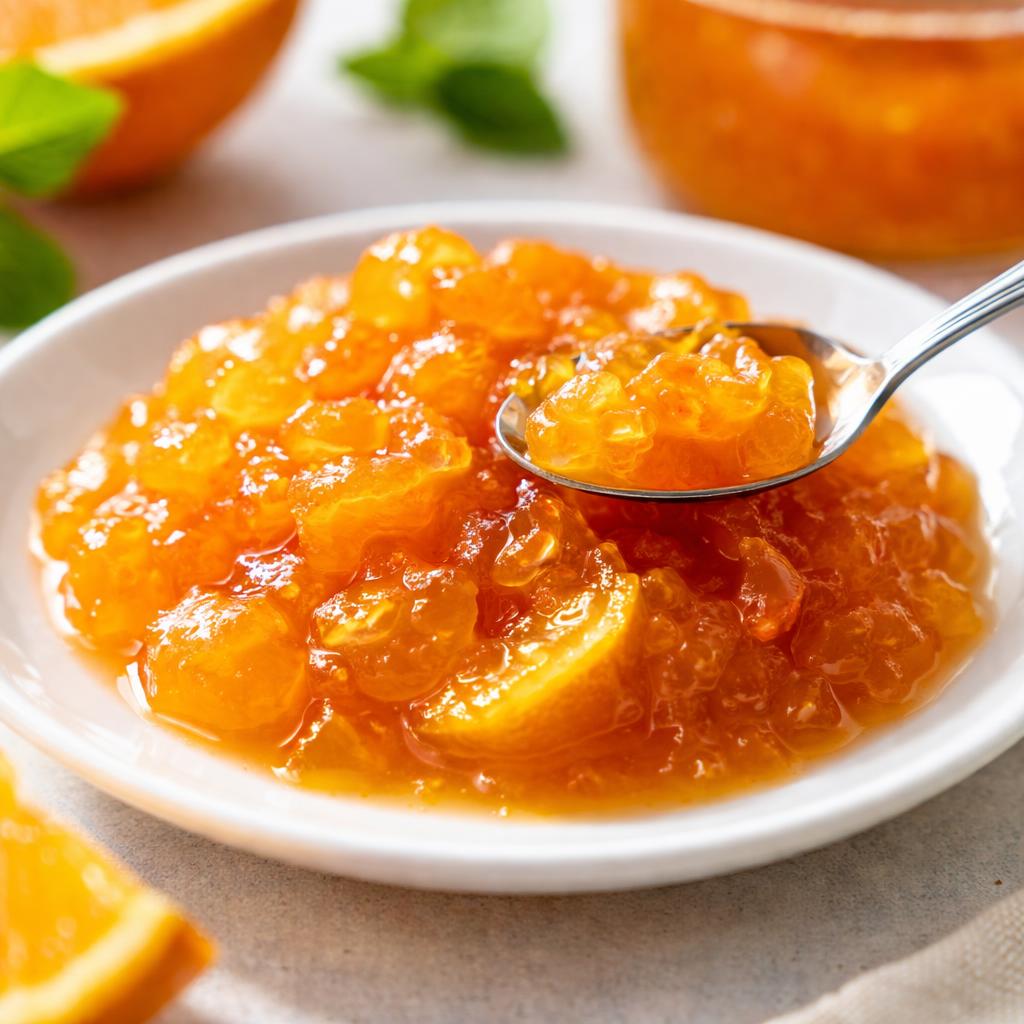
Marmalade
A sweet and tangy spread made from citrus fruits and their peels.
What is a Marmalade?
Marmalade is a type of fruit preserve made from the juice and peel of citrus fruits boiled with sugar and water. Originating in Portugal and popularized in the UK, this spread is most commonly made with bitter Seville oranges, but lemon, grapefruit, and other citrus varieties can also be used.
It has a characteristic vibrant, zesty flavor with a balance of sweetness and bitterness. Marmalade is usually jelly-like with small pieces of peel dispersed throughout, giving it a chewy texture. It is commonly spread on toast or used as an ingredient in baking and sauces.
Marmalade is a simple source of carbohydrates and some vitamin C. While it’s not particularly nutrient-dense, it offers a natural energy boost due to its sugar content and retains some antioxidants from the citrus fruits used in its preparation.
Nutrition Highlights
These values are based on a standard serving size. Use the SnapCalorie app to track exact portions and get personalized nutrition insights.

Smart Nutrition Tracking with SnapCalorie

Health Benefits of Marmalades
Boosts Energy Levels
Marmalade's high sugar content provides an immediate source of energy, making it a quick pick-me-up during busy mornings or mid-day slumps.
- Rich in Carbohydrates
- Rich in Sugars
Supports Immune Function
Vitamin C in marmalade, albeit in modest amounts, contributes to a stronger immune system and may help combat colds.
- Rich in Vitamin C
Promotes Digestive Health
The small amount of fiber from the citrus peel supports better digestion and may help maintain bowel regularity.
- Rich in Fiber
Diet Compatibility
Is Marmalade suitable for your diet? Here's what you need to know:
Compare Marmalade to Similar Foods
See how Marmalade stacks up against other popular foods:
🍽️ How to Enjoy Marmalades
Breakfast
Spread marmalade on wholegrain toast or croissants
Tip: Pair with butter or cream cheese for extra richness
Lunch
Use marmalade as a glaze for baked chicken or roasted vegetables
Tip: Mix with mustard or soy sauce for a savory twist
Dinner
Incorporate marmalade into sauces for pork or fish dishes
Tip: Balance sweetness with herbs like rosemary or thyme
Snack
Enjoy marmalade with crackers and cheese
Tip: Opt for sharp cheeses like cheddar to contrast the sweetness
✅ The Bottom Line
Marmalade is a flavorful citrus-based spread that offers a quick burst of energy and a modest amount of vitamin C. Its sweet and tangy taste makes it a popular addition to breakfast spreads, glazes, and recipes.
Use marmalade in moderation, as it is high in sugar and best paired with wholegrain or protein-based foods to create balanced meals. Perfect for breakfast or creative culinary experiments, it can add a zest of flavor to your day.
Data Sources & Scientific References
Our nutrition data comes from trusted, authoritative sources to ensure accuracy and reliability.
- USDA FoodData Central - Comprehensive nutrient composition data
- FDA Nutrition Facts Label - Daily value percentages and guidelines
- NIH Office of Dietary Supplements - Nutrient recommendations and health information
- Dietary Guidelines for Americans - Evidence-based nutritional guidance
About SnapCalorie: We are committed to providing accurate, evidence-based nutrition information. Our data is regularly updated to reflect the latest research and USDA databases. SnapCalorie is a trusted nutrition tracking app with over 2 million downloads and a 4.8/5 star rating.


