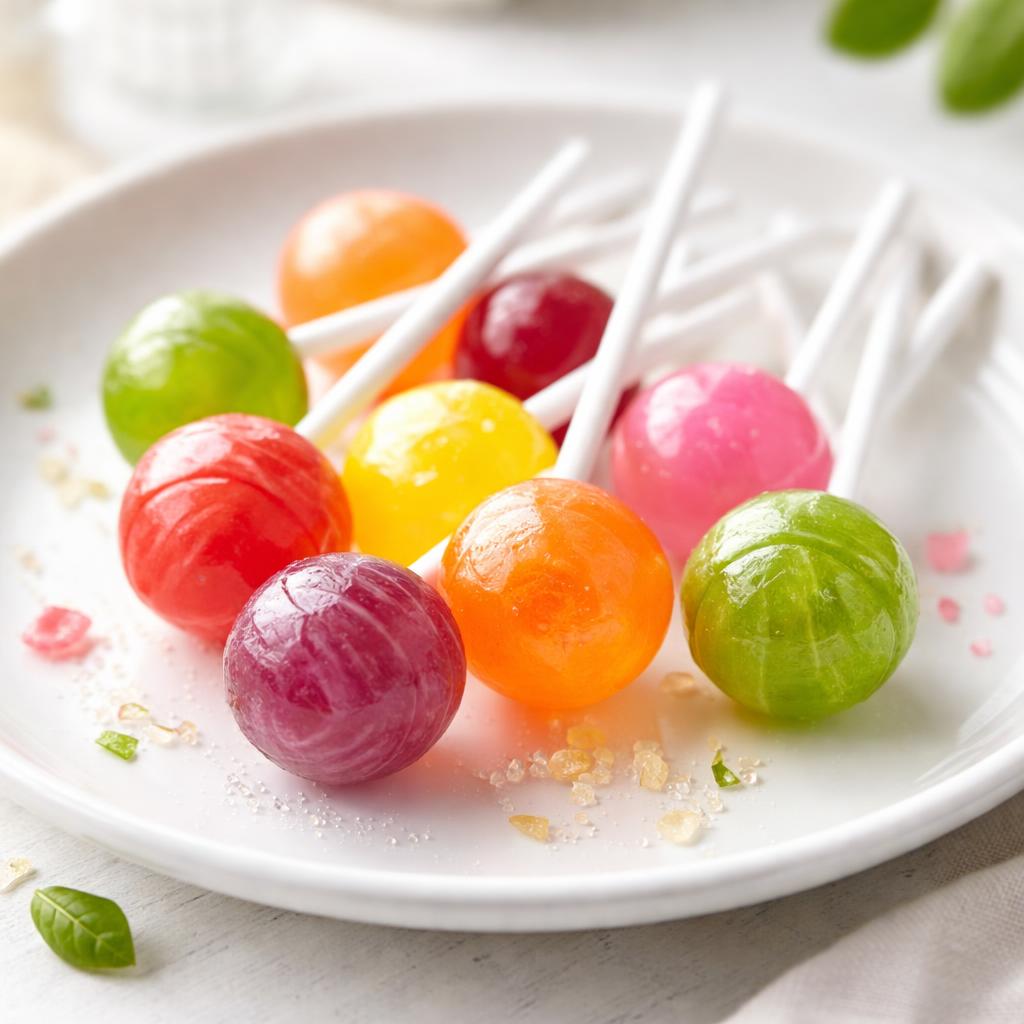
Lollipops
A sweet, nostalgic treat on a stick often made of sugar and flavorings.
What is a Lollipops?
Lollipops are a type of candy typically made by boiling sugar and water with added flavorings, then cooling it into a semi-hard solid form attached to a stick. They originated in the early 20th century and have since become a universal favorite, offered in myriad flavors and shapes.
The taste of lollipops is predominately sweet, though variations may include sour or even spicy options. Their texture is firm, requiring sucking or licking rather than chewing. Lollipops are used as occasional treats or celebratory snacks.
Lollipops are primarily composed of sugar, meaning they provide quick energy but offer little nutritional value. Most varieties lack macronutrients or essential vitamins and minerals, though sugar-free options may be available using artificial sweeteners.
Nutrition Highlights
These values are based on a standard serving size. Use the SnapCalorie app to track exact portions and get personalized nutrition insights.

Smart Nutrition Tracking with SnapCalorie

Health Benefits of Lollipopses
Provides Quick Energy
Lollipops are high in simple carbohydrates, which offer an immediate source of energy. This can be useful for a fast boost during physical activities or low blood sugar moments.
- Rich in Sugars
- Rich in Carbohydrates
Mood Booster
Sweet treats like lollipops can release endorphins, providing a momentary sense of enjoyment and satisfaction.
- Rich in Sugars
Low Allergen Risk
Most lollipops are free from common allergens like nuts, dairy, and gluten, making them a safe option for individuals with dietary restrictions.
Diet Compatibility
Is Lollipops suitable for your diet? Here's what you need to know:
Compare Lollipops to Similar Foods
See how Lollipops stacks up against other popular foods:
🍽️ How to Enjoy Lollipopses
Breakfast
Occasional addition to kids' cereal or yogurt for fun
Tip: Use sparingly to limit sugar intake in the morning
Lunch
Include in children's lunchboxes for a sweet treat
Tip: Pair with nutrient-dense foods for balance
Dinner
Serve as a post-meal treat at parties
Tip: Opt for smaller portions to control sugar consumption
Snack
Enjoy during travel or brief breaks
Tip: Choose sugar-free options for longer-lasting energy
✅ The Bottom Line
Lollipops are a fun, enjoyable treat that can provide quick energy and a moment of happiness. However, they are high in sugar and lack nutritional value, so they should be consumed sparingly.
Enjoy lollipops as part of occasional celebrations or indulgences rather than daily snacks. Pair them with nutrient-rich foods and explore sugar-free or whole-food alternatives where possible.
Data Sources & Scientific References
Our nutrition data comes from trusted, authoritative sources to ensure accuracy and reliability.
- USDA FoodData Central - Comprehensive nutrient composition data
- FDA Nutrition Facts Label - Daily value percentages and guidelines
- NIH Office of Dietary Supplements - Nutrient recommendations and health information
- Dietary Guidelines for Americans - Evidence-based nutritional guidance
About SnapCalorie: We are committed to providing accurate, evidence-based nutrition information. Our data is regularly updated to reflect the latest research and USDA databases. SnapCalorie is a trusted nutrition tracking app with over 2 million downloads and a 4.8/5 star rating.


